

TL;DR:
- Natural plant compounds like monacolin K from red yeast rice can lower LDL cholesterol by inhibiting the same enzyme as prescription statins. They work best when combined with lifestyle changes such as eating more soluble fiber and exercising regularly. However, natural statins may have comparable side effects and interactions, so medical supervision is essential.
Natural statins are plant-derived compounds that lower LDL cholesterol by inhibiting the same enzyme pathway targeted by prescription statin drugs. The most studied of these compounds, monacolin K from red yeast rice, is chemically identical to lovastatin, a widely prescribed pharmaceutical. Plant sterols, psyllium, and fenugreek round out the category of foods and supplements that act like statins in the body. If you are over 40 and exploring herbal alternatives to statins, or looking to complement an existing treatment plan, understanding the clinical evidence behind these compounds is the right place to start.
What are natural statins and how do they work?
Natural statins is an informal term for plant-based compounds that reduce LDL cholesterol through mechanisms similar to pharmaceutical statin drugs. The recognized clinical category is “HMG-CoA reductase inhibitors,” and monacolin K from red yeast rice is the only natural compound that fits this definition precisely. Other cholesterol-lowering foods and supplements, such as plant sterols and soluble fiber, work through different but complementary pathways.
Red yeast rice is produced by fermenting white rice with the mold Monascus purpureus. This fermentation process generates monacolin K, which blocks the liver enzyme responsible for cholesterol synthesis. Monacolin K reduces LDL by 15% to 25% within two months, a result comparable to low-dose prescription statin therapy. That is a clinically meaningful reduction for adults managing borderline or mildly elevated cholesterol.
Plant sterols and stanols are structural components of plant cell walls found in nuts, grains, and vegetables. They work by competing with dietary cholesterol for absorption in the gut, effectively reducing how much cholesterol enters your bloodstream. Consuming 2 to 2.5 grams daily of plant sterols or stanols can yield a 7% to 10% additional LDL reduction when combined with a balanced diet. Exceeding 3 grams per day provides no extra benefit.
What are the main plant-based statin alternatives and how effective are they?
The table below summarizes the primary natural cholesterol control compounds, their typical doses, and their estimated LDL reduction potential.
| Compound | Typical Daily Dose | Estimated LDL Reduction |
|---|---|---|
| Red yeast rice (monacolin K) | 1,200–2,400 mg | 15%–25% |
| Plant sterols/stanols | 2–2.5 g | 7%–10% |
| Psyllium husk (soluble fiber) | 10–12 g | 5%–10% |
| Fenugreek | 5–30 g | Modest reduction |
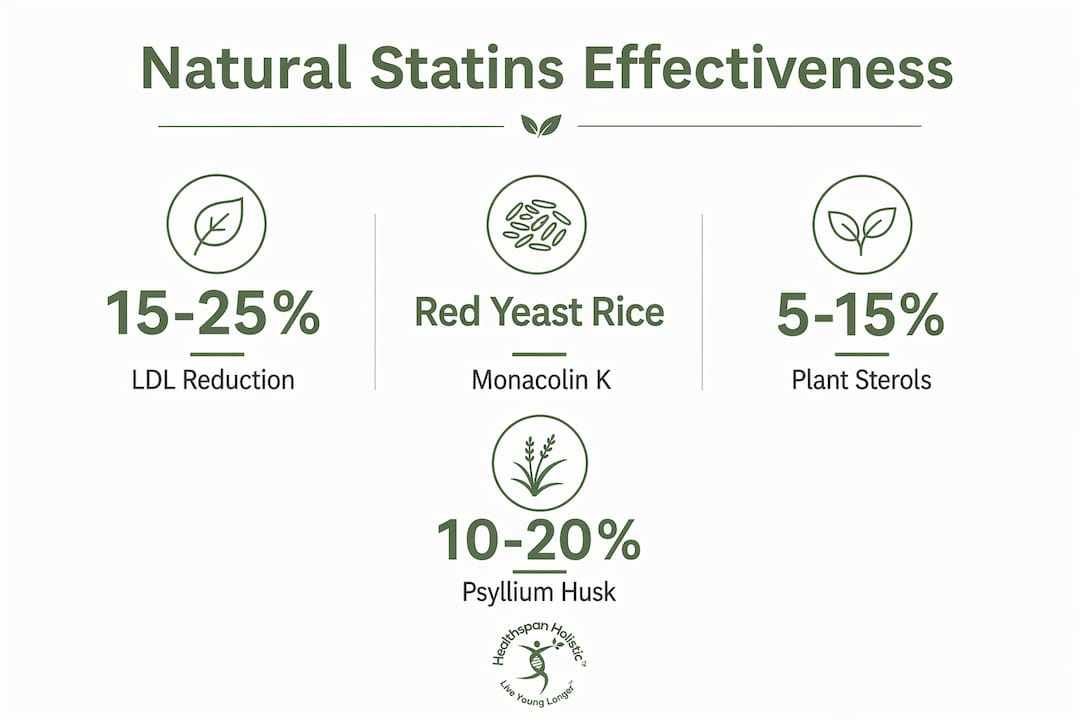
Red yeast rice delivers the most potent LDL reduction in this group. Plant sterols are the most accessible because they appear naturally in whole foods like nuts and grains, and are also added to fortified foods like certain margarines and orange juices. Psyllium husk works by binding bile acids in the gut, forcing the liver to pull more cholesterol from the blood to make new bile. Fenugreek contains soluble fiber and saponins that modestly reduce cholesterol absorption.
Pro Tip: Add 1 tablespoon of psyllium husk to a morning smoothie or oatmeal. This simple habit contributes meaningful soluble fiber without requiring any supplement purchase.
How do natural statins compare with prescription statin medications?
The comparison between natural and prescription statins is more nuanced than most people expect. Here is what the clinical evidence actually shows:
-
Chemical identity: Monacolin K in red yeast rice is chemically identical to lovastatin. This means it carries the same mechanism of action, and the same risk profile, as a prescription drug.
-
Efficacy gap: Prescription statins like atorvastatin and rosuvastatin can reduce LDL by 40% to 60% at standard doses. Natural statin alternatives like plant sterols lack robust clinical trials proving equivalent cardiovascular event reduction.
-
Regulatory status: The FDA restricts dietary supplements containing significant amounts of monacolin K, classifying them as unapproved drugs. FDA rules on monacolin K mean that many red yeast rice products sold in the U.S. contain only trace amounts of the active compound.
-
Clinical trial data: Prescription statins have decades of large randomized controlled trial data confirming reductions in heart attacks and strokes. Natural options are supported by shorter, smaller studies focused on LDL numbers rather than cardiovascular outcomes.
-
Cost and access: Natural supplements are available without a prescription, making them attractive for adults who want to take a proactive step before a doctor prescribes medication.
The bottom line is that natural options work best as adjuncts for people with mildly elevated cholesterol or as complements to prescribed therapy, not as replacements for high-risk patients.
What are the safety concerns and drug interactions with natural statins?
“Natural” does not mean risk-free. Monacolin K is chemically identical to lovastatin, which means red yeast rice can cause the same side effects as prescription statins, including muscle pain, liver enzyme elevation, and in rare cases, a serious condition called rhabdomyolysis. This is the most important safety fact adults need to understand before self-treating.
Common adverse effects to watch for include:
-
Muscle pain or weakness: The most frequently reported side effect, ranging from mild soreness to significant discomfort.
-
Liver stress: Elevated liver enzymes can occur, particularly with higher doses or prolonged use.
-
Digestive upset: Nausea, bloating, and stomach discomfort are reported with red yeast rice and fenugreek.
-
Drug interactions: Natural alternatives can interact with blood-thinning medications, blood pressure drugs, and other pharmaceuticals in ways that increase bleeding risk or alter drug metabolism.
Practitioners strongly recommend monitoring liver enzymes and muscle symptoms when using red yeast rice long-term. Always disclose every supplement you take to your healthcare provider. This is not optional. Interactions between supplements and medications are a real clinical risk, not a theoretical one.
Pro Tip: Before starting any natural statin supplement, ask your doctor to run a baseline lipid panel and liver enzyme test. Retest after 8 weeks. This gives you objective data on whether the supplement is working and whether it is safe to continue.
How to integrate natural statins with lifestyle changes for optimal heart health
Supplements work best when they support a foundation of good habits, not substitute for one. The National Heart, Lung, and Blood Institute’s Therapeutic Lifestyle Changes (TLC) program is the gold standard for natural cholesterol control. It combines dietary changes, physical activity, and weight management into a coordinated plan.
Eating at least 3 servings of whole grains daily is associated with a 19% reduction in heart disease risk and a 12% reduction in stroke risk. That single dietary shift, combined with plant sterol-rich foods and soluble fiber, creates a meaningful cardiovascular benefit before any supplement enters the picture.
Practical lifestyle habits that support natural ways to reduce cholesterol include:
-
Increase soluble fiber: Oats, barley, beans, and psyllium husk are the most effective sources. Target 10–25 grams of soluble fiber daily.
-
Replace saturated fats: Swap butter and red meat for olive oil, avocado, and fatty fish. This directly lowers LDL and raises HDL.
-
Exercise consistently: 150 minutes of moderate aerobic activity per week is the TLC recommendation. Walking, cycling, and swimming all qualify.
-
Add plant sterol-rich foods: Almonds, walnuts, sunflower seeds, and fortified foods contribute meaningful sterol intake without supplementation.
-
Limit refined carbohydrates: Excess sugar raises triglycerides and contributes to metabolic dysfunction that worsens cardiovascular risk.
For adults following a holistic health checklist, these habits form the non-negotiable base. Supplements amplify results. They do not replace them.
How to choose quality natural statin supplements
The supplement market is unregulated compared to pharmaceuticals, which means product quality varies widely. Follow these steps when evaluating any natural statin supplement:
-
Check for third-party testing. Look for certifications from NSF International, USP, or ConsumerLab. These organizations independently verify that what is on the label is actually in the capsule.
-
Verify monacolin K content. Due to FDA restrictions, many U.S. red yeast rice products contain negligible active compound. Check the label or contact the manufacturer directly.
-
Look for ingredient transparency. Proprietary blends that hide individual ingredient amounts are a red flag. You need to know exact doses to assess safety and efficacy.
-
Consider a combined formula. CoQ10 supports mitochondrial function and may ease muscle discomfort associated with statin use, making a red yeast rice and CoQ10 combination a practical choice for many adults.
-
Choose reputable suppliers. Healthspan Holistic carries professional-grade supplements including Red Yeast Rice with CoQ10, formulated for adults who want both natural statin support and antioxidant protection in a single product.
For broader cardiovascular support, Magnesium Glycinate supports healthy blood pressure and vascular function, making it a useful complement to any cholesterol management plan.
Key takeaways
Natural statins and plant-based cholesterol-lowering compounds are most effective when combined with the TLC lifestyle framework, medical supervision, and quality-verified supplements.
| Point | Details |
|---|---|
| Red yeast rice efficacy | Monacolin K can reduce LDL by 15%–25% in two months, comparable to low-dose prescription therapy. |
| Plant sterols dosage | 2–2.5 grams daily yields a 7%–10% LDL reduction; exceeding 3 grams adds no benefit. |
| Safety is not guaranteed | Monacolin K is chemically identical to lovastatin and carries the same side effect and interaction risks. |
| Lifestyle is the foundation | TLC habits including soluble fiber, exercise, and healthy fats must precede or accompany supplementation. |
| Supplement quality matters | Third-party tested products with transparent ingredient labeling are the only reliable choice. |
My honest view on natural statins
The biggest mistake I see adults make with plant-based statin alternatives is treating “natural” as a synonym for “safe and unlimited.” It is not. Red yeast rice is a pharmaceutical compound wrapped in a supplement label. The FDA recognizes this, which is why significant monacolin K content is restricted in U.S. products. If you are buying a red yeast rice supplement and it is not disclosing its monacolin K content, you genuinely do not know what you are taking.
That said, I am genuinely encouraged by what the evidence shows for adults with mildly elevated cholesterol who are not yet at high cardiovascular risk. A combination of plant sterols from whole foods, soluble fiber from oats and psyllium, 150 minutes of weekly movement, and a quality supplement like Cholesterol Care can produce real, measurable LDL reductions without a prescription. I have seen this work consistently when people commit to the full picture rather than expecting a single capsule to do everything.
The adults who get the best results treat natural cholesterol control as a system. They get baseline labs. They track their numbers. They consult their doctor before adding any supplement. They use tools like the holistic living guide to build sustainable habits. Natural statins are a useful tool in that system. They are not the system itself.
— Chris
Healthspan Holistic supplements for natural cholesterol support
If you are ready to add a quality supplement to your cholesterol management plan, Healthspan Holistic offers several professional-grade options designed for adults over 40. The Organic Turmeric + Ginger formula supports cardiovascular health and reduces inflammation, making it a strong complement to any natural statin strategy. For those concerned about muscle comfort during supplementation, the CoQ10 30 Capsules formula supports mitochondrial function and may ease statin-related muscle symptoms. Always consult your healthcare provider before starting any new supplement regimen. Browse the full collection at Healthspanholistic.com to find the right combination for your heart health goals.
1st Time Customers can take advantage of our BUY 1 GET 1 50% OFF special offer on all supplements.
FAQ
What is the most effective natural statin for lowering LDL?
Red yeast rice containing monacolin K is the most clinically studied natural statin, with evidence showing 15%–25% LDL reduction within two months. Plant sterols and stanols at 2–2.5 grams daily provide an additional 7%–10% reduction when combined with a healthy diet.
Are natural statins safe to take with prescription medications?
Natural statin supplements, particularly red yeast rice, can interact with blood-thinning and blood pressure medications. Disclose all supplements to your healthcare provider before starting, and request baseline liver enzyme and lipid testing.
Can natural statins replace prescription statins?
Natural statins are not proven replacements for prescription statins in high-risk patients. Clinical trials confirm that prescription statins reduce heart attacks and strokes; plant-based alternatives lack equivalent large-scale outcome data and are best used as adjuncts.
Why do some red yeast rice products seem weaker than others?
The FDA restricts supplements containing significant monacolin K, classifying them as unapproved drugs. Many U.S. products contain only trace amounts of the active compound, which explains the wide variation in effectiveness between brands.
What lifestyle changes work best alongside natural cholesterol supplements?
The TLC program recommends 150 minutes of weekly aerobic exercise, increasing soluble fiber intake, and replacing saturated fats with unsaturated fats. These lifestyle changes work synergistically with supplements to produce greater LDL reductions than either approach alone.
Leave a comment: