

TL;DR:
- A comprehensive holistic health checklist helps individuals over 45 identify and address interconnected wellness pillars effectively. Regular review and small, consistent habit changes support sustainable improvements in nutrition, movement, sleep, mental health, social connection, and environment. Incorporating targeted supplements further enhances progress by filling specific nutritional and detoxification gaps.
If you’re over 45 and feeling like your health is harder to manage than it used to be, you’re not imagining it. Your body is running more systems simultaneously than ever before, and a single-focus approach simply doesn’t cut it anymore. A well-structured holistic health checklist gives you a way to see every dimension of your wellness clearly, from physical function to emotional resilience to the air you breathe at home. This article walks you through each pillar with specific criteria, practical self-assessment questions, and realistic steps you can start this week.
Key takeaways
| Point | Details |
|---|---|
| Health is a connected system | Neglecting one wellness pillar weakens the others, so all domains need regular attention. |
| Use a checklist to spot gaps | A structured personal health checklist reveals blind spots that symptom-focused care often misses. |
| Small habits outperform big overhauls | Sustainable improvements come from 8-12 weeks of incremental practice, not overnight changes. |
| Social connection is a physical health issue | Strong relationships raise survival odds by 50%, putting social health on par with diet and exercise. |
| Environment shapes your biology | Toxin load, air quality, and nature exposure directly affect how your body regulates energy and inflammation. |

1. Your holistic health checklist starts with physical nutrition
What you eat after 45 hits differently than it did at 30. Metabolism shifts, nutrient absorption changes, and inflammation becomes a real factor in how you feel daily. Your nutrition checklist should focus on these markers:
- Are you eating mostly whole, nutrient-dense foods with plenty of colorful vegetables and quality protein?
- Do you limit ultra-processed foods, refined sugar, and seed oils that drive inflammation?
- Are you drinking enough water? Aim for at least half your body weight in ounces daily.
- Do you consume adequate omega-3 fats from sources like wild salmon, sardines, or quality fish oil?
The anti-inflammatory approach matters most in this age group. Research on inflammation and holistic health shows that chronic low-grade inflammation is a root driver of fatigue, joint pain, and cognitive decline. Your plate is one of your most powerful tools to address it.
2. Movement that supports longevity
Exercise is not just about burning calories. After 45, the goal shifts to preserving muscle, protecting joints, supporting bone density, and keeping your cardiovascular system resilient. A balanced movement checklist includes:
- Strength training at least twice per week to maintain muscle mass and support metabolism
- Daily walking or light cardio for at least 30 minutes, prioritizing consistency over intensity
- Flexibility and mobility work such as yoga or stretching to protect joints and reduce injury risk
- Balance exercises like single-leg stands or tai chi, which become critical after 60 for fall prevention
Yoga deserves special mention here. Cortisol reductions from yoga are among the largest of any exercise type, and the mental benefits compound quickly when practiced consistently.
Pro Tip: Don’t try to overhaul your movement routine at once. Add one new habit per month and let it solidify before adding the next. This approach keeps motivation high and injury risk low.
3. Sleep quality and circadian rhythms
Sleep is the multiplier in your wellness routine checklist. Poor sleep undermines every other effort you make. Your sleep checklist should cover:
- Are you getting 7 to 9 hours of sleep consistently, including on weekends?
- Do you maintain a regular bedtime and wake time to support your circadian rhythms?
- Is your bedroom dark, cool, and quiet enough to allow deep sleep cycles?
- Do you avoid screens and heavy meals within 90 minutes of bedtime?
Many adults in this age group underestimate how much sleep quality declines with age and how fixable it actually is. Wearable trackers that measure HRV and sleep stages can be especially useful here, since self-monitoring tools allow real-time adjustments that prevent chronic issues from developing.
4. Regular health screenings and lab work
Feeling fine is not the same as being fine. Many of the conditions that affect quality of life after 45, including osteoporosis, pre-diabetes, thyroid dysfunction, and vitamin deficiencies, develop silently. Your natural health assessment should include a regular review of:
- Annual comprehensive blood panels covering glucose, lipids, thyroid, and key nutrients like vitamin D and B12
- Bone density screening, especially for women post-menopause and men over 60
- Body composition tracking beyond the scale, since muscle-to-fat ratio matters more than total weight
- Blood pressure and resting heart rate monitored consistently, not just during doctor visits
Modern functional lab testing goes well beyond standard bloodwork to reveal root causes that conventional panels miss. If you haven’t had a thorough review recently, this is a strong starting point.
5. Mental and emotional wellness criteria
Mental health is not a soft category. It directly shapes your hormones, immune function, cardiovascular health, and sleep. Your integrative health checklist should ask:
- Do you have at least one daily stress management practice, even a simple 5-minute breathing session?
- Do you notice and name your emotions rather than suppressing or ignoring them?
- Do you journal, meditate, or use another practice that allows regular emotional self-check-ins?
- Are you able to set boundaries with people or situations that consistently drain your energy?
Mindfulness-based practices including breathing exercises and meditation reduce anxiety and support emotional regulation. Five minutes done daily is worth more than a 60-minute session done occasionally.
Pro Tip: Set a 2-minute check-in alarm midday. Ask yourself: How do I feel physically? How do I feel emotionally? What do I need right now? This habit alone can catch developing stress before it compounds into chronic strain.
6. Social health indicators
Social connection is a biological need, not a luxury. Research shows that strong social ties increase the odds of long-term survival by 50%, a benefit comparable to quitting smoking. Yet social isolation is one of the most underaddressed health risks in adults over 50. Your balanced living checklist should include:
- Do you have at least a few relationships where you feel genuinely seen and supported?
- Do you make regular contact with people who energize rather than deplete you?
- Are you part of a community, whether a faith group, hobby group, or neighborhood network?
- Do you recognize when a relationship is consistently harmful and feel empowered to set limits?
Quality matters far more than quantity. Two or three deep, authentic connections do more for your health than a large social network with surface-level interactions.
7. Spiritual health and sense of purpose
Spiritual health does not require a religious framework. It means having a sense of meaning, direction, and connection to something larger than daily tasks. Adults in this age group who score high on purpose tend to sleep better, have lower inflammation, and live longer.
Your spiritual health checklist asks:
- Do you know what your core values are, and does your daily life reflect them?
- Do you have activities or relationships that make you feel like your presence matters?
- Do you take regular breaks from screens and technology to simply be present?
- Do you spend time in nature? Spending 2 or more hours per week outdoors is linked to meaningfully better health outcomes.
Reconnecting with nature is sometimes called forest bathing, and the research behind it is solid. Even a 20-minute walk in a park or garden counts. Make it a weekly non-negotiable.
8. Environmental health factors to assess
Your environment is either restoring you or stressing you. Many people work hard on diet and exercise without realizing that indoor air quality, chemical exposure in cleaning products, and cluttered or chaotic living spaces are quietly working against their efforts.
Your environmental health checklist should cover:
- Do you use natural or low-chemical cleaning products at home?
- Is your indoor air quality monitored or at least supported by plants and regular ventilation?
- Have you minimized plastic use in food storage and cooking?
- Is your home an environment that feels calm and restorative rather than cluttered and stressful?
Body burden is the term used to describe the accumulation of stress, toxins, and inflammation that prevents the body from regulating itself properly. Even disciplined people can struggle to improve their health if this burden is too high. Addressing your home environment is one of the most underrated moves in any whole body health guide.
9. Comparing your checklist domains at a glance
Use this table as a quick reference for your ongoing wellness self-assessment. Review it monthly and mark which areas need more attention.
| Health domain | Key checklist items | Target frequency | Primary benefit |
|---|---|---|---|
| Physical nutrition | Whole foods, hydration, omega-3s | Daily | Reduced inflammation, sustained energy |
| Movement | Strength, cardio, flexibility, balance | 5 days per week | Muscle preservation, cardiovascular health |
| Sleep | 7-9 hours, consistent schedule | Nightly | Hormone balance, cognitive function |
| Mental/emotional | Breathing, journaling, boundary-setting | Daily | Cortisol reduction, emotional resilience |
| Social connection | Quality relationships, community | Weekly | Longevity, mental health, immune support |
| Spiritual/purpose | Value alignment, nature time | Weekly | Reduced inflammation, better sleep |
| Environmental | Air quality, toxin reduction, calm spaces | Monthly audit | Lower body burden, better recovery |
10. How to turn your checklist into lasting habits
A checklist without a plan for implementation is just a list. The science on habit formation is clear: measurable biological changes, including improved cortisol patterns and better sleep architecture, take 8 to 12 weeks of consistent practice to solidify. Here is a practical sequence:
- Choose one domain to start. Pick the area where you feel the most friction or the greatest gap. For most people, this is sleep or movement.
- Set a minimum viable habit. Make it almost embarrassingly small. Ten minutes of walking every morning. One glass of water before coffee. Size matters less than consistency at the start.
- Use daily check-ins as your feedback loop. Daily self-check-ins reveal gaps between where you are and where you want to be, giving you the information to adjust early.
- Add one new practice per month. After four weeks of consistency, layer in the next habit. This approach prevents overwhelm and builds genuine confidence.
- Track with a simple journal or wearable. You don’t need sophisticated technology. A notebook where you rate your sleep, energy, mood, and movement each day gives you enough data to spot patterns.
- Be patient with plateaus. Weeks 4 through 8 often feel stagnant. This is when many people quit. It’s also when the biological changes are happening below the surface. Stay the course.
Pro Tip: Prioritize sleep above every other habit first. Better sleep makes your nutrition choices cleaner, your movement more consistent, and your emotional regulation sharper. It’s the foundation everything else rests on.
My honest take on holistic health after 45
I’ve worked with a lot of mature adults who are genuinely doing everything “right” and still feel stuck. What I’ve found again and again is that the problem isn’t discipline. It’s that invisible body burdens including unresolved emotional stress, hidden toxin load, and nutrient deficiencies are quietly undermining progress that should be obvious by now.
The biggest shift I encourage is this: stop treating your health as a series of separate problems and start seeing it as one interconnected system. When someone tells me their energy is low, I’m immediately thinking about sleep, but also cortisol, social connection, purpose, and what their home environment looks like. Neglecting any one pillar causes the others to compensate, and eventually the whole system gets fragile.
What I’ve learned is that the adults who make the most durable progress are not the most disciplined. They’re the most curious. They ask better questions about their own bodies, they track what actually changes when they shift a habit, and they give themselves grace when a week goes sideways. That curiosity is what I’d love to see you bring to your own checklist.
— Chris
Support your checklist with targeted nutrition from Healthspanholistic
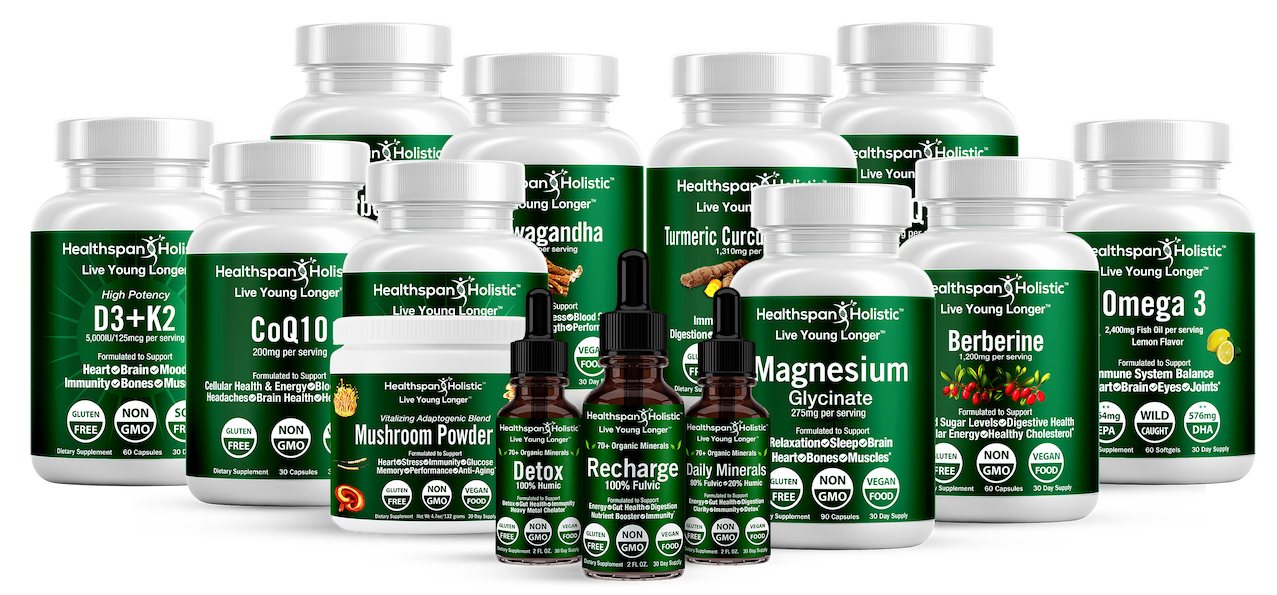
Your holistic health checklist shows you where to focus. The right supplements help you close the gaps that food and lifestyle alone can’t fully address. At Healthspanholistic, we’ve curated professional-grade formulas aligned with each checklist pillar. For bone health and immune function, our Vitamin D3 + K2 supplement is one of the most requested by adults in this age group. For those looking to lower body burden, our Liver Sauce botanical blend supports detoxification pathways naturally. You can explore the full collection at Healthspanholistic’s supplement store.
1st Time Customers can take advantage of our BOGO 50% OFF special offer: Buy 1, Get 1 50% Off on all supplements.
FAQ
What does a holistic health checklist include?
A holistic health checklist covers physical, mental, emotional, social, spiritual, and environmental health domains. Each area includes specific, measurable criteria to help you identify gaps and set priorities.
How often should I review my holistic wellness checklist?
A monthly review works well for most people, with quick daily or weekly self-check-ins on specific habits like sleep, movement, and mood. Daily check-ins help you catch imbalances before they become chronic issues.
Why is holistic health especially important after 45?
After 45, health systems become more interconnected and harder to manage in isolation. Hormonal shifts, muscle loss, sleep changes, and increased inflammation make a whole body health guide more necessary than at any earlier life stage.
Can supplements replace lifestyle habits in a holistic wellness plan?
No. Supplements fill specific nutrient gaps and support biological processes, but they work best alongside consistent nutrition, movement, sleep, and stress management practices. Think of them as reinforcement, not replacement.
How long does it take to see results from a holistic health routine?
Measurable biological changes such as improved cortisol patterns and better sleep typically emerge after 8 to 12 weeks of consistent practice. Visible improvements in energy and mood often appear sooner, within 3 to 4 weeks.
Leave a comment: