

TL;DR:
Functional lab tests identify subtle imbalances and early health issues that standard labs often overlook in adults over 45.
They use narrower “optimal” ranges and analyze patterns across systems, enabling personalized, proactive care to support healthy aging.
Your doctor runs your annual bloodwork, glances at the results, and tells you everything looks “normal.” Yet you’re still tired by 2 p.m., struggling to recover from exercise, and feeling like your body is slowly losing its edge. This disconnect is one of the most common frustrations we hear from adults over 45, and it’s precisely where functional lab tests fill a critical gap. These specialized assessments go beyond population-based averages to identify subtle imbalances, root causes of persistent symptoms, and early warning signs that conventional medicine routinely misses.
Key Takeaways
| Point | Details |
|---|---|
| Early detection | Functional lab tests identify subtle health imbalances before symptoms become diseases. |
| Personalized insights | Testing interprets your unique patterns for tailored nutrition, supplement, and lifestyle plans. |
| Beyond ‘normal’ results | You can be ‘normal’ on standard labs but still feel unwell—functional tests aim for optimal wellness. |
| Evidence-based caution | Focus on tests with the best evidence, consult trustworthy practitioners, and use results for actionable change. |
What are functional lab tests and how do they differ from standard labs?
Now that we’ve established why functional lab tests matter, let’s look closer at what makes them different from standard medical labs.
Standard medical labs were designed with one primary purpose: to detect disease. If your numbers fall inside the broad population range, you get a green light. But here’s the problem with that model. Those “normal” ranges are calculated from large, mixed populations that include people who are already metabolically compromised. You could have a thyroid hormone level sitting at the very bottom of the normal range and be told you’re fine, while still experiencing fatigue, brain fog, and weight gain every single day.
Functional lab tests operate on a different philosophy entirely. As functional medicine specialists explain, these tests identify early imbalances, root causes of symptoms, and suboptimal health markers before they reach disease levels, using narrower “optimal” reference ranges rather than broad population averages. Think of it this way: conventional labs ask, “Are you sick?” Functional labs ask, “Are you thriving?”
Normal vs. optimal: a critical distinction
The table below illustrates how the same marker can be interpreted very differently depending on which lens you use:
| Marker | Conventional “normal” range | Functional “optimal” range | Why it matters |
|---|---|---|---|
| TSH (thyroid) | 0.4 to 4.5 mIU/L | 1.0 to 2.5 mIU/L | High-normal TSH may signal sluggish thyroid function |
| Vitamin D | 20 to 100 ng/mL | 50 to 80 ng/mL | Levels below 50 are linked to immune and mood issues |
| Fasting glucose | 70 to 99 mg/dL | 75 to 86 mg/dL | Upper-normal fasting glucose suggests early insulin resistance |
| Ferritin | 12 to 300 ng/mL | 50 to 100 ng/mL | Low-normal ferritin can cause exhaustion even without anemia |
This distinction means that essential minerals testing and micronutrient insufficiency testing often reveal the hidden nutritional gaps that explain why so many adults feel chronically depleted despite eating reasonably well.
Key things to keep in mind about this approach:
-
Functional tests use individualized baselines, not one-size-fits-all cutoffs
-
Early detection is the goal, catching imbalances months or even years before disease develops
-
Results are interpreted in context of your symptoms, health history, and lifestyle
-
“Normal” does not equal “optimal” when it comes to energy, cognitive function, and healthy aging
“Your lab results are a window into your biology, not just a pass-or-fail test. The real question isn’t whether you’re sick today, but whether your body is positioned to stay well tomorrow.”
Core methodologies and types of functional lab tests
Understanding the guiding principles of functional testing sets the stage for looking at the specific categories and methods these tests use.

Functional labs aren’t limited to blood draws. The choice of sample type depends on what system you’re investigating and what level of detail you need. Core functional methodologies include comprehensive blood panels covering hormones, thyroid, metabolic markers, and nutrients; stool analysis for gut microbiome health; saliva and urine testing for cortisol and sex hormones; detailed micronutrient panels; inflammatory markers like high-sensitivity C-reactive protein (hs-CRP); and advanced options like the organic acids test (OAT), which evaluates mitochondrial function and metabolic byproducts.
The main categories at a glance
| Test type | Sample | What it reveals | Best for |
|---|---|---|---|
| Comprehensive blood panel | Blood | Hormones, thyroid, glucose, lipids, nutrients | Broad metabolic snapshot |
| Stool/microbiome analysis | Stool | Gut bacteria balance, digestion, inflammation | Gut health, autoimmunity |
| Saliva/urine hormone test | Saliva or urine | Cortisol rhythm, estrogen, testosterone | Stress, menopause, andropause |
| Micronutrient panel | Blood | Intracellular vitamin and mineral levels | Fatigue, immunity, cognition |
| Organic acids test (OAT) | Urine | Mitochondrial function, detox pathways | Energy, mood, detoxification |
| Inflammatory marker panel | Blood | hs-CRP, homocysteine, cytokines | Cardiovascular and aging risk |
Here’s a simple way to think about which tests to prioritize. Work through this numbered process with a qualified practitioner:
-
Identify your top symptoms. Fatigue, brain fog, poor sleep, and weight changes each point toward different systems.
-
Choose tests that match those systems. Hormone imbalances need a comprehensive hormone panel, while sluggish energy often calls for a metabolic panel.
-
Run baseline tests first. Establishing your starting point makes it possible to track progress and measure real change over time.
-
Retest strategically. Most functional markers are retested every three to six months after an intervention to confirm improvement.
-
Look for patterns across tests. A single abnormal result tells one story. Multiple interconnected results tell the full picture.
Pro Tip: If you’re new to functional testing, start with a comprehensive blood panel and a micronutrient test. These two alone often reveal the most common contributors to low energy and poor recovery in adults over 45: suboptimal thyroid function, low vitamin D, insufficient magnesium, and early insulin resistance.
Interpreting patterns: how functional tests inform holistic care
With a variety of test types available, the real strength of functional labs is how the results are interpreted in context to create holistic, tailored care strategies.
A single out-of-range marker rarely tells the whole story. What makes functional testing genuinely powerful is the ability to read patterns across body systems simultaneously. For example, elevated hs-CRP combined with low cortisol in the morning and poor gut microbiome diversity paints a picture of chronic stress driving inflammation and disrupting digestion. Each finding reinforces the others, pointing toward a root cause rather than an isolated problem.
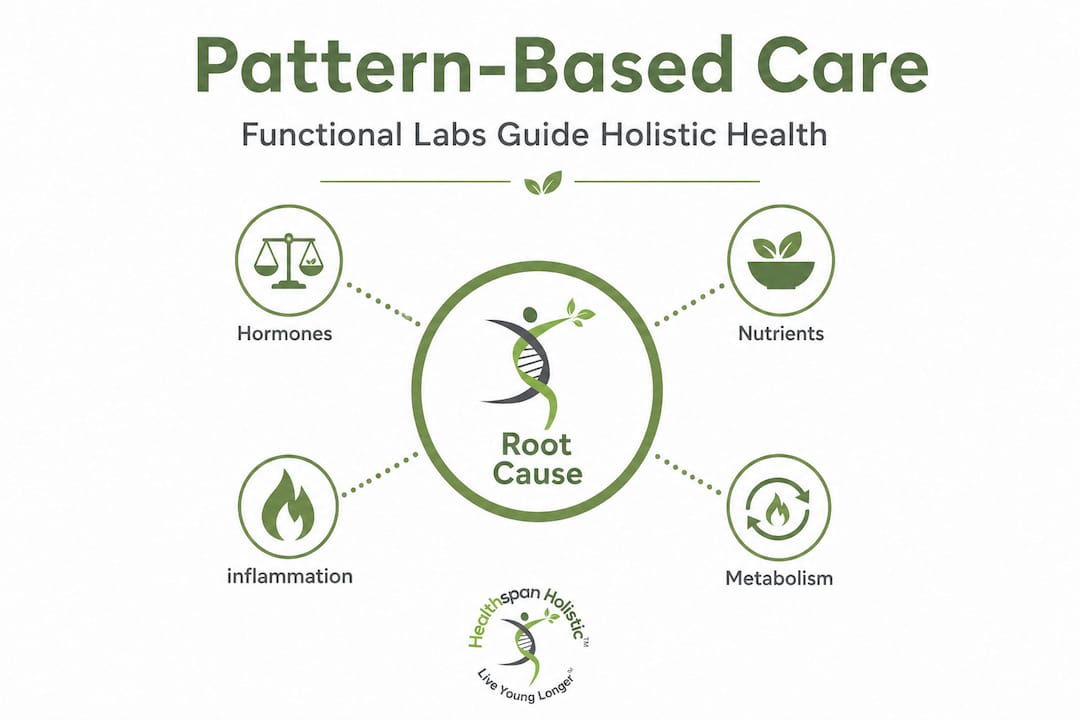
As functional practitioners describe it, results are analyzed across metabolic, hormonal, immune, and gut systems rather than in isolation, with the goal of building truly personalized interventions that include diet changes, targeted supplementation, and coaching support.
Here’s what a holistic interpretation process typically looks like in practice:
-
Fatigue cluster: Low ferritin plus suboptimal thyroid conversion plus low vitamin B12 suggests an energy production deficit affecting mitochondria and oxygen-carrying capacity.
-
Inflammation cluster: Elevated homocysteine plus high hs-CRP plus poor omega-3 to omega-6 ratio points toward cardiovascular and cellular aging risk.
-
Hormone cluster: Low DHEA-S plus declining testosterone or progesterone plus high evening cortisol suggests HPA axis dysregulation, meaning the stress-hormone system is out of rhythm.
-
Gut cluster: Low diversity in the microbiome plus signs of poor fat digestion plus elevated inflammatory cytokines connects gut dysfunction to systemic immune activation.
When you see these constellations of findings together, the care plan becomes obvious: address the root system that’s driving multiple downstream effects. This is fundamentally different from treating each symptom separately, which is the standard medical model most adults over 45 have been navigating for decades.
Personalized supplementation and coaching become far more targeted and effective when driven by this kind of pattern-based interpretation. Instead of guessing which supplements might help, you’re working from actual data.
Pro Tip: Bring your functional lab results to your primary care physician as well as your health coach. The two perspectives together, one focused on ruling out disease and one focused on optimizing function, give you the most complete picture of your health.
Evidence, skepticism, and expert guidelines for using functional tests
While the holistic potential of functional labs is enticing, it’s important to review what the evidence actually supports and what expert guidelines recommend.
Let’s be honest about where the science stands. Most of the evidence supporting functional lab testing comes from observational studies and case reports rather than large randomized controlled trials. That doesn’t mean the tests lack value, but it does mean you should approach them with discernment and work with evidence-based practitioners.
Here’s what the research does support clearly:
-
Micronutrient testing and targeted repletion have solid mechanistic and observational backing, particularly for vitamins D, B12, and magnesium in aging adults
-
Thyroid function optimization within optimal rather than normal ranges is associated with better energy, cognition, and metabolic health
-
Gut microbiome testing informs dietary and probiotic strategies that have shown real symptom improvement in observational cohorts
-
Inflammatory marker monitoring using hs-CRP and homocysteine has meaningful research support for cardiovascular and longevity applications
The published data on functional interventions is encouraging: personalized supplementation guided by lab results reduced CRP by 33 to 46% and homocysteine by 29 to 37%, while gut testing-informed protocols improved symptoms in 58 to 82% of participants. These are meaningful numbers, even if they come from observational work rather than randomized trials.
“Evidence-based functional testing is not about chasing every obscure marker. It’s about using well-validated tools to catch the patterns that standard care routinely overlooks until they become harder to reverse.”
Where does skepticism serve you? Be cautious of tests that lack peer-reviewed validation, practitioners who recommend panels of 50+ tests without clear clinical rationale, or anyone who uses lab results to sell you a stack of 20 supplements without explaining the reasoning. The goal is clarity and targeted action, not complexity for its own sake.
Functional testing for longevity is most valuable when it’s built around markers with clear research support and interpreted by someone who can translate the data into realistic, evidence-guided steps.
Our perspective: the real-world value (and limits) of functional lab testing
Having examined the promises and evidence, here’s our candid perspective as experienced health practitioners on when and why functional lab testing works best for holistic wellness.
We’ve seen hundreds of adults in their 50s and 60s come to us after years of being told their labs are fine, only to discover that a cluster of “low-normal” findings was quietly draining their energy, sharpening their anxiety, and accelerating their aging. Thyroid conversion issues, chronically low ferritin, borderline vitamin D, and elevated homocysteine are invisible in standard lab reports but unmistakable in functional panels. For these individuals, getting the right test wasn’t just informative. It was genuinely life-changing.
That said, we want to be direct about the limits. Not every functional test on the market is equally useful. Some panels sold by wellness companies include markers with limited clinical relevance, and a positive result can send people chasing solutions to problems that may not actually exist. Our recommendation is always to start with the markers most relevant to your symptoms and health goals, prioritize tests with solid research backing, and view the results as a starting point for conversation with both your health coach and your physician.
The most important mindset shift we encourage is this: functional lab testing is a launchpad, not a destination. The data matters only when it leads to action. When someone discovers through exploring a hormone panel that their progesterone is barely detectable or their testosterone has declined significantly, the value isn’t in the number itself. It’s in the personalized protocol that follows. That protocol might include dietary changes, targeted supplements, sleep optimization, and stress management strategies that collectively restore what time and modern life have depleted.
Functional testing used wisely gives you a roadmap to aging on your own terms, with more energy, sharper cognition, and a body that supports the life you want to live.
Take the next step: personalize your wellness journey
If you’ve been settling for “normal” when you could be pursuing “optimal,” now is the time to act on that instinct. You don’t have to navigate this alone.

At Healthspan Holistic, we make it straightforward to move from curiosity to clarity. Start with one of our professionally designed panels, such as the comprehensive hormone panel to evaluate energy, mood, and metabolic health, or the metabolic panel test to understand how your body is processing fuel at the cellular level. Every test comes with guidance on how to interpret your results in the context of your specific health goals. When you’re ready for personalized next steps, Contact Us and let us help you build a plan that fits your body, your symptoms, and your vision for how you want to feel at every age.
Frequently asked questions
What makes functional lab tests different from regular labs?
Functional tests use narrower “optimal” ranges to identify subtle health issues early, rather than waiting until you fall outside broad population averages that were never designed to define true wellness.
What can functional lab tests detect for aging adults?
They uncover nutrient deficiencies, hormone shifts, inflammation, and early metabolic changes that standard labs routinely miss, and age-related declines in thyroid conversion, nutrient absorption, and stress hormone rhythms are particularly relevant for adults between 45 and 75.
Is there strong research supporting functional lab testing?
Evidence is promising for targeted markers, but most data comes from observational studies rather than large clinical trials. Focus on tests with solid mechanistic support and work with reputable, evidence-based providers.
How do I know which functional lab tests are right for me?
Start by matching tests to your most pressing symptoms and health goals, since pattern-based analysis across hormonal, metabolic, gut, and immune systems will yield far more actionable results than testing randomly.
Recommended
-
Why test your blood? Unlock wellness and longevity at any age | Healthspan Holistic
-
Best evidence-based supplements for longevity after 40 | Healthspan Holistic
-
Testosterone for women: Energy, wellness, and longevity | Healthspan Holistic
-
How mitochondrial health shapes your energy and longevity | Healthspan Holistic
Leave a comment: