

Most people assume blood tests are something you do when you feel sick. That assumption could be costing you years of healthy living. For adults over 45, routine blood testing is one of the most powerful tools available for catching silent health risks before they become real problems. Blood testing detects early risks for heart disease, diabetes, anemia, nutrient deficiencies, and inflammation, making it a cornerstone of preventive health management. This guide walks you through what blood tests reveal, how to personalize your approach, which markers matter most, and practical steps to get started on your longevity journey.
Key Takeaways
| Point | Details |
|---|---|
| Blood tests reveal risks | Routine blood tests can spot hidden health issues before symptoms appear. |
| Personal trends matter most | Tracking your own biomarker trends is more valuable than comparing to general ‘normals’. |
| Choose evidence-based markers | Focus regular testing on proven indicators such as lipids, inflammation, and blood sugar. |
| Home testing empowers action | Modern methods allow for convenient, accurate at-home tracking to support holistic wellness. |
What blood tests reveal about your health
Think of your blood as a live report card for everything happening inside your body. It carries oxygen, nutrients, hormones, immune cells, and waste products, all at once. When something shifts, your blood reflects it, often long before you feel any symptoms.
The most valuable thing blood testing offers is early visibility. You can spot rising cholesterol, creeping blood sugar, low vitamin D, or chronic low-grade inflammation years before they cause damage. That window of time is where real prevention happens.
Here are some of the key benefits of routine blood testing:
-
Early detection of silent conditions like prediabetes, anemia, and cardiovascular risk
-
Personalized monitoring of how your body responds to diet, exercise, and supplements
-
Targeted interventions based on your actual numbers, not guesswork
-
Motivation and accountability when you can see your progress in data form
Some of the most important biomarkers to track are shown in the table below:
| Biomarker | Optimal range | Health implication |
|---|---|---|
| HbA1c | <5.2% | Blood sugar control and diabetes risk |
| LDL cholesterol | <70 mg/dL | Cardiovascular disease risk |
| hsCRP | <1.0 mg/L | Systemic inflammation level |
| Vitamin D | >50 ng/mL | Immune function and bone health |
| Lp(a) | <30 mg/dL | Inherited cardiovascular risk |
| Ferritin | 30-150 ng/mL | Iron storage and energy levels |
A landmark Harvard blood test research study linked LDL cholesterol, hsCRP, and Lp(a) to 30-year cardiovascular disease risk, reinforcing why tracking these markers over time is so valuable. These are not just numbers on a page. They are signals your body is sending you.
“The goal of blood testing is not to find disease. It’s to stay far enough ahead of it that disease never gets a foothold.” — Healthspan Holistic
When you pair your results with the right nutrient markers and supplements, you can start filling the gaps your blood work reveals and actually move the needle on your health.
The power of personalized blood testing
Standard reference ranges are built from population averages. They tell you where most people fall, but they don’t tell you where you should be. That distinction matters more than most people realize.

Your body has its own stable patterns. Researchers call these “set points,” and they are the personal baseline your blood tends to return to when you’re healthy. A reading that looks borderline on a population chart might be completely normal for you, or it might be an early warning sign. You can only know the difference if you track your own trends over time.
Personalized blood testing uses individual baselines like CBC set points over time, rather than broad population norms, for better early detection. In fact, CBC personal set points were found to be stable over 20 years in a study of 12,000 people, and deviations from those personal norms predicted higher disease and death risk within 10 years.
Here’s how population ranges compare to personalized set points:
| Approach | Based on | Best for |
|---|---|---|
| Population reference range | Average of thousands of people | Identifying obvious disease |
| Personalized set point | Your own repeated results over time | Catching subtle early shifts |
The personalized approach is simply smarter for longevity. It’s also worth noting that healthy people can show abnormal ranges due to natural variation, which is another reason personal trends matter more than any single result.
Here’s how to start building your personal baseline:
-
Get a full panel done now, even if you feel great
-
Record and store every result with the date
-
Repeat the same panel annually, or every six months if you have risk factors
-
Note any lifestyle changes between tests (new supplement, diet shift, exercise program)
-
Look for directional trends, not just whether you’re “in range”
Pro Tip: Keep a simple spreadsheet or folder with every blood test result. Year-over-year comparisons are far more informative than any single snapshot. Supporting lifestyle monitoring tools can help you track what’s shifting between tests, and tracking long-term immune trends like vitamin D levels over time gives you real leverage on how your immune system ages.
How often to test and which markers matter
Knowing your personal trends leads naturally to the next question: what should you test, and how often?
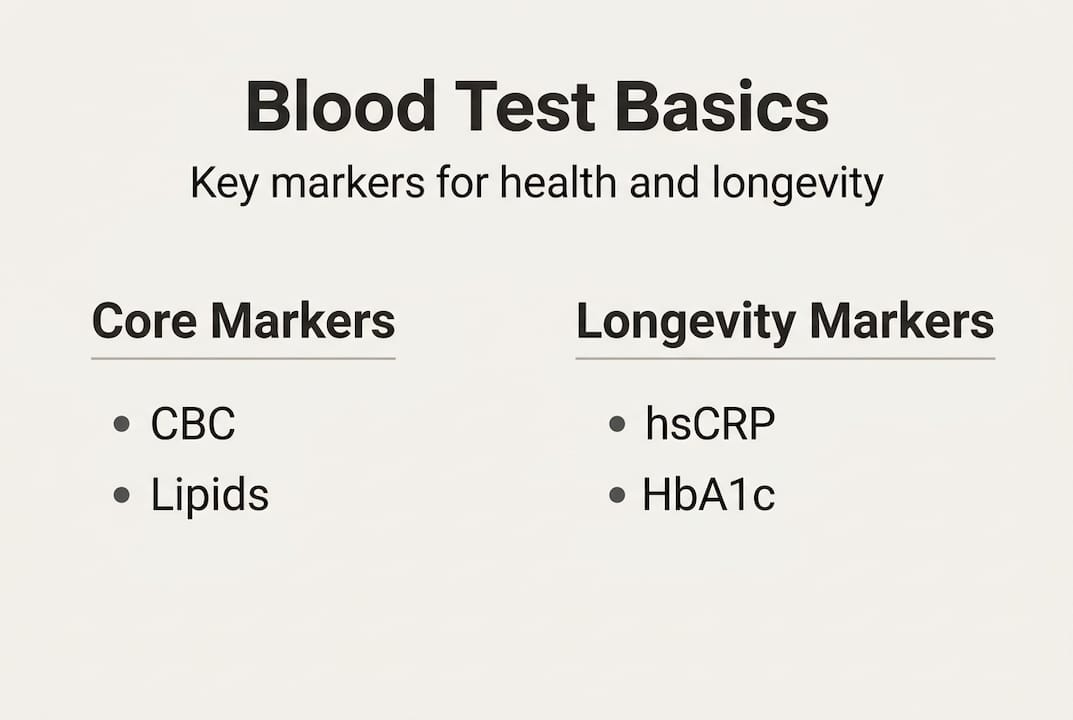
For most healthy adults between 45 and 75, annual blood tests covering CBC, lipids, metabolic markers, and inflammation give you the baseline data you need for holistic health management. If you have existing risk factors, are starting new interventions, or are working with a health coach, testing every three to six months gives you much faster feedback.
Here are the core markers worth prioritizing:
-
Complete blood count (CBC): Tracks red and white blood cells, hemoglobin, and platelets
-
Lipid panel: LDL, HDL, triglycerides, and total cholesterol
-
Fasting glucose and HbA1c: Blood sugar control and diabetes risk
-
hsCRP: High-sensitivity C-reactive protein, a marker of systemic inflammation
-
Lp(a): A genetic cardiovascular risk factor most people never check
-
Ferritin: Iron storage, linked to energy, immunity, and cellular health
-
Vitamin D: Add this if you have specific risk factors or deficiency symptoms
It’s worth noting that routine vitamin D testing is not recommended by the Endocrine Society unless you have specific clinical reasons. The stronger focus for longevity should be on evidence-backed markers like Lp(a) and hsCRP for cardiovascular risk. If you do test vitamin D and find it low, targeted Vitamin D and K2 support can help restore optimal levels efficiently.
Pro Tip: Ask your provider which tests align with your personal risk profile. A 55-year-old with a family history of heart disease has different priorities than someone focused primarily on metabolic health. Stay current with latest research and updates to make sure your panel reflects the best available evidence.
Methods: How blood testing works today
Once you know which tests to get, understanding how they work helps you make confident, informed choices, whether you’re heading to a clinic or testing from home.
The two main methods are venipuncture and capillary fingerstick testing.
Venipuncture is the standard method most people know. A needle is inserted into a vein in your arm, and blood is drawn into a collection tube. According to standard blood draw methods, a 21-gauge needle is typically used with a tourniquet applied for less than 30 seconds to avoid sample artifacts. It’s the gold standard for accuracy and is required for some specialized tests.
Capillary fingerstick testing involves a small lancet prick on your fingertip to collect a few drops of blood. Capillary blood self-testing is emerging as a reliable home monitoring option, with comparability to venous samples for most chemistry analytes, making it ideal for longevity tracking without clinic visits.
When each method makes sense:
-
Venipuncture: Best for comprehensive panels, specialized hormone tests, or when precision is critical
-
Fingerstick: Great for routine monitoring, tracking trends at home, or when clinic access is limited
-
Both: Useful in combination for validating home results against clinical benchmarks
Statistic to know: Up to 5% of completely healthy people will show at least one result outside the “normal” range on any given test. In a 20-test panel, that number rises to 64%. This is why repeat testing and personal trends matter far more than reacting to a single result.
For people focused on holistic health, the ability to test at home removes one more barrier to consistent monitoring. Pairing your testing routine with targeted detox and nutrition interventions helps you act on what your results reveal, not just observe them.
Our perspective: Why most people miss the big picture with blood testing
Here’s the honest truth: most people treat blood testing as a one-time check-in rather than an ongoing conversation with their body. They get tested when something feels wrong, see a result labeled “normal,” and move on. That approach misses almost everything that makes blood testing genuinely powerful.
The real value is in the trend, not the snapshot. A single result tells you where you are today. A series of results tells you where you’re heading, and that’s where you can actually intervene before something becomes a problem.
We’ve seen this repeatedly: people who start tracking their personal baselines begin to notice micro-changes that would have been invisible otherwise. A gradual rise in fasting glucose over three years. A slow decline in ferritin that explains persistent fatigue. These patterns don’t show up as “abnormal” on any single test, but they are absolutely meaningful.
The other piece most people miss is context. Blood results don’t exist in a vacuum. They reflect your diet, sleep, stress, activity, and supplement use. When you pair regular testing with holistic lifestyle upgrades, your numbers become a feedback loop, not just a report card. Explore advanced blood test insights to stay ahead of the curve and make your results work harder for your long-term wellness.
Next steps: Support your health journey
You now have a clear picture of how personalized blood testing can reshape your approach to health and longevity. But knowledge alone doesn’t move the needle. The next step is putting your results to work.

Once you know where your gaps are, targeted nutritional support can help you close them. Our comprehensive multivitamin support is designed to address the most common nutrient shortfalls revealed by blood testing, from B vitamins to zinc to key antioxidants. If your vitamin D levels need attention, our Vitamin D3 and K2 formula delivers both nutrients together for optimal absorption and bone support. At Healthspan Holistic, we bring blood work, coaching, supplements, and advanced therapies together so you can act on your results, not just collect them.
Frequently asked questions
How often should healthy adults test their blood?
Most healthy adults benefit from annual blood tests covering CBC, lipids, and metabolic markers, but more frequent testing is advisable if you have risk factors or are starting new interventions.
What are the most important blood markers to check for longevity?
Essential markers include CBC, lipid panel, HbA1c, hsCRP, Lp(a), and ferritin. A Harvard study links LDL, hsCRP, and Lp(a) to 30-year cardiovascular disease risk, making these especially important for longevity-focused adults.
Is at-home blood testing accurate?
Capillary fingerstick tests are highly accurate for most analytes and are ideal for home monitoring, especially when repeated consistently to track personal trends over time.
Why do my blood test results show ‘abnormal’ values if I feel healthy?
Up to 5% of healthy people fall outside normal ranges by statistical definition, and 64% show at least one abnormal result in a 20-test panel. Repeated testing and personal trends provide far better insight than any single result.
Does everyone need routine vitamin D testing?
Routine vitamin D testing is not recommended by the Endocrine Society unless you have specific clinical conditions. For longevity, prioritizing evidence-based markers like LDL, hsCRP, and Lp(a) delivers more actionable value.
Leave a comment: