

TL;DR:
- Fiber supports heart health, blood sugar control, and longevity beyond just relieving constipation.
- Most adults aged 45-75 consume significantly less fiber than recommended, increasing health risks.
- Gradually increasing fiber intake with proper hydration and food sources optimizes benefits and minimizes GI issues.
Most adults think of fiber as little more than a remedy for constipation. That belief is costing them years of good health. The truth is that 94% of adults fall short of their daily fiber targets, and the consequences reach far beyond the digestive system. Fiber plays a direct role in heart health, blood sugar control, longevity, and even how well your gut communicates with your immune system. This guide cuts through the confusion and delivers practical, evidence-based fiber strategies designed specifically for adults aged 45 to 75 who want to live with more energy, less disease risk, and a longer healthspan.
Key Takeaways
| Point | Details |
|---|---|
| Fiber boosts heart health | Soluble fiber lowers cholesterol and supports cardiovascular function. |
| Most adults are fiber-deficient | Over 90 percent of adults aged 45-75 fall short of daily fiber recommendations. |
| Balance types of fiber | Soluble and insoluble fibers each provide unique health benefits and should be included daily. |
| Increase fiber gradually | Sudden jumps in intake can cause discomfort; always hydrate and build up slowly. |
| Higher fiber promotes longevity | Intakes above 21 grams daily reduce risk of premature death and cardiovascular disease. |
Why fiber matters: Health benefits beyond digestion
Fiber often gets reduced to a single talking point: it keeps you regular. That framing undersells one of the most powerful and accessible nutrition tools available to you. When we look at the full body of research, fiber’s impact on long-term health is nothing short of remarkable.
Cardiovascular protection is one of fiber’s most well-documented benefits. Soluble fiber lowers LDL cholesterol, stabilizes blood sugar, aids diabetes management, and supports heart health by reducing blood pressure and inflammation. Soluble fiber works by forming a gel-like substance in your digestive tract that binds to cholesterol particles and removes them before they can enter your bloodstream. Think of it as a natural sponge, quietly absorbing harmful compounds before they cause damage.
Metabolic support is another area where fiber truly earns its reputation. Blood sugar spikes after meals are a major driver of insulin resistance, a condition that becomes increasingly common after age 45. Fiber slows the absorption of glucose into the bloodstream, flattening those post-meal spikes and reducing the strain on your pancreas. For anyone managing pre-diabetes or type 2 diabetes, this mechanism is clinically meaningful. Understanding how fiber stabilizes blood sugar can change how you approach every meal.
Longevity and mortality risk are where the data gets truly compelling. In individuals with metabolic syndrome (a cluster of conditions including high blood pressure, excess abdominal fat, and elevated blood sugar), fiber above 21.7g per day reduces all-cause mortality by up to 20% and cardiovascular disease risk by 39%. That is not a marginal benefit. That is a meaningful extension of healthy, functional years.
Here is a quick summary of fiber’s core benefits:
- Lowers LDL (bad) cholesterol through soluble fiber binding
- Reduces blood pressure and systemic inflammation
- Stabilizes post-meal blood sugar and supports insulin sensitivity
- Feeds beneficial gut bacteria, supporting immune function
- Reduces risk of colorectal cancer and diverticular disease
- Linked to lower all-cause mortality in adults with metabolic conditions
“Fiber is not just a digestive aid. It is one of the most powerful, food-based tools we have for reducing chronic disease risk and extending healthspan well into our 60s and 70s.”
The connection between nutrition and heart health reinforces why a fiber-rich diet should be seen as a foundational strategy, not an afterthought. Knowing all of this, the next question becomes obvious: how much fiber do you actually need?
How much fiber do you need? Practical targets for ages 45-75
Knowing daily targets is important, but not all fiber works the same way. First, let’s get the numbers right.

Current recommendations for adults aged 45 to 75 are as follows: women should aim for 22 to 25 grams per day, and men should target 28 to 31 grams per day. The average American adult, however, consumes only around 17 grams per day, leaving a significant gap. Roughly 94% of adults are below these targets.
| Group | Recommended daily fiber | Average actual intake | Shortfall |
|---|---|---|---|
| Women 45-75 | 22-25g | ~17g | 5-8g |
| Men 45-75 | 28-31g | ~17g | 11-14g |
That 11 to 14 gram shortfall for men, and the 5 to 8 gram gap for women, may seem small in isolation. But over months and years, chronically low fiber intake compounds into elevated cholesterol, poorer blood sugar control, reduced gut microbiome diversity, and greater cardiovascular risk. Consistently falling short of your daily fiber recommendations is one of the more underappreciated drivers of age-related metabolic decline.
Why is intake so low? Several factors contribute. Ultra-processed foods dominate the modern diet, and most of them contain virtually no fiber. Refined grains such as white bread and white rice have had their fiber stripped out during processing. And many people simply do not eat enough vegetables, legumes, or whole grains throughout the day.
The health risks of persistently low fiber are real and well-documented. They include increased LDL cholesterol, poorer glycemic control, greater risk of colorectal cancer, higher rates of diverticulitis, and a less diverse gut microbiome. These are not minor inconveniences; they are serious health outcomes that fiber can help prevent.
Pro Tip: If your current fiber intake is well below your target, do not try to close the gap all at once. Adding too much fiber too quickly leads to gas, bloating, and cramping. Instead, increase your intake by 3 to 5 grams per week, allowing your gut bacteria to adjust. This gradual approach makes the transition comfortable and sustainable.
Soluble vs. insoluble fiber: Key differences and dietary sources
Not all fiber behaves the same way inside your body. Understanding the difference between soluble and insoluble fiber helps you make smarter food choices and get the most from every gram.
Soluble fiber dissolves in water and forms a thick, gel-like substance in the digestive tract. This gel slows digestion, which is why soluble fiber lowers LDL cholesterol, stabilizes blood sugar, and supports heart health. It also acts as a prebiotic, feeding beneficial bacteria in the colon. Insoluble fiber, by contrast, does not dissolve in water. It adds bulk to stool and promotes bowel regularity, and it must resist fermentation to function properly.
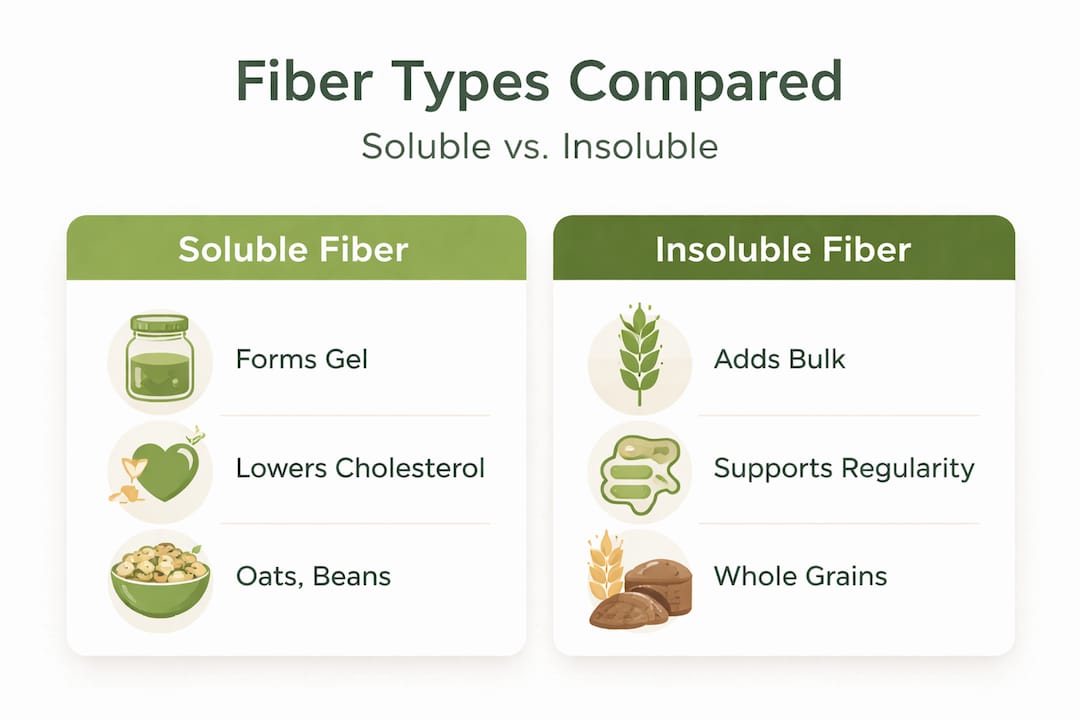
| Fiber type | How it works | Top food sources | Key health benefit |
|---|---|---|---|
| Soluble | Forms gel, slows digestion | Oats, legumes, psyllium, apples, flaxseed | Lowers LDL, stabilizes blood sugar |
| Insoluble | Adds stool bulk | Wheat bran, whole grains, leafy greens, celery | Promotes regularity, prevents constipation |
Both types are essential for optimal health. An exclusively soluble fiber diet may not give you adequate bowel support, while relying only on insoluble fiber misses out on cholesterol and blood sugar benefits. The key is balance.
Here are some of the best food sources to cover both types:
- Oats and oat bran: Rich in beta-glucan, a soluble fiber with strong cholesterol-lowering evidence
- Legumes (beans, lentils, chickpeas): Among the highest fiber foods per serving, offering both soluble and insoluble types
- Psyllium husk: A concentrated source of soluble fiber and a useful supplement if food sources are insufficient. Psyllium prebiotics also support a healthy gut microbiome alongside their cholesterol benefits
- Vegetables (broccoli, carrots, Brussels sprouts): Provide insoluble fiber along with essential micronutrients
- Fruits (apples, pears, berries): Excellent sources of pectin, a soluble fiber that supports cholesterol and blood sugar management
- Wheat bran and whole grain cereals: Some of the richest sources of insoluble fiber for digestive regularity
One important nuance: fermentable fibers, particularly soluble ones, are digested rapidly by gut bacteria and can produce significant gas. If you are sensitive, start with lower-fermentability options like psyllium before moving to higher-fermentability sources like beans or chicory root. Stay well hydrated, because dehydration reduces the effectiveness of fiber and can actually worsen constipation, particularly with insoluble fiber.
Smart fiber strategies: Increase intake safely and avoid GI pitfalls
Understanding fiber types sets the stage for applying real strategies. But how you increase fiber matters just as much as how much you eat. Getting this wrong is where most people run into trouble.
Here is a practical, step-by-step approach to boosting your fiber intake without the GI distress:
- Start low and go slow. Begin with a modest daily increase of 3 to 5 grams per week. Your gut microbiome needs time to adapt to a fiber-richer environment, and rushing the process leads to bloating and cramping.
- Hydrate consistently. Fiber absorbs water, and without adequate fluid intake, it can actually cause or worsen constipation rather than relieving it. Aim for at least 8 cups of water per day as you increase intake. Explore hydration with fiber to understand why electrolyte balance matters here too.
- Prioritize whole foods first. Vegetables, legumes, fruits, and whole grains should be your primary fiber sources. They come packaged with vitamins, minerals, and phytonutrients that supplements cannot fully replicate.
- Use supplements strategically. When food alone is not enough, psyllium whole husk fiber is one of the most evidence-backed fiber supplements available. It is gentle, effective, and well-tolerated by most adults.
- Spread fiber across all meals. Rather than trying to hit your target at one meal, distribute fiber intake throughout the day. This keeps blood sugar more stable and reduces the fermentation load on your gut at any single time.
- Know when to moderate. A “more is better” mindset does not apply here. Rapid increases can cause gas and bloating, and consuming more than 50 to 60 grams per day risks diarrhea, nutrient malabsorption, and GI distress, especially in people with IBS or Crohn’s disease.
Pro Tip: If you have irritable bowel syndrome (IBS), inflammatory bowel disease, or Crohn’s disease, speak with your doctor or health coach before significantly changing your fiber intake. Some high-fiber foods, particularly those high in FODMAPs (fermentable carbohydrates), can worsen symptoms. Targeted gut health solutions can help you navigate these sensitivities more precisely.
The goal is a consistent, moderate, well-hydrated approach. Fiber is a long game, and the benefits accumulate over months and years of steady intake.
Why most fiber advice fails adults over 45
Here is what we rarely hear discussed openly: most mainstream fiber guidance was not written with you in mind. Standard public health recommendations are often based on population averages that include young adults with different gut motility, microbiome compositions, and health profiles. Adults over 45 face a genuinely different set of physiological realities.
Gut motility (the speed at which food moves through the digestive tract) slows with age. This means that the same amount of insoluble fiber that works perfectly for a 30-year-old may cause cramping or constipation in someone at 60, particularly if they are not drinking enough water. Soluble fiber becomes proportionally more valuable as we age precisely because it does not rely on transit speed to deliver its benefits.
We also see that many older adults are on medications, including statins, blood pressure drugs, and metformin, that interact with how the body processes nutrients. Fiber can affect the absorption of certain medications if taken simultaneously. This is not a reason to avoid fiber; it is a reason to be thoughtful about timing and to work with a knowledgeable health professional.
Then there is the trend we might call “fibermaxxing,” the aggressive pursuit of extremely high fiber intake driven by social media enthusiasm. We understand the appeal. The evidence for fiber is strong, and it feels empowering to take control of your health through food. But pushing beyond 50 to 60 grams per day creates real risks: reduced absorption of zinc, iron, calcium, and magnesium, minerals that adults over 45 already struggle to get enough of.
Our perspective is this: personalize your fiber strategy rather than chasing a universal number. Use organic psyllium fiber capsules as a convenient, controlled way to fill gaps without overloading your system. Pair your fiber increase with targeted hydration and micronutrient support. And track how your body responds over weeks, not days. That individualized, data-informed approach is what separates genuinely effective nutrition from generic advice.
How Healthspan Holistic helps optimize your fiber and overall nutrition
Fiber optimization is a powerful starting point, but it is just one piece of a larger nutritional picture. To truly extend your healthspan, you need to understand how fiber, hydration, blood sugar regulation, and gut health fit together in the context of your unique biology.
At Healthspan Holistic, we offer detailed lab testing, personalized health coaching, and a curated selection of professional-grade supplements designed for adults over 40 who are serious about their health. Our whole food organic fiber supplements complement a food-first fiber strategy, and our one-on-one coaching helps you interpret your results and build a nutrition plan that actually fits your life. Whether you want to improve heart health, stabilize blood sugar, or simply feel more energized every day, we are here to guide you with evidence-backed, personalized support.
Frequently asked questions
Can fiber help lower cholesterol in adults 45 and older?
Yes, soluble fiber lowers LDL cholesterol and reduces heart disease risk by improving blood pressure and reducing inflammation throughout the cardiovascular system.
How much fiber should I eat daily if I’m over 60?
Women should aim for 22 to 25 grams and men for 28 to 31 grams daily, though 94% of adults currently fall well below these recommended targets.
Is it safe to rapidly increase fiber intake?
Rapid increases can cause gas, bloating, or GI distress, so always build up gradually over several weeks and increase your water intake at the same time.
What’s the difference between soluble and insoluble fiber?
Soluble fiber dissolves in water and lowers cholesterol by binding to it in the gut, while insoluble fiber promotes regularity by adding bulk to stool and speeding intestinal transit.
Can fiber intake impact longevity?
Yes, higher fiber intake is directly linked to lower all-cause mortality, with fiber above 21.7g per day reducing cardiovascular disease risk by up to 39% in adults with metabolic syndrome.
Leave a comment: