

TL;DR:
Vitamin D supports bones, immunity, muscle function, and cellular aging, especially in older adults.
Supplementation guidelines suggest targeted dosing based on blood levels, with older adults over 75 often benefiting from empiric supplementation.
Effective and safe supplementation involves testing levels first, using D3 with fats, and avoiding megadosing without medical supervision.
Vitamin D is one of the most talked-about nutrients in wellness circles, yet most people have no idea whether they actually need it. Walk into any pharmacy and you will find shelves lined with vitamin D supplements in every dose imaginable, often marketed as essential for everyone. But the latest research tells a more nuanced story. For adults between 45 and 75, the question of whether to supplement is not a simple yes or no. It depends on your age, your lifestyle, your health history, and critically, your actual blood levels. This guide cuts through the noise and gives you a clear, evidence-based picture.
Key Takeaways
| Point | Details |
|---|---|
| Supplement if deficient or 75+ | Most adults 75 and older, or anyone with proven low vitamin D, benefit from daily supplementation. |
| Benefits are specific | Evidence supports fall, fracture, and some cancer mortality risk reduction mainly in deficient or high-risk individuals. |
| Dosing and safety matter | Stick with 1000-2000 IU daily, avoid excess, and combine vitamin D with K2 and calcium for optimal bone health. |
| Holistic strategies work best | Test your blood, optimize diet and sun, and use supplements thoughtfully—not automatically. |
Understanding vitamin D: function, sources, and deficiency risk
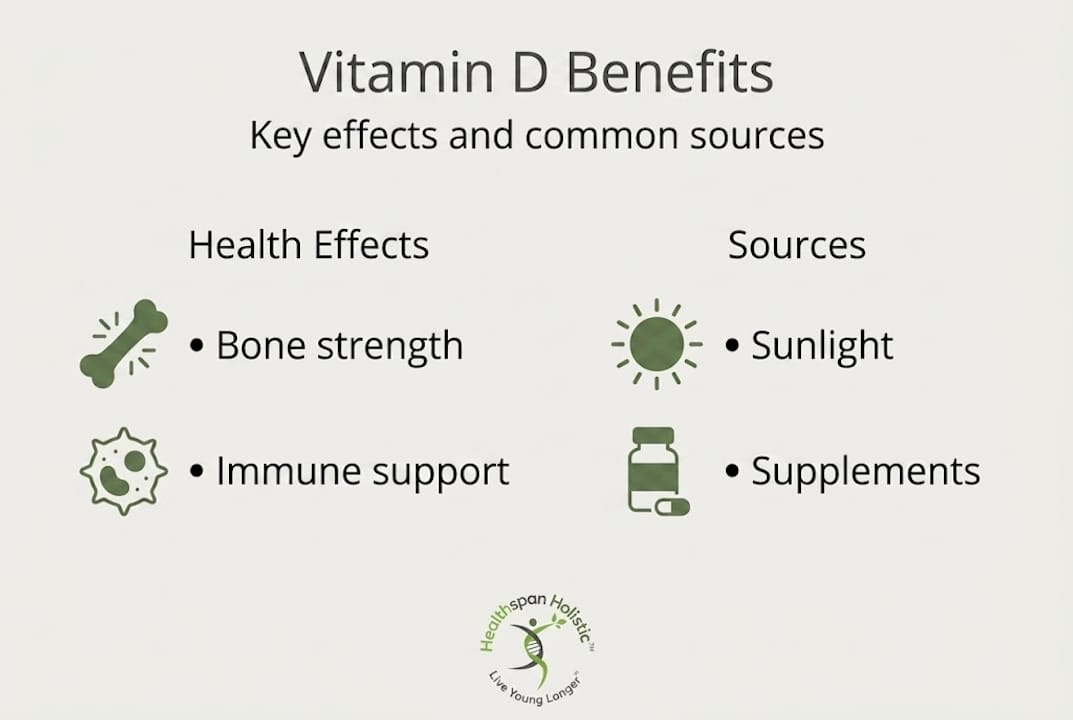
Vitamin D is not just a vitamin. It acts more like a hormone in your body, influencing dozens of biological processes that become increasingly important as you age. Your bones, immune cells, muscles, and even your DNA all depend on adequate vitamin D levels to function well.
What vitamin D actually does
Most people know vitamin D is linked to bone health, but its role goes much deeper. It helps your gut absorb calcium and phosphorus, the two minerals that keep bones dense and strong. Without enough vitamin D, your body pulls calcium from your bones to maintain blood levels, which gradually weakens your skeleton over time. This is why vitamin D deficiency is so closely tied to osteoporosis and fracture risk in older adults.
Beyond bones, vitamin D regulates your immune system, helping it respond appropriately to infections without overreacting. It also supports muscle fiber function, which matters enormously for balance and fall prevention as you get older. More recently, researchers have connected vitamin D to cell aging, specifically to how quickly your telomeres (the protective caps on your DNA strands) shorten over time.
How your body gets vitamin D
Your skin produces vitamin D when exposed to UVB sunlight. Spending 10 to 30 minutes in midday sun several times a week is enough for many younger adults, but this becomes less reliable as you age. Older skin is simply less efficient at synthesizing vitamin D from sunlight. Food sources like fatty fish, egg yolks, and fortified dairy products provide some vitamin D, but rarely enough to meet your needs on their own. Supplements fill the gap for many people, particularly in winter months or for those who spend limited time outdoors.

Why deficiency is so common after 45
The numbers are striking. Up to 61% of older U.S. adults are vitamin D deficient, and roughly 50% of adults globally fall short of optimal levels. Several factors converge to make deficiency especially common in midlife and beyond.
Key risk factors for vitamin D deficiency:
-
Age over 50: Skin synthesis declines significantly with age
-
Limited sun exposure: Working indoors, living in northern climates, or using high-SPF sunscreen consistently
-
Darker skin tone: Higher melanin reduces UVB absorption, requiring longer sun exposure to produce the same amount of vitamin D
-
Obesity: Vitamin D is fat-soluble and gets sequestered in body fat, reducing blood levels
-
Chronic illness: Conditions like Crohn’s disease, celiac disease, and kidney disease impair vitamin D absorption or conversion
-
Certain medications: Steroids, weight-loss drugs, and some cholesterol-lowering medications can reduce vitamin D levels
Understanding the importance of blood testing is the first step toward knowing where you actually stand, rather than guessing based on symptoms alone.
Should you supplement? Current guidelines for adults 45-75 and beyond
Now that you understand why vitamin D is important and who is at risk, let us address when supplementation truly makes sense. The answer has become clearer thanks to updated clinical guidelines published in 2024.
What the latest guidelines say
The Endocrine Society released a major clinical practice guideline in 2024 that changed how many clinicians think about vitamin D supplementation. The key finding: empiric supplementation is recommended for adults 75 and older, but not routinely for healthy adults under 75 without specific risk factors. This is a meaningful distinction. It means that if you are 55 and generally healthy, eating a varied diet and getting some sun, routine supplementation is not automatically necessary.
However, targeted supplementation is recommended for anyone with confirmed deficiency, limited sun exposure, darker skin tone, obesity, or a condition that impairs absorption. In other words, the decision should be personalized, not blanket.
A practical framework by age and risk
| Group | Recommendation | Notes |
|---|---|---|
| Adults 45-74, no risk factors | Not routinely recommended | Focus on diet and sun exposure |
| Adults 45-74, with risk factors | Targeted supplementation if deficient | Test first, then supplement |
| Adults 75 and older | Empiric supplementation recommended | 1000-2000 IU daily without testing |
| Any adult with confirmed deficiency | Supplement to restore levels | Dose guided by blood test results |
| Post-menopausal women | Consider supplementation | Higher fracture risk warrants attention |
Testing your vitamin D level before starting any supplement is the smartest move you can make. It removes the guesswork and helps you and your doctor determine the right dose.
Pro Tip: If you do supplement, choose vitamin D3 (cholecalciferol) over D2 (ergocalciferol). D3 raises blood levels more effectively and is the same form your skin produces. Take it with a fat-containing meal like avocado, olive oil, or nuts, since vitamin D is fat-soluble and absorbs significantly better with dietary fat. Our 2000 IU vitamin D3 supplements are a popular starting point for those at moderate risk.
Evidence-based benefits of vitamin D supplementation in adults 45+
Having explored when to supplement, let us look at what benefits to expect, and what is overhyped, when you do. The research landscape is rich but requires careful reading.
What the evidence actually supports
“Vitamin D supplementation in deficient older adults reduces falls, slows cellular aging, and provides some cancer mortality benefit, but does not appear to reduce cardiovascular disease or overall cancer incidence.” — Harvard Health, 2026
This summary from Harvard Health captures the current state of evidence well. Let us break it down category by category.
Falls and fractures: The strongest evidence for supplementation exists here. In older adults who are deficient, vitamin D improves muscle function and neuromuscular coordination, both of which are critical for preventing falls. Fracture risk drops meaningfully when deficiency is corrected, particularly in adults over 70 who are institutionalized or have limited mobility.
Cellular aging: This is one of the more exciting recent findings. 2000 IU of vitamin D daily slowed telomere shortening in people aged 50 and older, according to a 2025 study. Telomeres are the protective caps at the ends of your chromosomes, and shorter telomeres are associated with faster biological aging. Slowing their shortening is a meaningful marker of healthier aging at the cellular level.
Cancer mortality: The large VITAL trial found that while vitamin D supplementation did not reduce the overall incidence of cancer, it was associated with roughly a 25% lower risk of dying from cancer in those who developed it. That is a notable finding, especially for adults who already have elevated cancer risk.
What the evidence does NOT support
| Outcome | Evidence strength | Verdict |
|---|---|---|
| Reducing fall risk (deficient adults) | Strong | Supported |
| Slowing cellular aging (50+) | Moderate | Supported |
| Lowering cancer mortality | Moderate | Supported |
| Preventing cardiovascular disease | Weak | Not supported |
| Preventing cancer incidence | Weak | Not supported |
| Reducing diabetes risk | Weak | Not supported |
Benefits that are solid vs. overhyped:
-
Solid: Fall and fracture reduction in deficient/elderly adults
-
Solid: Immune support, particularly for those with low levels
-
Solid: Cellular aging markers in adults 50+
-
Overhyped: Heart attack prevention in the general population
-
Overhyped: Universal cancer prevention
-
Overhyped: Mood and depression improvement in non-deficient adults
Supporting boosting your immune system through adequate vitamin D levels is genuinely valuable, especially for older adults who face greater immune challenges. Pairing vitamin D with K2 and calcium adds another layer of bone protection, which is why our vitamin D and K2 with calcium formula is designed with synergy in mind.
How to supplement safely: Choosing dose, timing, and avoiding pitfalls
You know the evidence-based benefits. Here is how to actually supplement vitamin D safely and effectively, because getting this wrong can cause real harm.
Know your upper limit
The upper safe daily intake for adults is 4000 IU. Consistently exceeding this threshold can cause hypercalcemia (too much calcium in the blood), kidney stones, nausea, weakness, and in severe cases, dangerous heart rhythm changes. This is not theoretical. Cases of vitamin D toxicity are rising as high-dose supplements become more popular and accessible. More is not better with vitamin D.
Safe steps for starting supplementation:
-
Test your blood levels first. A simple 25-hydroxyvitamin D blood test tells you exactly where you stand. Optimal levels are generally considered to be between 40 and 60 ng/mL by most integrative practitioners, though conventional labs may use a wider range.
-
Choose the right dose for your situation. For most adults with mild to moderate deficiency, 1000 to 2000 IU of D3 daily is appropriate. Those with severe deficiency may need a higher short-term dose under medical supervision.
-
Take it with a fat-containing meal. Absorption increases significantly when vitamin D is consumed alongside healthy fats. A handful of nuts, some olive oil on your salad, or a piece of salmon all work well.
-
Check for medication interactions. Vitamin D can interact with thiazide diuretics, certain heart medications, and weight-loss drugs. Always review your current medications with your doctor or pharmacist before starting.
-
Retest after 3 to 6 months. Once you begin supplementing, retesting confirms your levels are moving in the right direction and helps you adjust your dose if needed.
Common mistakes to avoid:
-
Megadosing without medical supervision: Taking 10,000 IU or more daily without a confirmed severe deficiency and medical oversight is risky
-
Bolus dosing (large weekly or monthly doses): Daily low doses are more effective and safer than infrequent large doses
-
Skipping fat with your supplement: Taking vitamin D on an empty stomach or with a fat-free meal reduces absorption by up to 50%
-
Ignoring dietary sources: Fatty fish, fortified milk, and egg yolks all contribute meaningful amounts that count toward your daily total
-
Forgetting cofactors: Vitamin D works best alongside magnesium (needed to convert D into its active form) and vitamin K2
Pro Tip: If you are supplementing for bone health, consider a formula that combines calcium with D3 and K2. K2 directs calcium into your bones rather than your arteries, which is exactly where you want it. For those focused primarily on immune and cellular health, our D3 2000 IU softgels offer a clean, effective daily dose. Best practice for adults at osteoporotic risk includes combining vitamin D with calcium and magnesium for maximum bone protection.
The real-world nuance: Why vitamin D isn’t a magic fix, and what most people miss
We want to be honest with you, because we think you deserve a straight answer. Wellness media and social influencers have turned vitamin D into something close to a miracle nutrient. The reality is more grounded, and more empowering.
The real benefit of vitamin D supplementation is concentrated in people who are actually deficient or at high risk. For a healthy 55-year-old who eats well, spends time outdoors, and has normal blood levels, adding a daily supplement is unlikely to move the needle dramatically on longevity or disease prevention.
What does move the needle? Knowing your actual numbers. We see this repeatedly: people who get tested and discover a genuine deficiency, correct it through targeted supplementation, and then notice real improvements in energy, muscle strength, and immune resilience. That is the power of personalization over guesswork.
Vitamin D also does not work in isolation. Magnesium, calcium, vitamin K2, and adequate protein all interact with how your body uses vitamin D. Focusing on vitamin D alone while neglecting these cofactors is like tuning one instrument in an orchestra and wondering why the music still sounds off.
The value of personal testing cannot be overstated here. A targeted, data-driven approach to supplementation is simply more effective than following a generic wellness trend.
Find vitamin D and holistic supplements that fit your needs
If this article has you thinking about your own vitamin D status, that is exactly the right response.
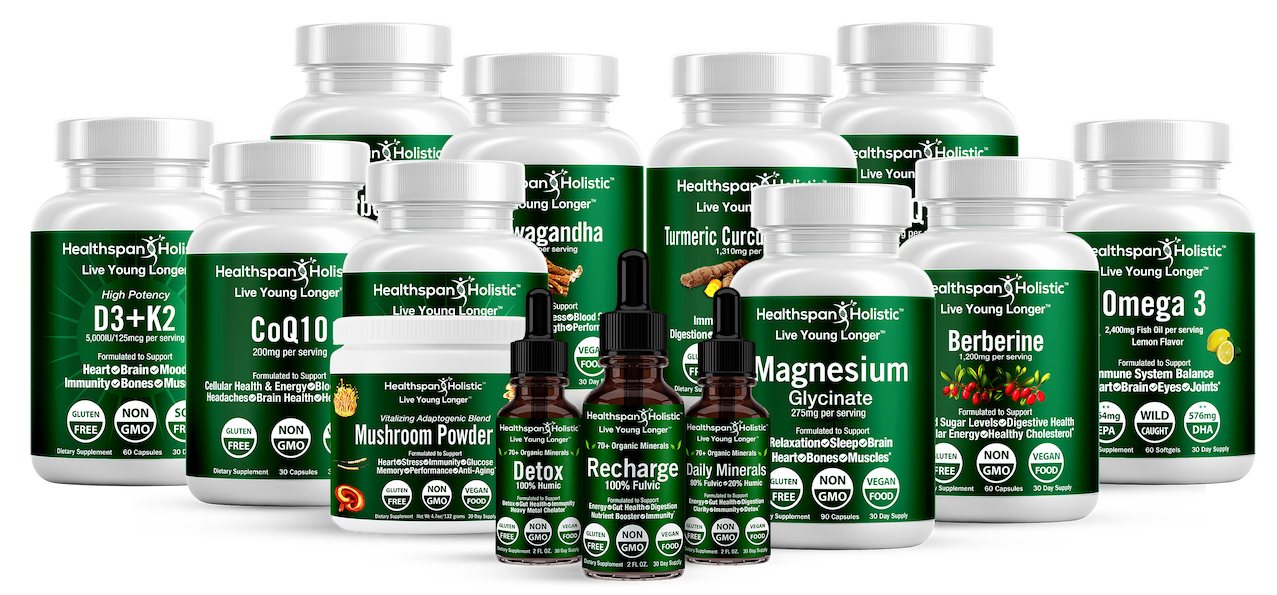
At Healthspan Holistic, we believe supplementation should be personal, purposeful, and backed by real data. Whether you are looking for a straightforward daily Vitamin D3 + K2 supplement or a synergistic formula that pairs calcium and D3 for comprehensive bone support, we have carefully selected professional-grade options to match your needs. Browse our full supplement selection and consider pairing your supplement choice with one of our personalized health coaching sessions, so you can optimize your approach with expert guidance.
Frequently asked questions
How much vitamin D should adults aged 45-75 take daily?
If you are deficient, 1000 to 2000 IU of D3 daily is safe and effective for most adults. Those over 75 may benefit from empiric daily supplementation without testing, but a conversation with your doctor is always a good idea.
Can you get enough vitamin D without supplements?
Regular sun exposure combined with a diet rich in fatty fish and fortified foods can maintain adequate levels for some people. However, up to 61% of older U.S. adults still develop deficiency, particularly in winter months or with limited outdoor activity.
Is vitamin D toxic in high doses?
Yes. Consistently taking more than 4000 IU daily can elevate blood calcium levels, increase kidney stone risk, and cause other serious health complications. Always stay within recommended limits unless under medical supervision.
Does vitamin D really prevent chronic diseases like cancer or heart problems?
Vitamin D reduces fall risk and may lower cancer mortality in deficient adults, but does not reduce CVD or cancer incidence in the general population. The benefits are real but more targeted than wellness media often suggests.
Should you routinely test your vitamin D levels?
Routine screening is not necessary for everyone, but testing is recommended if you have risk factors such as limited sun exposure, darker skin tone, obesity, or symptoms like fatigue, muscle weakness, or frequent illness.
Leave a comment: