

TL;DR:
- “Adrenal fatigue” is a non-medical term often used to describe chronic tiredness linked to stress, but it lacks recognition in mainstream medicine. Genuine adrenal disorders like Addison’s disease are rare and require proper diagnosis and treatment, unlike the unvalidated concept of adrenal fatigue. Addressing persistent fatigue after 40 involves testing for recognized conditions such as thyroid dysfunction, nutrient deficiencies, sleep disorders, and blood sugar issues through careful medical evaluation.
You’ve heard the term “adrenal fatigue” tossed around in wellness blogs, podcasts, and even your doctor’s waiting room. But if you’re over 40 and dragging through your days with relentless tiredness, brain fog, and sleep that never seems to refresh you, simply labeling it “adrenal fatigue” may actually be standing between you and real answers. This guide separates the science from the story, clarifies what’s medically recognized, and gives you a practical, evidence-backed path to restore your energy and reclaim your vitality.
Key Takeaways
| Point | Details |
|---|---|
| ‘Adrenal fatigue’ isn’t a diagnosis | There is no official medical definition for adrenal fatigue, so persistent tiredness needs proper investigation. |
| Serious conditions may be missed | Symptoms attributed to adrenal fatigue often overlap with treatable diseases that require medical care. |
| Evaluate all possible causes | Comprehensive health checks and lab tests are the most reliable way to uncover reasons for ongoing fatigue. |
| Holistic solutions improve energy | Strategies like better sleep, nutrition, stress relief, and targeted supplements can help restore vitality. |
What is ‘adrenal fatigue’ and why is it controversial?
With common misconceptions setting the stage, let’s define exactly what “adrenal fatigue” means and where the controversy lies.
The adrenal glands are small, walnut-sized organs that sit on top of your kidneys. They produce hormones like cortisol and adrenaline that regulate your stress response, metabolism, and immune function. In wellness circles, “adrenal fatigue” became a popular way to explain why so many people feel worn out despite seemingly normal lab results.
The concept resonates because the symptoms it describes are real and deeply frustrating:
-
Persistent tiredness that doesn’t improve with rest
-
Brain fog and difficulty concentrating
-
Cravings for salty or sweet foods
-
Feeling overwhelmed by stress
-
Disrupted sleep patterns
-
Low motivation and mood fluctuations
-
Slow recovery from illness
Here’s the problem. Mainstream medicine, including major organizations like the Endocrine Society, does not recognize “adrenal fatigue” as a legitimate diagnosis. There is no validated test to confirm it, and no agreed-upon treatment protocol. That doesn’t mean your symptoms aren’t real. It means the label itself may be leading you in the wrong direction.
When you search for relief and someone offers a convenient explanation, it’s easy to stop looking for the actual cause. You might spend money on unproven supplements and protocols while a treatable condition goes unaddressed. You can even request an adrenal stress test to get objective data rather than guessing.
The controversy matters because it affects the quality of your care and the speed of your recovery.
How adrenal fatigue differs from real adrenal disorders
Once you understand the origins of “adrenal fatigue,” it’s essential to compare it to what’s actually medically recognized and why this distinction matters.
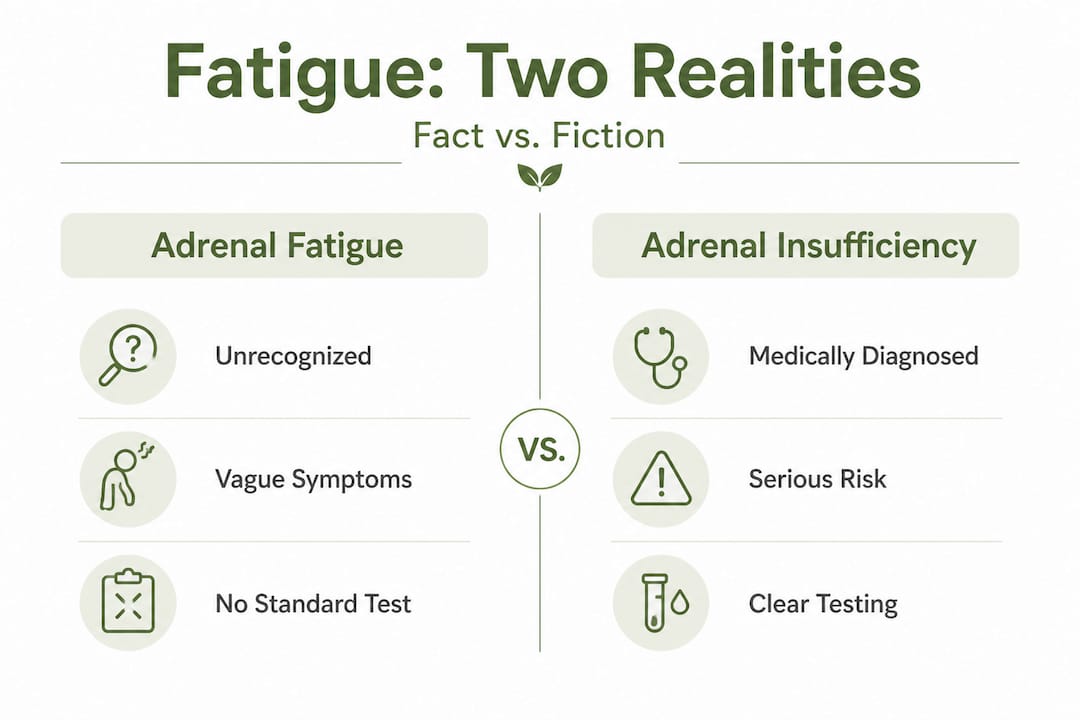
Real adrenal disorders exist and they are serious. The most important one to know about is adrenal insufficiency, also called Addison’s disease in its primary form. This is a condition where the adrenal glands genuinely cannot produce enough cortisol. It is diagnosable, treatable, and potentially life-threatening if ignored.

Symptoms overlap between adrenal fatigue claims and true adrenal insufficiency, which makes it easy to misread warning signs as something mild when they could be serious.
Here’s a side-by-side comparison to help you see the critical difference:
| Feature | “Adrenal fatigue” | Adrenal insufficiency |
|---|---|---|
| Medical recognition | Not recognized | Fully recognized |
| Diagnosable by labs | No standard test | Yes, via ACTH stimulation test |
| Severity | Vague, non-urgent | Can be life-threatening |
| Treatment | Unproven supplements | Hormone replacement therapy |
| Who diagnoses it | Wellness practitioners | Licensed physicians/endocrinologists |
| Common symptoms | Fatigue, brain fog, cravings | Extreme fatigue, weight loss, low blood pressure |
Beyond adrenal insufficiency, other recognized hormonal conditions are often lumped under the “adrenal fatigue” umbrella. Thyroid dysfunction, for example, shares nearly identical symptoms with what wellness practitioners call adrenal fatigue. Understanding thyroid health basics is essential if you’re experiencing unexplained fatigue, especially after 40. Similarly, hormone imbalances in men deserve attention, and exploring men’s hormone health after 40 can reveal patterns that explain persistent low energy.
The stakes are real. If you accept the “adrenal fatigue” explanation without proper testing, you may delay treatment for a condition that genuinely needs medical attention.
Pro Tip: If you’ve been told you have “adrenal fatigue” by a non-medical practitioner, request a full hormonal panel from your physician to rule out adrenal insufficiency, thyroid disorders, and other diagnosable conditions before starting any new supplement regimen.
Root causes of fatigue after 40: What to really check
With a clear understanding of official versus unofficial diagnoses, it’s time to focus on what’s really worth checking if you’re persistently tired.
Fatigue after 40 is rarely caused by a single thing. It’s usually the result of several overlapping factors that compound one another. Because “adrenal fatigue” is not a diagnosis, persistent fatigue should prompt a clinician evaluation to rule out recognized causes rather than assuming stress-related adrenal exhaustion.
Here are the most common and overlooked root causes to investigate:
-
Sleep disorders: Obstructive sleep apnea affects an estimated 25 to 30 percent of adults over 50. You can sleep eight hours and still wake up exhausted if your oxygen supply is being interrupted through the night. A sleep study can catch this quickly.
-
Thyroid dysfunction: Both hypothyroidism (underactive thyroid) and subclinical hypothyroidism can drain your energy, slow your metabolism, and cloud your thinking. Standard TSH testing doesn’t always reveal the full picture. Ask for a complete thyroid panel including Free T3 and Free T4.
-
Nutrient deficiencies: Low iron, B12, vitamin D, and magnesium are extremely common in adults over 40, especially in women postmenopause. These nutrients are essential for cellular energy production and nervous system function.
-
Anemia: Iron deficiency anemia and other forms of anemia reduce the oxygen-carrying capacity of your blood, leaving your cells literally starved for fuel.
-
Depression and anxiety: Mental health conditions are among the most underdiagnosed causes of physical fatigue in midlife adults. The body and mind are not separate systems.
-
Chronic low-grade infections or inflammation: Conditions like Lyme disease, chronic viral infections, or autoimmune processes can create systemic fatigue that feels very similar to what wellness practitioners describe as “adrenal fatigue.”
-
Medication side effects: Statins, beta-blockers, antihistamines, and many other common medications can contribute to persistent tiredness. Review your medication list with your doctor.
-
Blood sugar dysregulation: Insulin resistance and blood sugar swings create energy crashes throughout the day. This is especially common after 45 and is closely tied to diet and activity levels.
| Condition | Key test to request | Common symptom overlap |
|---|---|---|
| Hypothyroidism | Full thyroid panel (TSH, Free T3, T4) | Fatigue, brain fog, weight gain |
| Vitamin D deficiency | 25-OH Vitamin D blood test | Low energy, muscle weakness |
| Anemia | Complete blood count (CBC) | Exhaustion, pale skin, breathlessness |
| Sleep apnea | Polysomnography (sleep study) | Unrefreshing sleep, daytime tiredness |
| Blood sugar issues | Fasting glucose and HbA1c | Energy crashes, cravings |
| Adrenal insufficiency | ACTH stimulation test | Severe fatigue, low blood pressure |
You might also consider targeted stress relief supplement options as part of a broader, clinician-guided plan. But remember, supplements work best when paired with proper testing and a clear understanding of what your body actually needs.
Age-related hormone shifts are also worth noting. From your mid-40s onward, cortisol rhythms, sex hormones, and thyroid output can all shift. These shifts don’t mean your adrenals are “fatigued.” They mean your body is changing and your health strategy needs to evolve with it.
Holistic approaches for restoring energy and resilience
After identifying likely causes, here’s how to approach fatigue with real, lasting changes rather than just chasing an “adrenal fatigue” label.
It’s important to acknowledge that the term “adrenal fatigue” is used to explain tiredness and sleep disturbances when symptoms can’t be otherwise explained, but it is not an accepted diagnosis. That doesn’t mean holistic approaches don’t work. They absolutely can. But they work best when they’re targeted, personalized, and evidence-informed.
Here are the most effective holistic strategies for restoring energy in adults over 40:
-
Prioritize restorative sleep: This means more than just getting 7 to 9 hours. It means protecting your circadian rhythms (your internal 24-hour body clock) by keeping consistent sleep and wake times, reducing blue light exposure after 8 p.m., and keeping your bedroom cool and dark. Even one week of consistent sleep hygiene can measurably improve cortisol patterns.
-
Balance blood sugar throughout the day: Eat protein and healthy fats with every meal. Avoid skipping breakfast. Limit refined carbohydrates and sugary drinks that create energy spikes followed by crashes. Think of balanced blood sugar as the foundation your energy is built on.
-
Manage stress with intention: Chronic stress genuinely does impact your cortisol cycle and mitochondrial function (the energy-producing units inside your cells). Daily practices like breathwork, meditation, gentle yoga, and time in nature all have documented effects on stress hormones and perceived fatigue.
-
Move your body gently but consistently: Overtraining can worsen fatigue, especially when your system is already under stress. Aim for 30 minutes of moderate movement daily, such as walking, swimming, or cycling, rather than intense workouts that tax your recovery systems.
-
Choose nutrient-dense foods: Emphasize leafy greens, colorful vegetables, quality proteins, and omega-3 rich foods like wild salmon and flaxseeds. These provide the micronutrients your adrenal glands, thyroid, and mitochondria depend on to function well.
-
Consider guided supplementation: If lab tests reveal deficiencies, targeted supplementation can be a powerful tool. Nutritional support for adrenal health formulated with adaptogenic herbs and key micronutrients may help restore balance. Similarly, adrenal support supplements designed for adults over 40 can complement lifestyle changes when chosen thoughtfully.
-
Nurture social connection: Research consistently shows that loneliness and isolation increase inflammatory markers and fatigue. Meaningful relationships are not optional. They are a core pillar of resilience and long-term energy.
Pro Tip: Before starting any new supplement for fatigue, request a micronutrient panel from your healthcare provider. Supplementing what you don’t actually need can sometimes create more imbalance. Targeted is always better than random.
Working with a holistic health coach or integrative clinician ties all of these strategies together. They can help you interpret your lab results, prioritize the highest-leverage changes, and build a plan that fits your real life rather than a generic protocol.
The honest truth: What decades of experience say about adrenal fatigue
Here’s something we don’t always hear in wellness spaces: the “adrenal fatigue” concept has done some genuine good and some genuine harm.
On the positive side, it gave millions of tired adults a language to describe what they were feeling and the confidence to seek help. For many people, the idea that chronic stress could be affecting their hormonal health was the first time their experience felt validated. That matters. Self-advocacy is powerful.
But the label also created a shortcut that led many people away from proper diagnosis and effective care. When someone spends months following a protocol for “adrenal fatigue” while an undiagnosed thyroid disorder or sleep apnea goes untreated, real harm accumulates. Time lost, energy spent, and hope fading are very real costs.
Persistent fatigue should prompt a clinician evaluation to rule out recognized causes rather than assuming stress-related adrenal exhaustion. That sentence is not a dismissal of holistic thinking. It’s an invitation to hold both open-mindedness and medical rigor at the same time.
What we’ve seen work consistently is a both-and approach. Yes, optimize your sleep, nutrition, stress management, and lifestyle. And also, test properly, get accurate answers, and treat what’s actually going on. These two approaches are not in conflict. They are complementary.
The adults who recover their energy most fully and most durably are not the ones who find the perfect supplement. They are the ones who get clear on what’s actually happening in their bodies and then take consistent, layered action. That’s the real path to vitality after 40.
Personalized help: Go beyond adrenal fatigue for true vitality
If you’re tired of guessing and ready to get clear, real answers, Healthspan Holistic is built exactly for this moment in your health journey. Our approach combines evidence-based diagnostics with personalized coaching to help you find the actual source of your fatigue, not just a label for it.

Start by Contacting Us to book a call and talk through your symptoms and map out a testing strategy that fits your needs. From there, targeted lab testing like minerals and toxin testing and micronutrient deficiency testing give you objective data to work from. You don’t have to guess or settle for vague explanations. A clear picture of what’s happening inside your body is the most powerful first step toward getting your energy back.
Frequently asked questions
Is adrenal fatigue a real medical diagnosis?
No. “Adrenal fatigue” is not an accepted diagnosis by mainstream healthcare organizations, though the symptoms it describes are real and deserve proper medical investigation.
What’s the danger in self-diagnosing adrenal fatigue?
Self-diagnosing can delay needed treatment for serious underlying conditions. Symptoms overlap between “adrenal fatigue” claims and true adrenal disorders like adrenal insufficiency, which require prompt medical evaluation and proper treatment.
What first steps should I take if I have persistent fatigue?
Schedule a thorough checkup and request comprehensive lab work. Persistent fatigue should prompt a clinician evaluation to rule out thyroid disorders, hormonal imbalances, nutrient deficiencies, and other recognized causes before settling on any explanation.
Can lifestyle changes help with persistent tiredness?
Absolutely. Improving sleep quality, eating nutrient-dense foods, managing stress consistently, and staying active can significantly boost energy levels for most adults over 40, especially when combined with proper testing and personalized guidance.
Leave a comment: