

TL;DR:
- Holistic living combines physical, mental, emotional, and environmental health into daily habits, especially after age 45. Small, intentional changes like tracking sleep, movement, and nutrition build lasting vitality and resilience. Personalization through self-observation and testing helps optimize wellness routines for long-term health.
Holistic living is defined as the practice of integrating physical, mental, emotional, and environmental health into one consistent daily approach. For adults aged 45 to 75, this matters more than ever. Your body’s needs shift after midlife, and the old “push harder” approach stops working. The good news is that the most effective natural wellness practices are also the simplest. At Healthspan Holistic, we see this every day: small, intentional changes compound into real, lasting vitality. This guide gives you the evidence-backed holistic living tips that actually move the needle.
1. Start small and build momentum
The single most important principle in adopting a healthier lifestyle is to start with one change, not ten. Committing to one habit for 30 days builds the neural pathways that make that behavior automatic. That is when real momentum begins.

Pick something you can do today. A 10-minute walk after dinner. One extra glass of water in the morning. One meal built around vegetables and lean protein. These are not trivial. They are the foundation.
Habit stacking is one of the most reliable methods for adults over 45. Attach a new behavior to something you already do. For example, do five minutes of deep breathing right after you brush your teeth. Track your mood, energy, and sleep quality in a simple notebook. Tracking these three markers helps you identify which habits are actually working for your body.
Drastic overhauls rarely stick. Incremental change does. Adults over 45 often carry more responsibilities and more ingrained routines, which makes gradual shifts far more sustainable than complete lifestyle resets.
Pro Tip: Commit to one new habit for exactly 30 days before adding another. This single rule prevents overwhelm and dramatically improves long-term follow-through.
2. Prioritize sleep as your recovery foundation
Sleep is not passive rest. It is when your body repairs tissue, consolidates memory, and regulates hormones. Adults need 7–9 hours of sleep with consistent wake and sleep times to anchor circadian rhythms.
Consistency in sleep timing matters more than total hours. Your body’s internal clock responds to regularity. Waking at the same time every day, even on weekends, is the single most powerful sleep intervention available.
Keep your bedroom temperature between 65°F and 68°F. Avoid blue light screens for 60 minutes before bed to allow melatonin production. Caffeine has a long half-life, meaning an afternoon coffee can still be active in your system at midnight. Cutting caffeine after 1:00 p.m. is a practical step most people underestimate.
Pro Tip: Get natural sunlight within 30 minutes of waking. Morning light exposure sets your circadian clock and makes falling asleep at night significantly easier.
3. Move your body every day, not just at the gym
Daily movement is one of the most studied and most effective healthy living habits for adults over 45. Aiming for 10,000 steps per day combined with strength training 2–3 times weekly improves metabolism, preserves muscle mass, and supports insulin sensitivity.
Compound movements like squats, lunges, and push-ups are especially valuable. They train multiple muscle groups simultaneously and directly support the movements you use in daily life, from carrying groceries to climbing stairs.
Breaking up sedentary time matters just as much as formal exercise. Two-minute walking breaks every 45–60 minutes provide measurable blood sugar regulation benefits. This is not a substitute for exercise. It is an addition that protects your metabolic health between workouts.
You do not need a gym membership to start. A daily walk, a resistance band, and a consistent schedule are enough to build real physical resilience after 45.
4. Build your plate around whole foods
Nutrition is the most direct lever you have over your energy, inflammation, and long-term health. A whole-food diet rich in vegetables, legumes, lean protein, and minimal processed foods supports every system in your body.
Fermented foods like yogurt, kefir, and sauerkraut feed the gut microbiome, which influences everything from immune function to mood. Omega-3 sources like salmon, sardines, walnuts, and flaxseed support brain health and reduce systemic inflammation. These are not supplements. They are foods you can add to your weekly rotation starting today.
For adults over 45, vitamin D3 is a particular priority. Optimal vitamin D3 levels sit between 40–60 ng/mL, and pairing D3 with vitamin K2 supports calcium utilization in bones and arteries. Most adults in this age group are deficient without knowing it. A simple blood test reveals your actual level.
The holistic nutrition guide from Healthspan Holistic offers a practical framework for building meals that support energy and longevity at every stage of midlife.
5. Practice mindfulness in everyday moments
Mindfulness is defined as present-moment awareness practiced during routine activities. It does not require a meditation cushion or a 30-minute session. It requires attention. That is something you can practice anywhere.
Box breathing is one of the most effective tools for lowering cortisol quickly. Inhale for four counts, hold for four, exhale for four, hold for four. Repeat four times. A few minutes of focused breathing daily over six months builds lasting emotional resilience. That is a low-cost, high-return practice by any measure.
Mindful eating means slowing down, chewing thoroughly, and noticing hunger and fullness cues. Mindful walking means feeling your feet on the ground and observing your surroundings without a phone in your hand. These are not spiritual exercises unless you want them to be. They are attention practices that reduce stress and improve focus.
“Mindfulness is not about clearing your mind. It is about noticing what is already there.”
Social connection is another underrated mindful lifestyle practice. Regular, meaningful contact with friends, family, or a community group measurably reduces stress hormones and supports cognitive health as you age.
6. Bring nature into your wellness routine
Spending time outdoors is one of the most accessible integrative health suggestions available, and one of the most overlooked. Twenty minutes in a natural green space measurably reduces cortisol and inflammatory cytokines. That is a physiological change, not just a mood lift.
Eco-friendly living advice does not have to mean a complete lifestyle overhaul. Start with these simple swaps:
-
Replace synthetic cleaning products with plant-based alternatives to reduce indoor chemical exposure.
-
Eat locally grown, seasonal produce when possible to reduce pesticide load and support gut diversity.
-
Spend at least 20 minutes outdoors daily, even in urban settings with parks or tree-lined streets.
-
Reduce screen time in the evening and replace it with outdoor walks or time in a garden.
-
Open windows daily to improve indoor air quality, which directly affects respiratory and cognitive health.
The connection between a clean environment and personal health is direct. Reducing your toxic load at home supports the same goals as improving your nutrition or sleep.
Pro Tip: Combine your daily walk with a green space whenever possible. You get the movement benefit and the cortisol-lowering effect of nature at the same time.
7. Personalize your approach using bioindividuality
No single wellness routine works for every person. Bioindividuality means your genetics, history, gut microbiome, and lifestyle create a unique health profile. What works for your neighbor may not work for you.
Self-observation is the most practical tool you have. Track how you feel after meals, after different types of exercise, and after changes in sleep. Patterns emerge quickly when you pay attention.
The table below helps you prioritize which pillar to address first based on your current challenges:
| Pillar | Ease to start | Impact on energy | Common challenge |
|---|---|---|---|
| Sleep | High | Very high | Screen use before bed |
| Daily movement | Medium | High | Consistency |
| Whole-food nutrition | Medium | High | Meal planning time |
| Mindfulness practice | High | Medium | Feeling “too busy” |
| Eco-friendly habits | High | Medium | Habit replacement |
Start with the pillar that scores highest on ease for you personally. Early wins build confidence. Confidence builds consistency. Journaling your observations, even briefly, accelerates this process by making patterns visible.
Curiosity beats perfectionism every time. Approach your wellness routine as an experiment, not a test you can fail.
8. Support your body with targeted supplementation
Whole foods and lifestyle habits are the foundation. Targeted supplementation fills the gaps that diet alone cannot always close, especially after 45 when absorption efficiency declines.
Vitamin D3 with K2, magnesium, and broad-spectrum micronutrients are the most commonly deficient nutrients in adults over 45. Testing before supplementing is the most effective approach. A cellular micronutrient test identifies exactly where your gaps are, so you supplement with purpose rather than guesswork.
Gut health is a direct bridge between nutrition and mental well-being. The role of gut health in overall wellness after 45 is well-documented, and targeted probiotic and prebiotic support can meaningfully improve energy, mood, and immune resilience.
Key takeaways
Living well after 45 requires consistent, personalized daily habits across sleep, movement, nutrition, mindfulness, and environment, not a single dramatic change.
| Point | Details |
|---|---|
| Start with one habit | Commit to one change for 30 days before adding another to build lasting momentum. |
| Sleep consistency is critical | Consistent wake times anchor circadian rhythms more effectively than total hours alone. |
| Movement beats sedentary time | Two-minute walking breaks every 45–60 minutes improve blood sugar regulation between workouts. |
| Personalize before you prescribe | Use self-observation and testing to identify which habits your specific body needs most. |
| Nature reduces stress hormones | Twenty minutes in a green space measurably lowers cortisol and supports mental clarity. |
What I have learned from living this way after 45
I used to think that getting healthier after 45 meant doing more. More supplements, more workouts, more discipline. What I actually found was the opposite.
The shift that changed everything for me was slowing down enough to notice what my body was already telling me. I started tracking sleep, energy, and mood. Within two weeks, patterns began appearing. I realized my afternoon coffee was wrecking my sleep. I realized I felt sharper on days I walked outside versus days I stayed indoors. These were not revelations from a lab. They came from paying attention.
Mindfulness became my daily anchor, not as a spiritual practice, but as a practical one. Five minutes of box breathing before a stressful call changed how I showed up. Eating without a screen in front of me changed how much I ate and how I felt afterward.
The uncomfortable truth I have learned is this: most people already know what they need to do. They just need permission to start small and stay curious rather than chasing the perfect routine. Bioindividuality is real. What works for someone else may not work for you, and that is not a failure. It is information.
Be kind to yourself during the process. Lifestyle change is not a sprint. It is a long game, and the people who win it are the ones who stay consistent, not the ones who were perfect.
— Chris
Ready to take your wellness further with Healthspan Holistic?
The tips in this article give you a strong foundation. Healthspan Holistic takes it further with personalized coaching, advanced lab testing, and professional-grade supplements designed specifically for adults over 40.
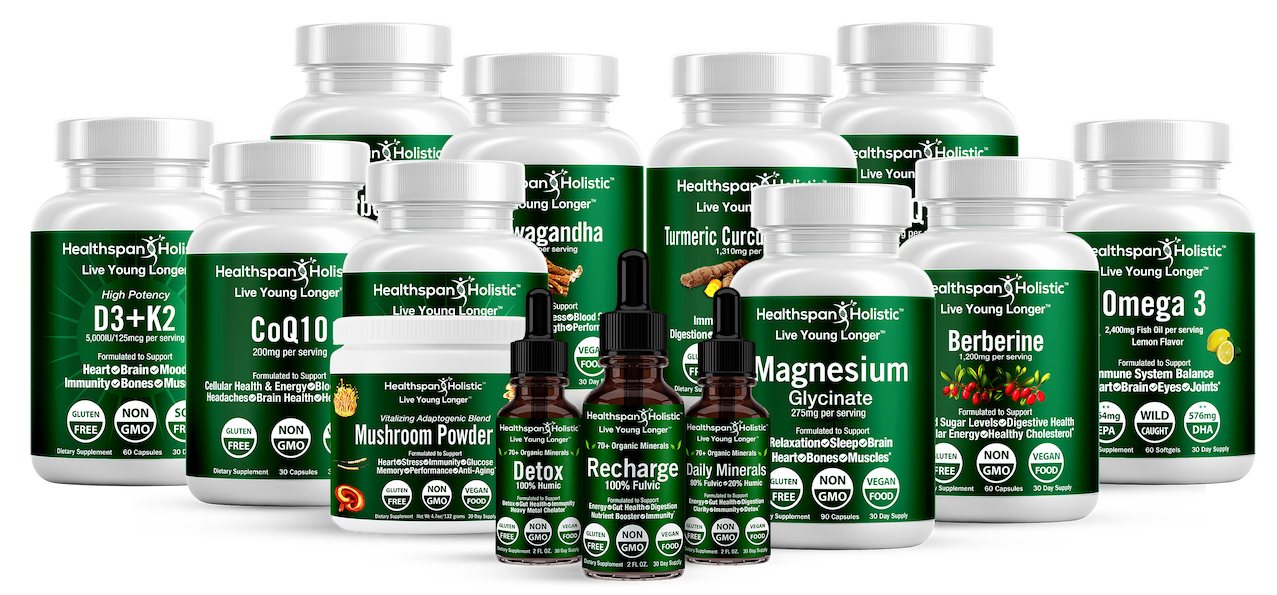
The Our 90 Day Journey to Longevity program pairs you with a one-on-one health coach to build a sustainable lifestyle plan tailored to your biology, goals, and schedule. Combine that with targeted diagnostics like the Magnesium RBC test to identify deficiencies that drain your energy and focus. Our supplement store at Healthspan Holistic features professional-grade formulas for energy, metabolism, bone health, and cardiovascular support. 1st Time Customers can take advantage of our BUY 1 GET 1 50% OFF special offer on all supplements.
FAQ
What does holistic living actually mean?
Holistic living means addressing physical, mental, emotional, and environmental health together rather than treating each in isolation. The goal is lasting well-being through consistent daily habits, not quick fixes.
How do I start living more holistically after 45?
Start with one habit, such as a 10-minute daily walk or a whole-food breakfast, and commit to it for 30 days before adding another. Tracking mood, energy, and sleep helps you identify what works for your body specifically.
How much sleep do adults over 45 need?
Adults need 7–9 hours of sleep per night, with consistent wake and sleep times being more important than total hours for circadian rhythm health. Keeping your bedroom between 65°F and 68°F and avoiding screens 60 minutes before bed supports deeper, more restorative sleep.
Does spending time outdoors really improve health?
Yes. Spending 20 minutes in a natural green space measurably reduces cortisol and inflammatory markers. This applies even in urban parks, making it one of the most accessible natural wellness practices available.
Should I test my nutrient levels before supplementing?
Testing before supplementing is the most effective approach for adults over 45. A cellular micronutrient test identifies specific deficiencies so you can target supplementation precisely rather than guessing.
Leave a comment: