

TL;DR:
- Your liver performs over 500 vital biological processes daily, including filtering blood and regulating hormones, yet many ignore its health until problems arise. Lifestyle choices like a balanced diet, gradual weight loss, and regular exercise can effectively protect and restore liver function, especially after age 45. Routine blood screenings and cautious supplement use, based on individual testing, are essential for early detection and safe management of liver health.
Your liver quietly runs over 500 biological processes every single day, from filtering blood and metabolizing fat to regulating hormones and storing energy. Yet most people over 45 give it very little thought until something goes wrong. Liver health doesn’t make headlines the way heart health does, but the two are deeply connected. The good news is that your liver is one of the most resilient organs in your body, and with the right lifestyle choices, you can meaningfully protect and restore its function at any age.
Key takeaways
| Point | Details |
|---|---|
| Your liver self-detoxifies | The liver runs enzymatic detox processes around the clock and does not need commercial cleanses to function. |
| Diet is your most powerful tool | Anti-inflammatory foods like cruciferous vegetables, olive oil, and coffee directly reduce liver fat and inflammation. |
| Sustainable weight loss matters | Losing 1 to 2 pounds per week is the safe target; rapid weight loss can worsen liver inflammation. |
| Symptoms appear late | Liver disease is often silent until advanced, making proactive blood screening critical for adults over 45. |
| Supplements require caution | Some popular liver supplements carry real risks, especially when combined with medications common in midlife. |
How your liver works and what threatens it after 45
Think of your liver as the body’s processing plant. It filters every substance you consume, neutralizes harmful compounds, produces bile for digestion, and converts nutrients into forms your cells can actually use. The liver detoxifies continuously through complex enzymatic systems operating 24 hours a day, seven days a week. It does not store toxins waiting for a weekend cleanse to flush them out.
What does threaten this organ is cumulative and largely lifestyle-driven. Metabolic dysfunction-associated steatotic liver disease, now commonly called MASLD (previously known as fatty liver disease), affects an estimated one in three adults and often develops without any noticeable symptoms. Excess body fat, type 2 diabetes, insulin resistance, and heavy alcohol use are the primary culprits. After 45, these risk factors tend to compound because metabolism slows, activity levels often decrease, and many people are managing multiple conditions with multiple medications.
Here are the main risk factors that directly affect liver health in adults over 45:
-
Excess visceral fat, especially around the abdomen
-
Unmanaged blood sugar and insulin resistance
-
Regular alcohol use, even at moderate levels
-
Certain medications, including statins, NSAIDs, and some diabetes drugs
-
Chronic inflammation driven by poor diet and inactivity
-
Undiagnosed hepatitis B or C from earlier exposure
Liver disease stays silent through early and middle stages, which is exactly why so many people are blindsided by a diagnosis. You can feel perfectly fine while significant fibrosis is already developing.
Pro Tip: If you have two or more of the risk factors listed above, ask your doctor for a liver function panel at your next visit. Catching early-stage changes on a blood test takes a few minutes and can change everything.
Foods that support liver health
Food is the most direct lever you have for liver health, and the research here is specific enough to act on today. You are not looking for a rigid meal plan. You are looking to shift the overall pattern of your diet toward fewer inflammatory triggers and more protective compounds.
Cruciferous vegetables, olive oil, green tea, and coffee contain antioxidants and natural compounds that reduce liver inflammation and support healthy enzyme activity. Broccoli, Brussels sprouts, and cauliflower in particular stimulate liver detox enzymes. A daily cup or two of coffee has some of the strongest evidence for lowering liver enzyme levels and reducing the progression of liver fibrosis.
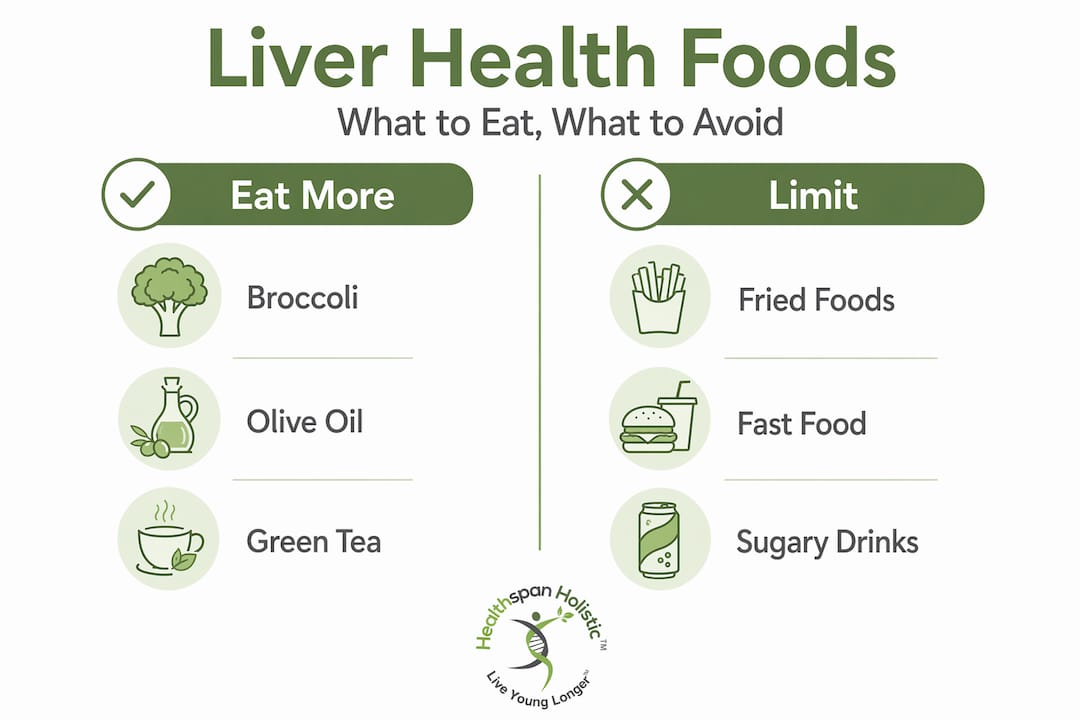
The table below shows which foods to prioritize and which to pull back on:
| Eat more of | Limit or avoid |
|---|---|
| Cruciferous vegetables (broccoli, kale) | Fried foods and fast food |
| Extra virgin olive oil | Refined sugars and sweetened drinks |
| Fatty fish (salmon, sardines) | Processed meats |
| Whole grains and legumes | White bread and white rice |
| Coffee and green tea | Alcohol |
| Berries and other antioxidant-rich fruits | Saturated fat from red and processed meat |
Dietary fiber deserves special mention because most adults over 45 are not getting nearly enough. Fiber supports liver health by feeding gut bacteria that reduce inflammation, slowing glucose absorption, and helping the body excrete excess cholesterol. Aim for at least 25 to 35 grams per day from whole food sources.

Alcohol is worth addressing directly. The NHS recommends no more than 14 units per week, spread across several days with alcohol-free days included. For context, that is roughly six standard glasses of wine or six pints of average-strength beer. For anyone with existing liver concerns, even staying under that threshold may not be enough. The liver has no safe floor when it comes to alcohol.
Vitamin D deficiency is notably common in people with poor liver function. Since the liver plays a role in converting vitamin D into its active form, a deficiency can become self-reinforcing. Getting your levels checked is worth doing, particularly if you spend limited time outdoors. Fatty fish, egg yolks, and fortified foods help, but supplementation is often needed.
Pro Tip: Rather than overhauling your entire diet overnight, pick one food from the “eat more” list to add each week. Small, consistent shifts in an anti-inflammatory food pattern create lasting change without the burnout.
Lifestyle changes that boost liver function
Diet alone is not the complete picture. How you move, sleep, and manage stress all have measurable effects on how well your liver functions. Here are the most impactful lifestyle changes, in order of evidence strength:
-
Lose weight gradually if needed. Targeting a 500 to 1000 calorie daily deficit to lose 1 to 2 pounds per week is the clinically recommended approach for MASLD. Even a 5% to 10% reduction in body weight can significantly reduce liver fat and inflammation.
-
Exercise regularly, including resistance training. Aerobic exercise burns visceral fat directly. Strength training improves insulin sensitivity, which reduces the liver’s burden of managing excess blood sugar. Aim for 150 minutes of moderate activity weekly, with two strength sessions included. Check out these lifestyle strategies for metabolic health if you are looking for a structured starting framework.
-
Prioritize sleep quality. Poor sleep increases MASLD risk and disrupts the metabolic processes the liver manages overnight. Adults over 45 are more prone to sleep apnea, which is itself an independent risk factor for liver inflammation. If you wake feeling unrefreshed consistently, it is worth discussing a sleep evaluation with your doctor.
-
Manage chronic stress. Sustained psychological stress elevates cortisol, which drives visceral fat accumulation and worsens insulin resistance. Both are direct pathways to liver damage over time. Practices like walking in nature, breathwork, and setting firm limits on screen time before bed make a real difference.
-
Quit smoking. Smoking accelerates liver fibrosis, worsens metabolic disease, and reduces the liver’s ability to process medications safely.
Pro Tip: Rapid weight loss from crash diets or extreme caloric restriction can actually worsen liver inflammation and trigger gallstones. Slow and steady is not just a cliché here. It is the clinically safer path.
The truth about liver detox methods and supplements
This is where the wellness industry gets in the way of actual progress. The concept of a “liver cleanse” or “liver detox” product implies that your liver is a vessel that fills with toxins and needs periodic emptying. That is not how it works. Liver cleanses lack clinical trial support and are not regulated by the FDA. Some actively cause harm.
“There is no scientific evidence that these products are either safe or effective.” — Johns Hopkins Medicine
That said, certain supplements do have a credible evidence base when used thoughtfully. Milk thistle (silymarin) has the most research behind it for liver protection, particularly in the context of alcohol-related liver damage and some forms of hepatitis. Omega-3 fatty acids can reduce liver fat in MASLD. Vitamin E has shown benefit in specific non-diabetic patients with NAFLD, though it is not appropriate for everyone.
The critical concern for adults over 40 and supplements is the interaction risk with common medications. Statins, blood pressure drugs, and diabetes medications all pass through the liver, and adding poorly understood supplements can change how those medications are processed.
Here is what to keep in mind when considering any supplement for liver support:
-
Green tea extract supplements have been specifically linked to acute liver damage. Drinking green tea is safe; concentrated extracts at high doses are not.
-
Antioxidants from whole foods perform better than isolated supplements because they work together in context, not in isolation.
-
Always tell your doctor about every supplement you are taking before you start, not after.
For guidance on supplement safety tailored to adults over 40, the resource on holistic supplements after 40 offers a thoughtful overview of what works and what to watch out for.
Recognizing signs of liver disease
Most people picture jaundice, the yellowing of the skin and eyes, as the signature liver symptom. That is accurate, but jaundice typically appears only when significant damage has already occurred. Routine liver screening through blood tests is critical precisely because the early stages produce no symptoms at all.
Watch for these more subtle liver damage symptoms that can appear before overt disease:
-
Persistent fatigue that does not improve with rest
-
Unexplained itching on the skin
-
Swelling in the ankles or abdomen
-
Easy bruising or slow wound healing
-
Pale or clay-colored stools
-
Dark urine despite adequate hydration
If you have risk factors such as obesity, type 2 diabetes, heavy drinking history, or family history of liver disease, proactive screening is non-negotiable. Ask your doctor about ALT, AST, GGT, and bilirubin levels as a baseline. Hepatitis B and C testing is also advisable if you have never been tested, as both can be present silently for decades. Vaccinations for hepatitis A and B are available and recommended for adults who have not been previously immunized.
My take on holistic liver care after 45
I have worked with many adults over 45 who come to us exhausted, frustrated by vague symptoms, and carrying a diagnosis of fatty liver disease they received with very little guidance. The first thing I tell them is this: the liver is not beyond recovery. It is one of the few organs that can genuinely regenerate under the right conditions.
What I have seen work, consistently, is not a supplement protocol or a detox program. It is the boring stuff done consistently. Reducing refined sugar. Walking every day. Cutting back on alcohol, not eliminating it overnight out of guilt, but reducing it with intention. Getting enough sleep. These changes compound over months, and the bloodwork starts to reflect it.
What I am most skeptical of is the promise of fast results. Clients who crash diet to lose weight quickly often see their liver enzymes spike before they improve. The liver responds to metabolic stress, not just caloric reduction. Gradual, consistent lifestyle change supported by real data is what actually works.
I also strongly believe in testing before supplementing. Without knowing your actual vitamin D levels, your magnesium status, or your baseline liver enzymes, you are guessing. At Healthspanholistic, we pair advanced testing with one-on-one coaching precisely because that combination closes the gap between knowing what to do and actually doing it.
— Chris
How Healthspanholistic can support your liver health
If this article has prompted you to take your liver health more seriously, the most empowering next step is getting a clear picture of where you stand right now. At Healthspanholistic, we offer the Magnesium RBC test to detect deficiencies that often underlie poor metabolic health, alongside a cellular micronutrient panel that shows exactly which nutrients your body needs most. Pair that with one-on-one coaching through The Healthspan Plan and you get a personalized roadmap built around your actual biology, not generic advice.
Checkout our curated liver support supplements. 1st Time Customers can take advantage of our BUY 1 GET 1 50% OFF special offer on all supplements. Always consult your healthcare provider before starting any new supplement, especially if you are managing existing conditions.
FAQ
What are the early signs of liver disease?
Early liver damage symptoms are often subtle and include persistent fatigue, unexplained itching, dark urine, and easy bruising. Because liver disease is frequently silent until advanced, proactive blood testing is the most reliable detection method for adults over 45.
Do liver detox cleanses actually work?
No. The liver continuously detoxifies through built-in enzymatic systems and does not require periodic cleanses. Johns Hopkins Medicine confirms there is no scientific evidence that commercial liver detox products are safe or effective.
What foods are best for liver health?
Cruciferous vegetables, extra virgin olive oil, fatty fish, whole grains, coffee, and green tea all have evidence behind them for reducing liver fat and inflammation. Limiting refined sugars, alcohol, fried foods, and saturated fat is equally important.
How much weight do I need to lose to help my liver?
Studies show that losing just 5% to 10% of body weight can significantly reduce liver fat and lower inflammation in people with MASLD. The target rate is 1 to 2 pounds per week to avoid the worsening effect that rapid weight loss can cause.
Is it safe to take supplements for liver health after 50?
Some supplements, like milk thistle and omega-3 fatty acids, have credible evidence behind them, but adults over 50 need to be cautious about interactions with common medications. Always consult your doctor and consider professional testing to identify what your body actually needs before adding anything new.
Leave a comment: