

TL;DR:
- Living longer does not necessarily mean living better, as healthspan emphasizes quality years with vitality. Targeting biological pillars like inflammation and mitochondrial decline through lifestyle, testing, and nutrition can delay age-related decline. Personalized strategies combining functional testing, dietary patterns, movement, and supplements optimize healthspan beyond mere lifespan extension.
Most people assume that living longer automatically means living better. It doesn’t. The healthspan holistic approach challenges that assumption directly, shifting focus from how many years you live to how many of those years you spend with real energy, strength, and clarity. According to the WHO, the global healthspan-lifespan gap sits at roughly 9.6 years, meaning most people spend nearly a decade in poor health before they die. For anyone between 40 and 75, that number is a wake-up call, and a reason to act now rather than later.
Key takeaways
| Point | Details |
|---|---|
| Healthspan beats lifespan | The goal is maximizing vibrant, functional years, not simply adding more years to your life. |
| Aging has biological pillars | Inflammation, mitochondrial decline, and other mechanisms drive aging and can be targeted with lifestyle and nutrition. |
| Testing reveals your true biology | Epigenetic clocks and functional markers give you a personalized, data-driven picture of how you are aging. |
| Nutrition and lifestyle move the needle | Mediterranean-style eating, quality sleep, and physical activity each target multiple aging mechanisms simultaneously. |
| Supplements support, not replace | Functional health supplements work best when layered on top of strong lifestyle foundations and guided by lab results. |
The biological pillars of aging
Your body does not age randomly. It ages through specific, interconnected mechanisms that scientists now call the pillars of aging. Understanding these gives you a real target to work toward, not just vague advice to “eat better and exercise.”
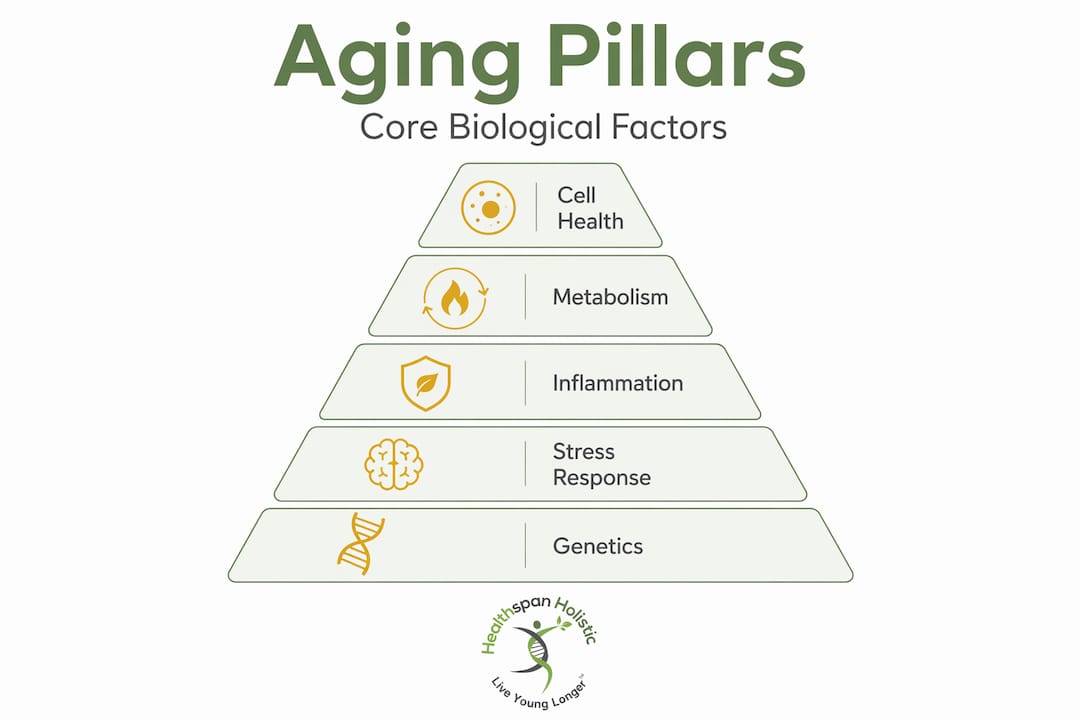
The major pillars include chronic low-grade inflammation (sometimes called “inflammaging”), mitochondrial dysfunction, impaired proteostasis (the cell’s ability to clear damaged proteins), telomere attrition, and cellular senescence. These are not isolated events. When one pillar weakens, it puts pressure on the others. A person with poor mitochondrial function, for example, tends to generate more oxidative stress, which accelerates inflammation, which in turn disrupts cellular repair systems. The whole system degrades together.
Here is why this matters for you practically:
-
Inflammation is driven by sleep deprivation, processed food, chronic stress, and physical inactivity. You can lower it.
-
Mitochondrial health responds directly to aerobic exercise, certain nutrients, and caloric timing.
-
Proteostasis is supported by intermittent fasting, which activates autophagy, your body’s internal cleanup crew.
-
Cellular senescence accelerates with smoking, obesity, and UV exposure, all modifiable factors.
Targeting these pillars through lifestyle and evidence-based interventions can delay or reverse the geriatric syndromes that most people assume are inevitable. Exercise, in particular, hits multiple pillars at the same time, making it one of the most potent healthspan enhancement strategies available to you right now.
Pro Tip: Think of your aging pillars like the legs of a table. You only need one to buckle badly before the whole surface becomes unstable. Shoring up your weakest pillar often produces the most noticeable improvement in how you feel.
Functional testing and biomarker audits
Guessing your biological age based on how you feel is not enough. Feelings are filtered through habit, denial, and comparison. Real data cuts through that noise, and the tools available to you today are more specific than ever before.
Here is a practical framework for getting meaningful testing done:
-
Start with epigenetic age clocks. Consumer tests measuring markers like DunedinPACE, GrimAge, and PhenoAge give you a molecular picture of how fast your cells are aging. These tests run $200 to $500 and are best repeated annually or after a significant lifestyle change.
-
Track trends, not single data points. One measurement tells you where you are. Two or three over time tell you whether you are improving. Directional trends over time are far more actionable than any isolated result, because transient variables like illness or poor sleep can temporarily skew a single test.
-
Add functional reserve measures. Lab values catch disease, but they often miss early functional decline. Integrating functional reserve measures like VO2 max, grip strength, and metabolic flexibility gives you a more complete picture of your resilience.
-
Review your medications. If you are managing multiple conditions, polypharmacy streamlining by auditing your current prescriptions with your doctor often does more for your healthspan than adding new supplements. Some medications disrupt key aging biology, and that burden rarely gets discussed.
-
Use findings to build a personalized plan. Precision geromedicine emphasizes that effective healthspan strategies must be based on your molecular profile and physiology, not a generic protocol designed for the average person.
You can explore how blood testing supports longevity planning and how to make the results work for you at any age. Functional testing is not about fear. It is about getting an accurate map before you start the drive.
Pro Tip: When you get your first epigenetic age result, resist the urge to react to the number itself. Write it down, make one or two targeted lifestyle changes, and retest in 12 months. The change in that number is the real story.
Nutrition’s transformative role in healthspan
Food is not just fuel. It is information. Every meal you eat sends signals to your cells that either accelerate or slow the aging process. The research on Mediterranean and whole-food dietary patterns consistently shows lower rates of chronic disease and longer healthy years in those who follow them, and the mechanisms are well understood.

| Dietary Pattern | Key Features | Primary Aging Benefit |
|---|---|---|
| Mediterranean | Olive oil, fish, legumes, vegetables | Reduces inflammation, supports cardiovascular health |
| Okinawan | Low calorie, plant-rich, minimal processed food | Linked to exceptional longevity and low cancer rates |
| DASH | Low sodium, high potassium, whole grains | Lowers blood pressure and reduces arterial aging |
| Nordic | Fatty fish, berries, root vegetables, rye | Antioxidant-rich, supports brain and metabolic health |
What these patterns share matters more than what makes them different. They all prioritize whole plant foods, healthy fats, fiber-rich carbohydrates, and minimal ultra-processed ingredients. They keep oxidative stress low, feed a diverse gut microbiome, and reduce the systemic inflammation that drives almost every chronic disease associated with aging.
Caloric timing deserves your attention too. Intermittent fasting and caloric restriction activate cellular pathways including mTOR inhibition, AMPK activation, and sirtuin expression that trigger autophagy, your body’s built-in cellular repair system. A simple 14 to 16 hour overnight fast is enough to stimulate these pathways without extreme dietary restriction.
Key nutrition habits that move the healthspan needle:
-
Replace refined carbohydrates with legumes, lentils, and intact whole grains
-
Use extra-virgin olive oil as your primary fat source
-
Eat fatty fish at least twice per week for omega-3s and anti-inflammatory support
-
Prioritize gut microbiome health with fermented foods, diverse vegetables, and prebiotic fiber
-
Limit ultra-processed food to rare occasions, not as a regular convenience
Pro Tip: The fastest nutrition win for most people over 50 is not a new supplement. It is cutting ultra-processed food to fewer than 10% of total calories. That single shift reduces inflammatory load faster than almost any other dietary change.
Lifestyle behaviors that protect your vitality
Nutrition builds the foundation, but sleep, movement, and stress management are what activate it. Think of these three as the operating system running on top of your dietary hardware. Without them, even the best nutrition plan underperforms.
Sleep comes first, because almost every repair process in your body requires it. Seven to eight hours of quality sleep correlates strongly with higher life satisfaction and healthspan in adults over 60, according to a 2026 systematic review. Sleep consistency matters as much as duration. Going to bed and waking at the same time, even on weekends, protects your circadian rhythms and downstream hormone regulation.
Physical activity is your most accessible aging intervention, and it works on multiple pillars at once:
-
Cardiovascular fitness: High VO2 Max and low resting heart rate both correlate with reduced mortality and better quality of life in longitudinal studies. Even modest improvements in aerobic capacity produce measurable benefits.
-
Strength training: After 40, muscle mass declines at roughly 1% per year without resistance training. Lifting two to three times per week preserves muscle, supports bone density, and maintains metabolic rate.
-
Recovery balance: Tools like the WHOOP Healthspan model use nine integrated metrics combining sleep, strain, and cardiovascular fitness data to give you a real-time picture of whether your training is building you up or breaking you down.
Stress management is the piece most people underestimate. Chronic psychological stress elevates cortisol, promotes inflammation, disrupts sleep, and directly accelerates cellular aging through telomere shortening. Mindfulness practice, even 10 minutes daily, measurably reduces cortisol. So does time in nature, social connection, and deliberate breathing techniques. None of these require a gym membership or a prescription.
Functional health supplements for longevity
Supplements are not shortcuts. They are support. The most effective functional health supplements for healthspan work by filling gaps that diet and lifestyle cannot fully close, or by amplifying the processes your lifestyle has already activated.
Supplements worth understanding for longevity support include:
-
Antioxidants like vitamin C, vitamin E, and astaxanthin that reduce oxidative stress across multiple aging pillars
-
Botanical blends that support liver detoxification, mitochondrial function, and inflammation modulation
-
NAD+ precursors such as NMN and NR, which decline with age and support cellular energy and DNA repair. Research on NAD+ and age-related disorders continues to expand our understanding of its role in healthy aging
-
Omega-3 fatty acids for cardiovascular protection and systemic anti-inflammatory effects
-
Phosphatidylcholine, which supports cellular membrane integrity and cognitive health
Choosing supplements wisely means grounding your choices in your lab results and personal health history, not trending social media advice. A supplement that works well for one person may be irrelevant or even counterproductive for another. This is exactly where professional guidance pays off. You can find a useful starting point in this guide to longevity supplements after 40 before discussing options with your health coach or physician.
1st Time Customers can take advantage of our BUY 1 GET 1 50% OFF special offer on all supplements.
Pro Tip: Before adding a new supplement, ask one question: “Does my current lab work suggest I actually need this?” Targeted supplementation based on identified deficiencies outperforms generic longevity stacks every time.
My take on precision-driven healthspan
I’ve worked with enough people in the 50 to 70 age range to know that the single biggest mistake most of them make is looking for one answer. One supplement. One protocol. One intervention that fixes everything.
What I’ve learned is that healthspan improvement is a system, not a solution. The people who genuinely thrive as they age are the ones who commit to the full picture: they test, they adjust, they build lifestyle habits that compound over years, and they treat their biology as something worth understanding rather than just managing.
I’ve also seen how liberating it is when someone gets their first meaningful biomarker panel back and realizes they are not just “getting older.” They are dealing with specific, identifiable, addressable imbalances. That shift from helplessness to agency is where real change begins. Precision-driven personalized approaches are not just for elite athletes or biohackers. They belong to anyone willing to pay attention to their own data.
The mindset shift I keep coming back to is this: stop thinking about avoiding death and start thinking about protecting your vitality. Those are very different goals, and only one of them keeps you motivated for the long haul.
— Chris
Start building your healthspan today
If you recognize yourself in these pages, whether it is the fatigue that lingers, the recovery that takes longer, or the quiet sense that your best years should not be behind you, Healthspan Holistic was built for exactly that moment.
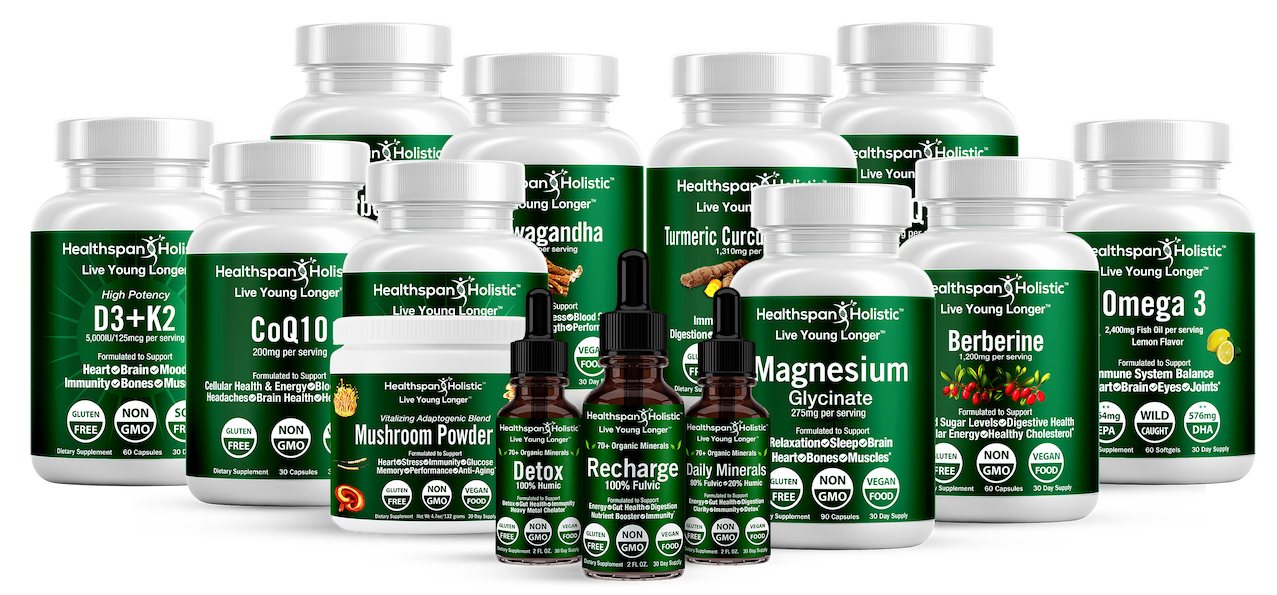
Healthspan Holistic offers professional-grade supplements designed to support the aging pillars we have covered here, from cellular membrane integrity to liver detoxification and mitochondrial function. Two products worth exploring are the Liver Sauce Botanical Blend, a targeted botanical formula supporting liver health and detoxification, and PC Liquid, which promotes cellular health and metabolic function at the membrane level.
1st Time Customers can take advantage of our BOGO 50% OFF special offer: Buy 1, Get 1 50% Off on all supplements.
These products are curated to complement the nutrition, lifestyle, and testing strategies in this article, not replace them. Take the next step toward optimal health and wellness with a product line built for the long game.
FAQ
What is healthspan, and how is it different from lifespan?
Healthspan refers to the years of your life spent in good health, free from disability and chronic disease. Lifespan simply counts total years lived, regardless of quality.
What are the best holistic approaches to longevity?
Combining quality sleep, regular strength and cardiovascular training, whole-food nutrition, stress management, and targeted supplementation produces the strongest cumulative effect on healthspan.
How do epigenetic tests help with holistic health improvement?
Epigenetic age tests like DunedinPACE and GrimAge measure how fast your cells are aging at a molecular level, giving you a personalized baseline to track and improve over time.
When should someone start focusing on healthspan enhancement strategies?
The most effective time to start is before symptoms appear. For most people, the 40s represent the optimal window to assess biological age and begin targeted interventions while the body is still highly responsive.
Can functional health supplements actually extend healthspan?
Supplements support specific aging mechanisms but work best when layered onto strong lifestyle habits and guided by lab results. They amplify a good foundation rather than substitute for one.
Leave a comment: