

TL;DR:
Choosing targeted, well-certified supplements based on personalized testing supports healthy aging from 45 to 75.
Safety, evidence level, and consistency are key factors in selecting effective supplements tailored to individual needs.
Walk into any health food store or scroll through a wellness website and you’ll face dozens of products all claiming to restore energy, sharpen your mind, or protect your heart. For anyone aged 45 to 75 focused on long-term vitality, the sheer volume of choices can feel paralyzing. Understanding the types of functional supplements available is the first step toward making confident, evidence-informed decisions. This guide cuts through the noise and gives you a clear framework to evaluate what’s worth your time, money, and trust.
Key Takeaways
| Point | Details |
|---|---|
| Evaluate supplement categories | Understand supplements by nutrient, mechanism, and safety categories to choose what fits your health needs. |
| Focus on consistency | Select supplement forms and formats you can take regularly to support long-term vitality routines. |
| Use lab tests to guide | Testing for nutrient deficiencies helps target supplements safely and effectively for longevity goals. |
| Verify product quality | Choose supplements verified by independent labs to avoid unsafe or ineffective products. |
| Set realistic expectations | Supplements support wellness but are not cure-alls; prioritize holistic lifestyle and medical advice. |
How to evaluate types of functional supplements
Before you spend a dollar on any product, you need a lens for evaluation. The role of functional supplements in your health plan depends entirely on matching the right ingredient to your actual needs, not the most convincing label.
Start by recognizing how the FDA regulates these products. Unlike prescription drugs, dietary supplements do not require pre-market approval. That means the burden of verifying safety and quality falls on you, the consumer. This is not a reason to avoid supplements. It is a reason to shop smarter.
Here is a practical framework for evaluating any supplement you encounter:
-
Ingredient category: Is it a vitamin, mineral, botanical, amino acid, or functional compound? Each category carries its own evidence base and safety profile.
-
Dosage form: Dietary supplements come in many dosage forms influencing tolerance and routine adherence. Capsules, tablets, powders, and liquids all absorb differently and suit different lifestyles.
-
Claim validity: Look for structure/function claims backed by peer-reviewed research, not just testimonials or vague “supports wellness” language.
-
Evidence level: Is the research on humans or just animals? Randomized controlled trials carry far more weight than observational studies.
-
Drug interactions: Anyone over 45 taking prescription medications needs to check for interactions before adding any supplement. Fish oil and blood thinners, for example, is a combination that requires physician oversight.
-
Third-party certification: Look for USP, NSF International, or ConsumerLab verification on the label. These signals mean an independent organization has tested what’s actually inside the bottle.
Understanding personalized supplementation benefits matters more than chasing the latest trend. What works for your neighbor may not serve your biology at all.
Pro Tip: Choose a supplement format you can realistically take every day. A powder you never mix or a tablet too large to swallow comfortably will sit on your shelf. Consistency over time is what drives results.
Nutrient-based supplements: vitamins, minerals, and multivitamins
These are the foundation of most supplementation plans. Nutrient-based products fill specific dietary gaps, and for people aged 45 to 75, several key nutrients deserve special attention.
Single-nutrient supplements target one specific deficiency. Think vitamin D3 for bone and immune support, vitamin B12 for nerve function and energy (especially important since B12 absorption declines with age), or magnesium for hundreds of enzymatic reactions. Multivitamins, on the other hand, combine dozens of nutrients into one product. They offer convenience, but they also require more scrutiny.
“Multivitamins are most valuable as a nutritional safety net, not a treatment. The COSMOS trial found that multivitamins did not protect against cardiovascular disease or cancer in healthy adults.”
This matters. It means you should think of multivitamins as insurance against dietary gaps, not as disease prevention tools. A useful detail: choose multivitamins with 50 to 150% of the Daily Value for most nutrients, and avoid those with over 200% except for specific vitamins like D, B12, or C, which have wider safety margins.
Here is a stepwise process for selecting the right nutrient supplements:
-
Identify your gaps first. Before buying, get a blood panel. Low vitamin D, insufficient B12, or borderline magnesium are common findings in adults over 45 and guide your selection precisely.
-
Target before stacking. Address confirmed deficiencies with single-nutrient supplements first. Add a multivitamin only if your overall diet is consistently poor in variety.
-
Match dose to your lab results. A vitamin D level of 18 ng/mL needs a different correction dose than a level of 28 ng/mL. Supplementing without data often means under-dosing or over-dosing.
-
Review your diet seasonally. Nutrient needs shift with age, season, and activity level. Your supplement routine should evolve accordingly.
-
Reassess every six months. A follow-up panel confirms whether your approach is working and prevents nutrient accumulation to toxic levels.
Learning more about supplement vitamin D benefits is a smart starting point if your energy or bone health feels off.
Mechanism-based supplements: omega-3s, magnesium, and functional mushrooms
These supplements work by influencing specific biological processes rather than simply filling a nutritional gap. They represent some of the most popular dietary supplements in this age group and some of the most misunderstood.
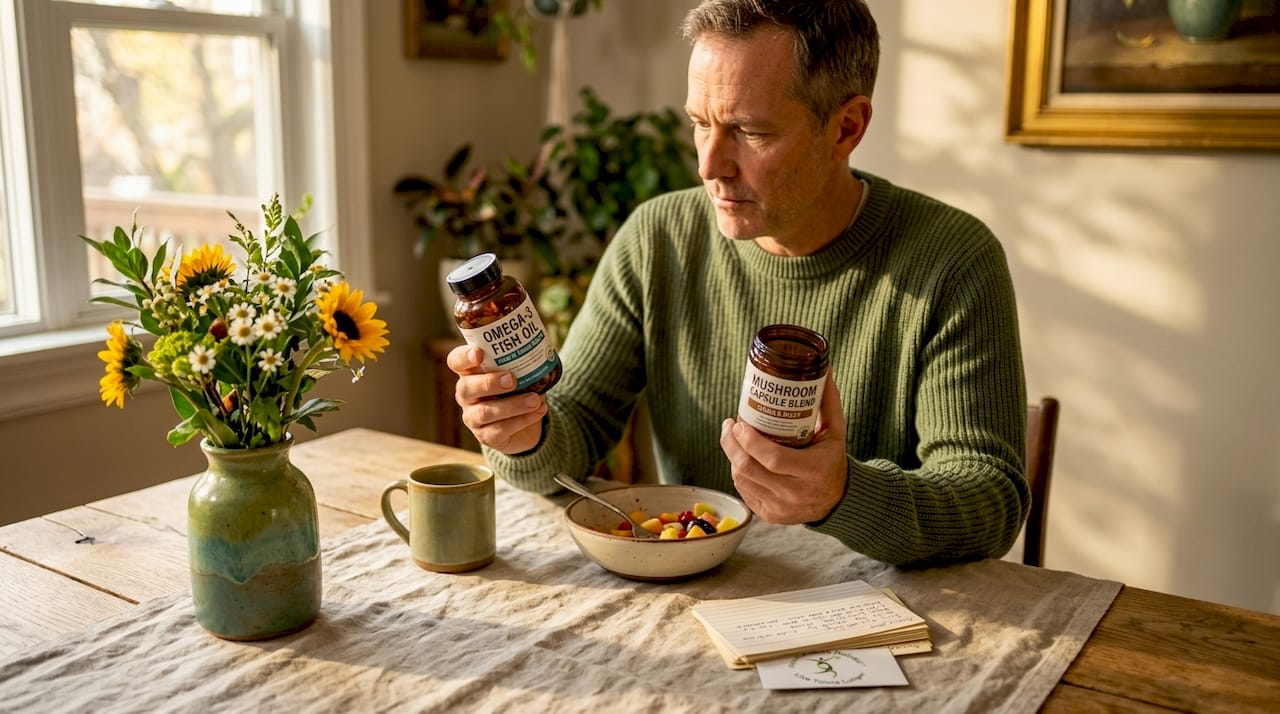
Omega-3 fatty acids (EPA and DHA, found in fish oil and algae oil) support cardiovascular function by reducing triglycerides and supporting healthy inflammation responses. They also play a documented role in cognitive health, which is a compelling reason for adults over 50 to consider them. Look for products specifying EPA and DHA content in milligrams, not just “fish oil” in grams.
Magnesium acts like a spark plug for over 300 enzymatic reactions in the body. It supports muscle recovery, sleep quality, blood sugar regulation, and heart rhythm. Magnesium glycinate and magnesium malate are gentler on the digestive system than magnesium oxide, which is poorly absorbed and commonly causes loose stools.
Functional mushrooms are natural performance enhancers with a long history in traditional Eastern medicine. Mushroom supplements vary by species, fruiting body or mycelium source, and powder or extract format, and all of these factors affect bioactive content. This is critical information when you’re shopping.
Here is a quick comparison to guide your decisions:
| Supplement | Primary benefit | Recommended form | Key label check |
|---|---|---|---|
| Omega-3 (EPA/DHA) | Heart and brain health | Triglyceride form fish oil or algae | EPA/DHA mg per serving |
| Magnesium glycinate | Sleep, muscle, metabolic | Capsule or powder | Elemental magnesium content |
| Lion’s mane mushroom | Cognitive support | Hot water extract | Fruiting body source |
| Reishi mushroom | Immune and stress support | Dual extract | Beta-glucan percentage |
| Chaga mushroom | Antioxidant, immune | Extract | Source and extraction method |
Key benefits and considerations at a glance:
-
Omega-3s reduce cardiovascular risk markers and may slow cognitive decline, but quality varies widely between brands
-
Magnesium corrects a deficiency that affects an estimated 50% of Americans, often invisibly
-
Lion’s mane contains hericenones and erinacines that may stimulate nerve growth factor production
-
Reishi is best suited for immune regulation and stress adaptation rather than acute health fixes
-
Dosage form influences convenience and how consistently you take products, a factor that matters especially in the 45 to 75 age group
Exploring products like maitake mushroom capsules or a well-formulated mushroom mycelium powder gives you targeted support with documented bioactive profiles.
Pro Tip: When buying mushroom supplements, always check whether the product comes from the fruiting body, the mycelium, or both. Fruiting bodies generally contain higher concentrations of the compounds you want, especially beta-glucans.
Comparing functional supplement types: form, function, and safety
Now that we have covered the main categories, it helps to see them side by side. This view clarifies the functional food categories most relevant to your vitality goals and flags where safety vigilance is needed.
| Type | Common forms | Primary function | Evidence level | Safety notes |
|---|---|---|---|---|
| Single vitamins (D, B12, C) | Capsule, soft gel, liquid | Fill specific deficiencies | Strong for deficiency correction | Monitor levels; D and A are fat-soluble |
| Multivitamins | Tablet, capsule, gummy | Dietary gap coverage | Moderate | Avoid mega-doses; check iron content |
| Omega-3 fatty acids | Soft gel, liquid | Cardiovascular, cognitive | Strong (EPA/DHA) | Check blood thinner interactions |
| Magnesium | Capsule, powder, liquid | Muscle, sleep, metabolic | Strong | Choose glycinate or malate for absorption |
| Functional mushrooms | Capsule, powder, extract | Immune, cognitive, adaptogenic | Emerging to moderate | Verify species and sourcing |
Safety tips worth bookmarking:
-
Verify third-party testing before purchasing. The FDA does not pre-approve most supplements, so quality control is your responsibility.
-
Never mega-dose fat-soluble vitamins (A, D, E, K) without testing and medical guidance. These accumulate in tissue and can reach toxic levels.
-
Watch for interactions between supplements and medications, particularly anticoagulants, thyroid medications, and statins.
-
Gummies often contain added sugars and lower active ingredient concentrations. They suit some people but are rarely the most cost-effective format.
-
Buy from brands with transparent manufacturing practices and ideally from those producing in NSF-certified or FDA-registered facilities.
Browsing a curated popular supplements collection vetted for quality and potency removes much of the guesswork from this process.
How to choose the right functional supplements for your longevity plan
This is where the guide to functional supplements becomes personal. Knowing what exists is step one. Knowing what you specifically need is step two, and it requires a bit more effort.
Practitioners recommend testing for deficiencies, targeting supplements selectively, and reviewing medication interactions, especially for older adults. Here is how to put that advice into action:
-
Start with a baseline lab panel. Test vitamin D, B12, magnesium, omega-3 index, and inflammatory markers like CRP. These results give you a personalized map rather than guesswork.
-
List all current medications. Share this list with your doctor or pharmacist before adding any supplement. Drug-nutrient interactions are more common than most people realize.
-
Select supplements based on confirmed need. If your omega-3 index is below 8%, adding fish oil makes clinical sense. If your vitamin D is already at 65 ng/mL, supplementing further adds no benefit and potential risk.
-
Choose certified brands. Prioritize products bearing USP, NSF, or ConsumerLab verification. These symbols mean the label matches what is in the bottle.
-
Build your routine around simplicity. Two or three well-chosen supplements taken consistently outperform a complex 12-product stack taken irregularly.
-
Schedule a follow-up panel at six months. Confirm your levels have moved and adjust accordingly. Supplementing without reassessment is like driving without checking your mirrors.
Exploring functional lab tests for vitality gives you a clear picture of where you stand and exactly where targeted supplementation can move the needle.
Pro Tip: Integrate your supplements into an existing daily habit. Take them alongside breakfast or when you brush your teeth. Attaching a new behavior to an established one dramatically improves long-term consistency.
A practical perspective on functional supplements for vitality seekers
Here is something most supplement articles will not tell you. The word “functional” on a label is a marketing claim, not a regulatory category. It does not guarantee clinical proof, significant dosing, or meaningful benefit for your specific health picture.
The supplement industry is built on hope, and hope is not nothing. When you see a product described as a natural performance enhancer or a health-focused supplement for longevity, that language is designed to connect with your desire for a longer, more energetic life. We understand that desire completely. But supplements should be viewed as adjuncts to diet and lifestyle, with evidence and safety varying widely by ingredient type.
What actually determines success with supplements is rarely the product itself. It is your ability to take it consistently, in the right dose, within a broader context of sleep, nutrition, and movement. We have seen people invest hundreds of dollars monthly in stacks of supplements while sleeping five hours a night and eating highly processed food. The supplements cannot overcome that gap. No product can.
The most effective supplementation plan is the one you actually follow, built around your real deficiencies and real lifestyle, not the one with the most impressive ingredient list.
Personalization is also a safety matter, not just a performance matter. A supplement that benefits one person can genuinely harm another. Blood thinners and high-dose vitamin E or omega-3s together, for example, can increase bleeding risk. Calcium supplements without adequate vitamin K2 may deposit in arteries rather than bones. These are not rare edge cases. They are common combinations in the 45 to 75 age group.
The good news is that well-chosen, evidence-grounded supplements genuinely do support vitality when selected thoughtfully. Dive deeper into holistic supplement insights to see how a whole-body approach brings this all together in a way that is both safe and genuinely energizing.
Pro Tip: Avoid chasing the latest functional supplement trend. Instead, build your routine around what your lab results reveal. Trend-chasing leads to an expensive, cluttered supplement shelf. Lab-guided selection leads to results.
Enhance your vitality with Healthspan Holistic supplements and testing
Now that you understand how to evaluate and select the right types of functional supplements, take that knowledge and put it to work. At Healthspan Holistic, we have done the curation for you. Our popular supplements collection features professional-grade products selected for potency, purity, and relevance to adults focused on vitality and longevity. If you are ready to personalize your approach, our vitamin D, omega-3, and magnesium lab test gives you the baseline data your decisions deserve. And if you want expert guidance on integrating supplements, lifestyle, and your specific health history, Contact Us to schedule a consultation. 1st time customers can take advantage of our BOGO 50% OFF offer on all supplements. Your longevity journey starts with one informed step.
Frequently asked questions
What exactly are functional supplements?
Dietary supplements are products intended to supplement the diet using ingredients like vitamins, minerals, herbs, and amino acids, but they are not regulated as drugs. Functional supplements is a broader term often used to describe products with a targeted health purpose beyond basic nutrition.
Are multivitamins proven to prevent chronic diseases?
Current evidence, including the COSMOS trial, shows multivitamins did not protect against cardiovascular disease or cancer in healthy adults. They are most useful as a dietary safety net, not a disease prevention strategy.
How do I know if a supplement is safe and effective?
Because the FDA does not pre-approve most supplements, your best protection is choosing products verified by independent programs like USP, NSF International, or ConsumerLab. These organizations confirm that what is on the label is actually in the bottle.
Can functional mushrooms help with cognitive health?
Functional mushrooms like lion’s mane contain compounds that may support brain health, but label source and form affect bioactive content significantly. Results vary by species, extraction method, and individual response, so quality of the product matters as much as the mushroom itself.
What should people aged 45 to 75 consider before taking supplements?
Practitioners stress testing for deficiencies, reviewing current medications for interactions, and selecting supplements based on confirmed need rather than general wellness marketing. Consistent intake of a few well-chosen products beats an unsustainable stack of many.
Recommended
-
Best evidence-based supplements for longevity after 40 | Healthspan Holistic
-
Functional lab tests: unlock vitality and longevity | Healthspan Holistic
-
How nutrition transforms aging and your vitality | Healthspan Holistic
-
Holistic supplements: energy, pain, and wellness after 40 | Healthspan Holistic
Leave a comment: