

TL;DR:
- Maintaining joint health after 45 relies on consistent physical activity, anti-inflammatory diets, and personalized lifestyle habits. Proper movement, nutritious food, and weight management reduce joint stress and support cartilage repair over time. Combining these strategies with testing and targeted supplements optimizes long-term joint comfort and mobility.
If you’ve noticed that your knees feel stiffer in the morning or that climbing stairs takes more effort than it used to, you’re not imagining it. Joint discomfort after 45 is one of the most common reasons people start exploring natural, holistic approaches to health. Knowing how to support joint health through lifestyle changes, rather than relying solely on medications, puts real power back in your hands. This guide covers the four pillars that actually move the needle: physical activity, anti-inflammatory nutrition, smart supplementation, and daily habits that protect your joints for the long haul.
Key takeaways
| Point | Details |
|---|---|
| Exercise is foundational | At least 150 minutes of moderate activity weekly strengthens muscles and protects joint function. |
| Diet patterns beat superfoods | A Mediterranean-style eating pattern reduces inflammation more reliably than any single supplement. |
| Supplements come last | Address diet and physical therapy first; add supplements only with professional guidance. |
| Daily habits reduce joint load | Weight management, ergonomic adjustments, and heat or cold therapy offer meaningful day-to-day relief. |
| Testing guides personalization | Lab panels for inflammation and metabolic health help tailor your joint support plan with precision. |
How to support joint health through physical activity
There is a widespread belief that resting sore joints protects them. In practice, the opposite is true. Physical activity keeps joints healthy by building the muscles that surround and stabilize them, reducing stress on cartilage and connective tissue over time. Inactivity causes those supporting muscles to weaken, which increases joint strain with every step.
For adults over 45, the goal is not to train like an athlete. It’s to move consistently and wisely. A minimum of 150 minutes of moderate activity per week, including both aerobic exercise and strength training, is the evidence-based benchmark for maintaining joint mobility and reducing pain risk.
Here are the most effective exercise categories for joint health after 45:
-
Low-impact aerobic activity: Swimming, cycling, and walking on grass or a track reduce joint stress compared to hard pavement while keeping your cardiovascular system active and your joints mobile.
-
Strength training: Building muscle around the knees, hips, and shoulders directly reduces the load placed on those joints. Two sessions per week using light to moderate resistance is a solid starting point.
-
Range-of-motion exercises: Gentle stretching and yoga improve flexibility, reduce stiffness, and help you move through your full range of motion without discomfort.
-
Balance training: Standing on one leg, using a balance board, or practicing tai chi improves joint stability and reduces fall risk, which becomes more relevant after 50.
One of the most discouraging barriers to getting started is the temporary increase in pain that often comes with new activity. It feels like a warning signal, but initial discomfort during activity does not usually indicate tissue damage. It’s your body adapting. Pushing through mild soreness, while staying well below your pain threshold, is actually part of how your joints and muscles get stronger.
Pro Tip: Start with just 10 to 15 minutes of walking every day. Build by five minutes each week. This gradual ramp-up lets your joints adapt without triggering inflammation or injury, and the consistency compounds over time far more than intense bursts ever would.
The confidence that comes from gradual, guided activity progression is also a psychological win. When you realize that moving more makes you feel better rather than worse, keeping at it becomes much easier.
Anti-inflammatory eating for joint comfort
What you eat every day either turns down the volume on joint inflammation or turns it up. The good news is that the dietary pattern most supported by research for joint health is also one of the most satisfying and sustainable ways to eat.

Mediterranean-style diets built around whole foods including fruits, vegetables, legumes, fish, nuts, and olive oil have a well-documented anti-inflammatory effect. This eating pattern works because it limits processed foods, refined sugars, and industrially produced fats, all of which contribute to systemic inflammation that settles in your joints.
| Food category | Joint-friendly choices | What to minimize |
|---|---|---|
| Proteins | Salmon, sardines, legumes, eggs | Processed meats, fried proteins |
| Fats | Olive oil, avocados, walnuts | Vegetable shortening, trans fats |
| Carbohydrates | Whole grains, sweet potatoes, berries | White bread, pastries, sugary drinks |
| Vegetables | Leafy greens, broccoli, bell peppers | Heavily salted, canned in brine |
One of the most important principles here is that nutrition works as a team. Chasing individual superfoods like turmeric or blueberries, while the rest of your plate stays full of inflammatory foods, produces minimal results. Your body responds to patterns, not isolated nutrients.
Foods rich in omega-3 fatty acids deserve special mention. Fatty fish like salmon and mackerel, as well as flaxseeds and walnuts, contain EPA and DHA, compounds that actively suppress inflammatory pathways in the body. Eating two to three servings of fatty fish per week is one of the most concrete ways to reduce joint pain through diet alone.
Pro Tip: Meal prep Sunday. Spend 45 minutes cooking a batch of grains, roasting vegetables, and portioning out nuts and seeds for the week. When healthy food is already in front of you, the decision to eat it is effortless. When it requires effort, processed food wins.
Beyond food, consider that chronic stress, poor sleep, and sedentary behavior all amplify inflammation in the body. Diet is a major lever, but it works best when the rest of your lifestyle supports it. Your holistic health checklist for ages 45 to 75 can help you see the full picture.
Choosing supplements wisely
Supplements are appealing because they feel like a direct solution. Buy the bottle, take the capsule, feel better. The reality is more nuanced, and understanding that nuance can save you money and protect your health.
The first principle, according to American College of Rheumatology guidance, is that diet improvement and physical therapy assessment should come before any supplement use. Most people who jump straight to glucosamine have not yet maximized their diet or exercise habits. Supplements fill gaps. They don’t replace foundations.
That said, there are several supplements with meaningful evidence behind them for joint support:
-
Glucosamine and chondroitin: These two compounds, often sold together, are the most studied supplements for osteoarthritis. Evidence is mixed overall, but a subset of people with moderate to severe knee pain show measurable benefit.
-
Omega-3 fatty acids (EPA/DHA): Reducing inflammation systemically, fish oil remains one of the better-supported options for joint comfort, especially when dietary fish intake is low.
-
Curcumin: The active compound in turmeric has real anti-inflammatory properties, but standard turmeric powder has poor absorption. Look for formulations with piperine or phospholipid complexes.
-
Collagen peptides: Emerging research suggests that hydrolyzed collagen may support cartilage health, particularly when taken with vitamin C to support synthesis.
-
Boswellia serrata: A lesser-known but well-studied herb with anti-inflammatory effects specifically relevant to joint tissues, often showing results within four to eight weeks.
The critical missing step most people skip is testing. Proper clinical assessment before supplementing allows you to address actual deficiencies rather than guess. If your inflammatory markers are elevated, that changes which supplements make sense. If your vitamin D is low, that affects joint and bone health in a way no amount of glucosamine will fix. Explore what personalized supplementation looks like when it’s grounded in real data. For adults over 40 specifically, the guide on holistic supplements after 40 is worth reading before you fill your cart.
Daily habits that protect your joints
The small choices you make each day accumulate into the health of your joints over years. These are not dramatic interventions. They are simple, repeatable practices that reduce wear and support recovery.
Managing your weight is one of the highest-return investments in joint health. Every extra pound of body weight adds roughly four pounds of force on your knee joints with each step. Weight management directly reduces cartilage stress and slows the progression of joint degeneration. Even a modest loss of 10 pounds can produce meaningful reduction in knee pain.
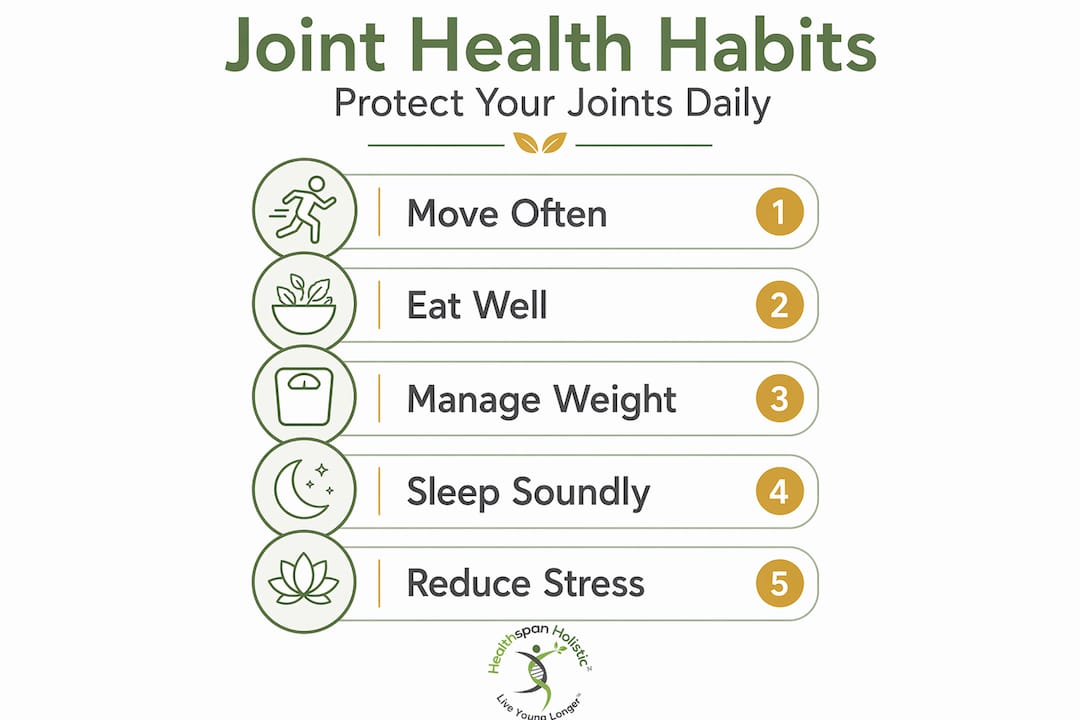
Using heat and cold strategically is a clinical skill worth learning. Heat improves blood flow and relaxes stiff joints, making it ideal for morning stiffness or before exercise. Cold reduces swelling and numbs acute pain, making it better suited for post-activity inflammation or flare-ups. The simple rule: heat for stiffness, cold for swelling.
Practical joint protection habits worth adopting:
-
Adjust your workstation so your screen is at eye level, your feet are flat on the floor, and your elbows rest at a 90-degree angle. Poor ergonomics increase joint strain in the neck, wrists, and hips over time.
-
Avoid sitting for longer than 45 to 60 minutes at a stretch. Stand, walk for two minutes, and return. This simple break resets joint fluid distribution and reduces stiffness.
-
Prioritize seven to nine hours of sleep. During deep sleep, your body performs repair work on cartilage and connective tissue. Consistent sleep deprivation accelerates inflammatory processes.
Pro Tip: Set a recurring phone alarm labeled “joint reset” every hour during your workday. Stand, take 10 steps, roll your shoulders, and sit back down. You’ll be amazed at how much less stiff you feel by the end of the day.
Know when to seek medical advice. If you experience sudden joint swelling, significant pain at rest, or joint locking, those are signals that warrant professional evaluation. Holistic strategies support your joints powerfully, but they work alongside appropriate medical care, not instead of it. For a well-rounded framework, the joint health tips from active adults perspective is a useful complement.
My honest take on joint health after 45
I’ve seen a lot of people go through the same cycle. They notice joint discomfort, they try to rest it away, the discomfort persists, and then they start researching supplements. By the time they find this kind of article, they’ve already bought three bottles that didn’t help and they’re frustrated.
What I’ve learned is that the frustration usually comes from expecting a fast solution for something that took years to develop. Your joints didn’t start complaining overnight. They adapted to decades of use, inactivity, dietary patterns, and accumulated stress. Restoring them takes months of consistent input, not weeks of a supplement stack.
The insight that changed how I approach joint health coaching is this: pain avoidance is often more damaging than the pain itself. When people stop moving because movement hurts, they lose muscle, lose mobility, and lose confidence. That loss accelerates decline faster than the original discomfort ever would. Gradual, consistent, properly guided movement is the medicine.
I also think we underestimate the power of testing. Most people guessing at their supplement needs are working in the dark. Knowing your inflammation markers, your vitamin D level, and your metabolic panel transforms supplementation from hopeful guessing into precise support. That’s the difference between a shotgun approach and a strategy.
The work is patient, steady, and absolutely worth it. And the results, when they come, feel genuinely earned.
— Chris
Start your personalized joint health plan
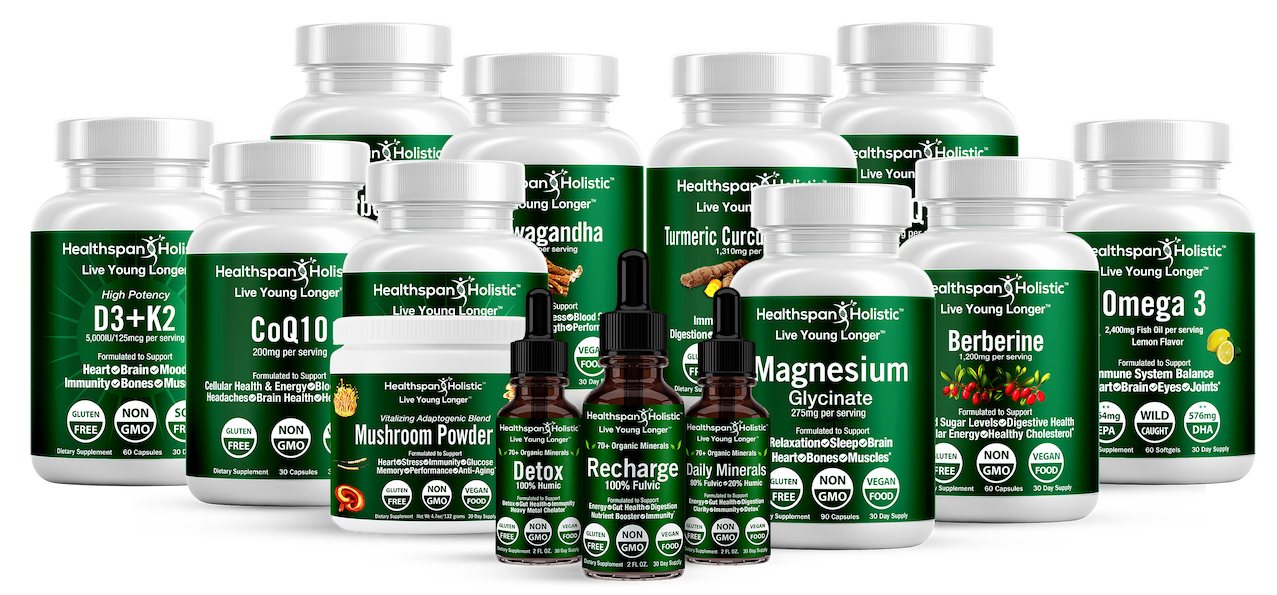
If this article gave you a clearer picture of what maintaining joint function actually requires, the next step is understanding where you specifically stand. At Healthspan Holistic, we offer an inflammation panel and a metabolic health panel that give you the biomarker data to make your joint support plan truly personal rather than generic. Our holistic health coaching can then guide you through lifestyle, nutrition, and supplementation changes step by step. Browse our professional-grade supplements designed for adults who want real results.
1st Time Customers can take advantage of our BUY 1 GET 1 50% OFF on all supplements.
FAQ
What exercises are best for joint health after 45?
Low-impact activities like swimming, cycling, and walking combined with twice-weekly strength training are the most effective exercises for joint health. Aim for at least 150 minutes of moderate activity per week to support muscle strength and joint function.
Can diet really reduce joint pain?
Yes. A Mediterranean-style dietary pattern rich in fatty fish, olive oil, vegetables, and legumes consistently reduces systemic inflammation, which is a primary driver of joint discomfort. Focusing on your overall eating pattern produces better results than any single food.
Are supplements for joints worth taking?
Supplements like glucosamine, chondroitin, curcumin, and omega-3 fatty acids have supporting evidence, but they work best after optimizing diet and exercise first. A clinical assessment of your inflammation markers and nutrient levels helps identify which supplements are actually worth taking for your specific needs.
How does body weight affect joint health?
Each pound of excess body weight places roughly four pounds of added stress on your knee joints with every step. Maintaining a healthy weight is one of the most direct ways to reduce joint load, slow cartilage breakdown, and lower chronic pain levels.
When should I see a doctor about joint pain?
Seek medical evaluation if you experience sudden joint swelling, significant pain while at rest, joint locking, or any rapid change in symptoms. Natural and holistic strategies are powerful complements to medical care, not substitutes when serious symptoms arise.
Leave a comment: