

TL;DR:
- Peptide therapy uses short amino acid sequences to support muscle, immune, hormonal, and tissue health. Effectiveness depends on proper testing, supervision, and awareness of evolving regulations in 2026. Monitoring labs before and during therapy ensures safety while aligning treatment with individual goals.
Peptide therapy support is defined as the clinical use of short-chain amino acid sequences to target specific biological pathways, including muscle recovery, immune modulation, hormone regulation, and tissue repair. For adults between 35 and 60, this approach has moved from the fringes of sports medicine into mainstream integrative health, driven by growing evidence and a more nuanced understanding of how peptides interact with the body’s own signaling systems. Peptides like BPC-157, TB-500, and FDA-approved agents like Semaglutide represent a spectrum of options, each with distinct mechanisms, evidence profiles, and monitoring requirements. What separates effective peptide therapy from guesswork is not the peptide itself. It is the structure around it: proper testing, medical supervision, and a clear understanding of the 2026 regulatory environment.
What are the main benefits of peptide therapy support?
The benefits of peptide therapy fall into three broad categories: growth hormone axis support, tissue repair and healing, and metabolic health. Each category draws on different peptide classes, and the evidence behind them varies considerably.
Growth hormone axis peptides
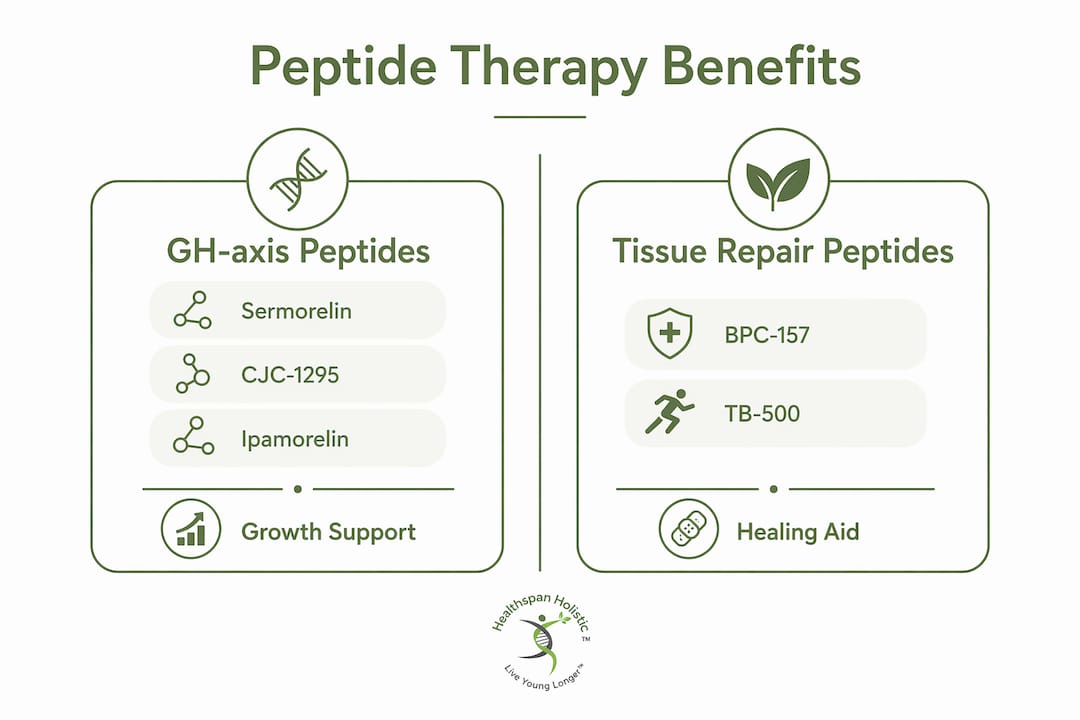
GH-axis peptides like Sermorelin, CJC-1295, and Ipamorelin stimulate the pituitary gland to release growth hormone naturally. This matters for adults over 35 because natural GH output declines with age, contributing to reduced muscle mass, slower recovery, and increased body fat. These peptides work by mimicking the body’s own signaling molecules, which is why they are often described as a more physiologic approach compared to direct GH injections.
Tissue repair and healing peptides
BPC-157 and TB-500 are among the most discussed performance peptides support options for recovery. BPC-157 stimulates angiogenesis, accelerates tendon healing, and exerts cytoprotective effects, supported by preclinical studies and case reports. TB-500 promotes cell migration and tissue regeneration through thymosin beta-4 pathways. The evidence for both remains in the moderate category, meaning preclinical data and clinical case series are promising, but large randomized controlled trials are still limited.
Metabolic peptides
Semaglutide and tirzepatide sit at the strongest end of the evidence spectrum. As FDA-approved GLP-1 receptor agonists, large randomized controlled trials show 15 to 22% body weight reduction alongside cardiovascular and hepatic benefits. These are not fringe compounds. They are among the most studied metabolic agents in modern medicine, and their inclusion in the peptide therapy conversation reflects how broad this field has become.
| Peptide class | Examples | Primary benefit | Evidence level |
|---|---|---|---|
| GH-axis peptides | Sermorelin, CJC-1295, Ipamorelin | Muscle recovery, body composition | Moderate |
| Tissue repair peptides | BPC-157, TB-500 | Tendon healing, tissue regeneration | Moderate (preclinical) |
| Metabolic peptides | Semaglutide, Tirzepatide | Weight loss, metabolic health | Strong (RCT data) |
| Immune modulating peptides | Thymosin Alpha-1, LL-37 | Immune function, inflammation | Early to moderate |
Pro Tip: When evaluating any peptide benefit claim, ask two questions: what type of study supports it, and in what population? Preclinical rodent data does not automatically translate to human outcomes, and anecdotal reports from online forums are not clinical evidence. A physician-reviewed evidence-based overview is your starting point.
How is peptide therapy support monitored for safety and effectiveness?
Safe peptide therapy for wellness depends entirely on structured lab monitoring. The biology is promising, but practical use is constrained more by data gaps in safety and dosing than by mechanistic plausibility. That means monitoring is not optional. It is the foundation of responsible therapy.
Different peptide classes require tailored lab panels and monitoring timelines. A one-size-fits-all approach to bloodwork is one of the most common failures in practice. Here is the recommended monitoring sequence for most peptide protocols:
-
Baseline labs within 30 days of starting. For GH-axis peptides, this includes IGF-1, fasting glucose, HbA1c, and a comprehensive metabolic panel. For metabolic peptides, add lipid panel and liver enzymes. For healing peptides, include inflammatory markers like CRP and ESR.
-
First follow-up at 6 to 8 weeks. This is the critical window. IGF-1 testing at 6 to 8 weeks guides dose adjustments and therapy continuation decisions. A flat IGF-1 response at this point suggests either a dose adjustment or a pause to reassess.
-
Three-month comprehensive review. Reassess all baseline markers, evaluate subjective outcomes like energy, sleep quality, and recovery speed, and confirm no adverse metabolic shifts.
-
Quarterly monitoring thereafter. For ongoing protocols, quarterly labs maintain safety and allow for protocol refinement as your body adapts.
-
Symptom-driven testing between scheduled labs. If you notice unexpected fatigue, changes in blood sugar, or joint discomfort, do not wait for the next scheduled draw.
Baseline and follow-up bloodwork is non-negotiable for GH-axis peptides, with IGF-1 and metabolic safety markers like fasting glucose and HbA1c checked every 6 to 8 weeks and then quarterly. This cadence exists because IGF-1 is a stable, reliable biomarker for GH-axis peptide efficacy. When levels rise appropriately, you know the therapy is working. When they do not, you know to act.
Pro Tip: Before starting any peptide protocol, order a Peptide Baseline Lab Panel. Also note that nutrient deficiencies in magnesium, zinc, and B vitamins can blunt peptide response and make it harder to interpret your results accurately.

What is the regulatory environment for peptide therapy in 2026?
The regulatory picture around peptide treatment options in 2026 is shifting, and understanding it protects you from both legal risk and substandard products. The FDA’s position on compounded peptides has evolved meaningfully this year.
In April 2026, the FDA removed 12 peptides from the Category 2 “do not compound” list and scheduled Pharmacy Compounding Advisory Committee (PCAC) meetings to evaluate their status further. This is a meaningful signal, but it is not a green light. Removal from Category 2 does not automatically approve a peptide for compounding. It opens the door for further review.
FDA removal from Category 2 does not guarantee lawful compounding. API quality, supplier compliance, and pharmacy accreditation remain active challenges. Patients sourcing compounded peptides should verify that their pharmacy operates under 503A or 503B standards and uses third-party tested active pharmaceutical ingredients.
Peptides currently under active regulatory consideration include:
-
BPC-157: Removed from Category 2 in 2026, pending PCAC evaluation
-
TB-500 (Thymosin Beta-4 fragment): Under review for compounding eligibility
-
Epithalon: Regulatory status under active assessment
-
Selank and Semax: Neuropeptides with evolving compounding classification
-
CJC-1295 and Ipamorelin: GH-axis peptides with ongoing PCAC scrutiny
FDA’s evolving stance on peptide compounding signals a complex regulatory environment that patients and providers must navigate proactively. For a deeper breakdown of what these changes mean for your access to specific peptides, the Healthspan Holistic article on the 2026 FDA peptide announcement covers the practical implications in detail.
How to approach peptide therapy for your health and wellness
Starting peptide therapy without a framework is like training without a program. You may see some results, but you will not get the most from the process, and you increase the risk of setbacks. Here is how to approach this practically.
The first step is matching the peptide to your actual health goal. Adults seeking muscle recovery and body composition improvements look at GH-axis peptides. Those dealing with chronic tendon issues or post-injury recovery explore BPC-157 or peptides for injury recovery. Adults with metabolic concerns like insulin resistance or excess body fat have the strongest evidence base in GLP-1 agents like Semaglutide.
Practical steps for initiating peptide therapy responsibly:
-
Work with a licensed provider. Self-prescribing peptides carries real risk. A physician or nurse practitioner experienced in integrative medicine can match your protocol to your labs, history, and goals.
-
Get baseline labs before day one. Do not start without knowing your IGF-1, fasting glucose, HbA1c, and relevant inflammatory markers.
-
Plan for cycling. Most GH-axis peptide protocols run 3 to 6 months, followed by a break. Continuous use without cycling can blunt receptor sensitivity.
-
Track subjective outcomes weekly. Energy levels, sleep quality, recovery speed, and body composition changes are all data points. Log them alongside your lab results.
-
Assess your micronutrient status. Deficiencies in magnesium and zinc specifically can impair GH release and recovery. A Magnesium RBC test gives you a more accurate picture than standard serum magnesium.
-
Review your cardiovascular baseline. Metabolic peptides in particular affect lipid profiles and cardiac markers. Starting with a clear cardiovascular picture is responsible practice.
Therapeutic peptides show potential across multiple aging hallmarks but face challenges including limited long-term safety data and unclear dosing regimens. That is not a reason to avoid them. It is a reason to approach them with structure. For adults over 40 looking at the broader picture of longevity and vitality, peptide therapy is one tool in a larger strategy that includes nutrition, sleep, movement, and targeted supplementation.
Key takeaways
Effective peptide therapy support requires matching the right peptide class to your health goal, establishing baseline labs before starting, and following a protocol-specific monitoring schedule.
| Point | Details |
|---|---|
| Match peptide to goal | GH-axis peptides suit recovery; metabolic peptides suit weight and insulin health. |
| Baseline labs are non-negotiable | Test IGF-1, HbA1c, and fasting glucose before starting any peptide protocol. |
| Monitor at 6 to 8 weeks | IGF-1 response at this window determines dose adjustment or continuation. |
| Regulatory status is evolving | FDA removed 12 peptides from Category 2 in 2026, but compounding is not yet approved. |
| Supervision protects outcomes | Self-prescribing without medical oversight increases risk and reduces effectiveness. |
What I have learned from watching patients navigate peptide therapy
The most common mistake I see is enthusiasm without infrastructure. Someone reads about BPC-157 or Sermorelin, orders a compounded version online, and starts injecting without a single baseline lab. Six weeks later, they feel “pretty good” and assume it is working. Maybe it is. But they have no way to know, and they have no safety net if something is shifting in the wrong direction.
What actually works is treating peptide therapy the way you would treat any serious health intervention: with data before, data during, and a clear definition of success. The patients who get the most from these protocols are the ones who come in with their labs, track their outcomes honestly, and adjust when the evidence says to adjust. They are not chasing a feeling. They are managing a process.
I also want to be direct about the evidence gap. Despite promising biology and real clinical experience, extensive RCTs remain scarce for many peptides. That does not make them useless. It makes clinical judgment and patient selection more important, not less. The adults who benefit most tend to be those who are already doing the fundamentals well: sleeping, eating well, managing stress, and using peptides as a targeted addition rather than a shortcut.
If you are exploring peptides for anti-aging goals, start with the question: what specific outcome am I trying to achieve, and what is the evidence that this peptide supports that outcome? That single question will save you time, money, and potential risk.
— Chris
Support your peptide therapy with targeted lab testing
At Healthspan Holistic, we believe that peptide therapy works best when it is built on a foundation of real data. Our lab testing options are designed to give you the baseline and ongoing monitoring you need to get the most from any peptide protocol safely. Be sure to checkout our Peptide Baseline Lab Panel which includes all of the biomarkers discussed in this article. 1st Time Customers can take advantage of our BUY 1 GET 1 50% OFF special offer on all supplements. Start with the right data, and your therapy starts with the right foundation.
FAQ
What is peptide therapy support?
Peptide therapy support refers to structured clinical protocols using biologically active peptides to target specific health outcomes like muscle recovery, immune function, and metabolic health. It includes the peptide protocol itself, lab monitoring, and medical supervision.
How does peptide therapy work in the body?
Peptides bind to specific receptors and trigger targeted biological responses, such as stimulating growth hormone release, promoting tissue repair, or activating GLP-1 pathways for metabolic regulation. The mechanism depends entirely on the peptide class being used.
What are the main peptide therapy side effects to watch for?
Side effects vary by peptide class and include water retention and insulin sensitivity changes with GH-axis peptides, GI discomfort with GLP-1 agents, and injection site reactions across all classes. Regular bloodwork catches most adverse metabolic shifts early.
Are compounded peptides legal in 2026?
The FDA removed 12 peptides from the Category 2 “do not compound” list in April 2026, but this does not automatically make them legal to compound. PCAC review is still required, and patients should only source from accredited 503A or 503B pharmacies.
How long before peptide therapy for muscle gain shows results?
Most GH-axis peptide protocols show measurable IGF-1 changes at 6 to 8 weeks, with body composition and recovery improvements typically noticeable between 8 and 12 weeks of consistent use alongside proper nutrition and training.
Leave a comment: