

TL;DR:
- Bioregulator peptides are short amino acid chains that penetrate cell nuclei and regulate gene expression directly. They target specific tissues and can extend lifespan, with evidence from animal studies and limited human trials. These peptides are used carefully alongside personalized wellness strategies to support healthy aging after 45.
Bioregulator peptides are defined as ultra-short amino acid chains, typically 2–4 amino acids long, that penetrate cell nuclei and regulate gene expression in specific tissues. Unlike most supplements or conventional peptides, they do not bind to surface receptors. They interact directly with DNA promoter regions, modulating which genes switch on or off at the cellular level. This mechanism, pioneered by researcher Vladimir Khavinson at the Russian Institute of Bioregulation and Gerontology, has been studied for over 40 years. For health-conscious adults aged 45–75, these peptides represent a shift from managing symptoms to addressing the biological roots of aging itself.
How do bioregulator peptides work at the molecular level?
The defining feature of peptide bioregulators is their size. At just 2–4 amino acids, they are small enough to cross cell and nuclear membranes and reach DNA directly. That is what separates them from nearly every other peptide therapy on the market.
Most peptides work by binding to receptors on the outside of cells, triggering a cascade of signals inside. Bioregulators skip that step entirely. They interact with DNA promoter regions, the control switches that determine whether a gene is expressed or silenced. This epigenetic action means they can restore gene expression patterns that decline with age, essentially nudging aging cells back toward younger functional states.
Their tissue specificity is equally important. Each bioregulator is derived from a specific organ or gland and retains an affinity for that tissue. Epitalon, for example, originates from the pineal gland and preferentially acts on pineal tissue. Cortexin targets the brain cortex. This targeting means the effects are concentrated where they are needed, rather than dispersed system-wide.
Key characteristics that distinguish bioregulators from other peptides:
-
Size: 2–4 amino acids, enabling nuclear membrane penetration
-
Mechanism: Direct DNA promoter interaction, not surface receptor binding
-
Dosing: Effective at ultra-low microgram doses due to direct gene access
-
Specificity: Each peptide corresponds to a specific organ or tissue type
-
Epigenetic effect: Restores age-related changes in gene expression patterns
Pro Tip: If a practitioner describes all peptides as working the same way, that is a red flag. The nuclear DNA interaction of bioregulators is fundamentally different from receptor-binding peptides like BPC-157 or growth hormone secretagogues. Ask specifically about the mechanism before starting any protocol.
What does the science say about bioregulator peptide benefits?
The research base for these peptides is substantial, though it carries an important caveat. Most clinical and animal data originate from a single Russian research network, with limited independent replication in Western randomized controlled trials. That context matters when interpreting the findings below.
Animal studies and lifespan extension
The longevity data from animal models is striking. Pineal and thymus-derived bioregulators produced 20–40% lifespan increases in multiple animal studies. That range reflects meaningful biological extension, not marginal gains. Epitalon specifically extended telomeres by 44% in normal human cell lines, a finding that connects directly to cellular aging theory. Telomere shortening is one of the most studied markers of biological aging, so a 44% extension in cell culture is a result worth noting.
Subcutaneous Epitalon injections increased mean and maximum lifespan by 12.3% in female SHR mice, with preserved reproductive function lasting longer than in controls. The protocol used 0.1 micrograms per mouse, administered 5 days per month starting at 3 months of age. That ultra-low effective dose is consistent with the direct nuclear mechanism described above.
Human clinical evidence
Human data exists, though it is more limited in scope. A clinical trial of Pinealon in 72 patients with traumatic brain injury found that oral Pinealon improved memory scores by 59.4%. That result is clinically significant, and it also demonstrates something practically important: oral administration produced meaningful outcomes even though oral bioavailability is lower than injectable routes. The brain injury context is specific, but the memory improvement signal is relevant to age-related cognitive decline research.
Comparative overview of studied bioregulators
| Peptide | Target organ | Primary studied effect |
|---|---|---|
| Epitalon | Pineal gland | Telomere extension, lifespan, melatonin regulation |
| Thymalin | Thymus | Immune function restoration, immune aging |
| Cortexin | Brain cortex | Cognitive support, neuroprotection |
| Retinalamin | Retina | Visual function, retinal cell protection |
| Pinealon | Pineal/brain | Memory, circadian rhythm, cognitive repair |
| Vilon | Immune system | Geroprotection (with noted safety signals) |
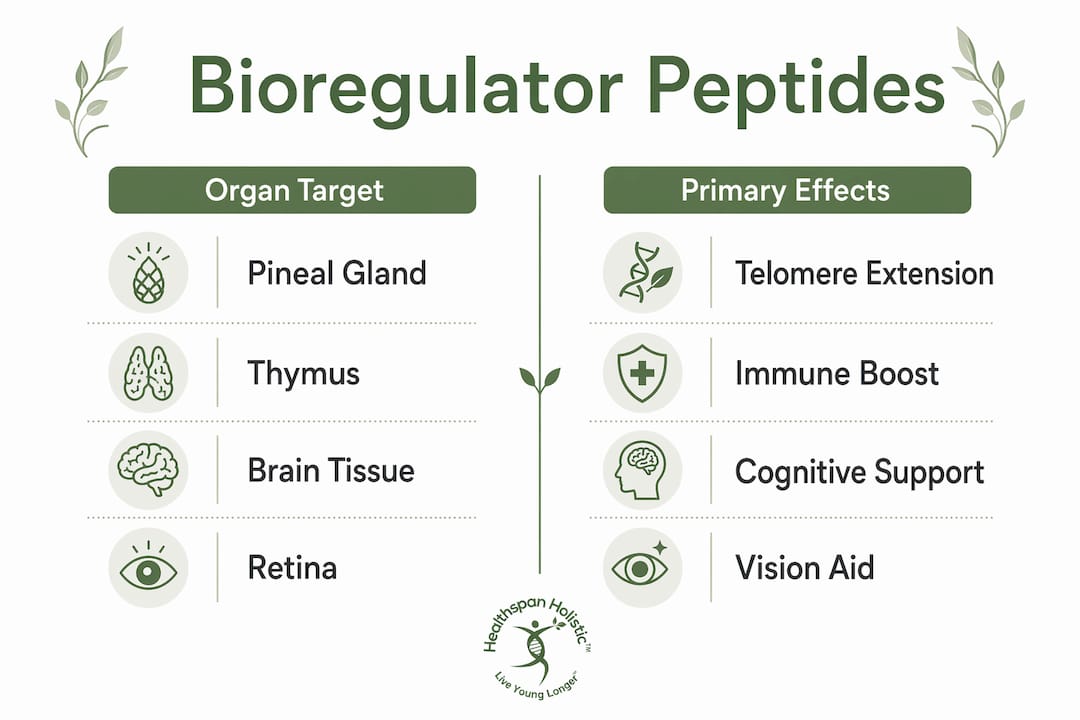
The research on tissue-specific gene regulation confirms that each bioregulator corresponds to a distinct organ system, which is why practitioners rarely use just one peptide in isolation.
What are the practical considerations for using bioregulator peptides?
Understanding how these peptides are administered and absorbed is as important as knowing what they do. Getting this wrong leads to either wasted money or unrealistic expectations.
Oral vs. injectable administration
Injectable delivery, typically subcutaneous, provides higher bioavailability and is the route used in most research protocols. Oral administration is more convenient but faces degradation from stomach acid. The reason oral dosing still works is specific: ultra-short peptides cross the intestinal epithelium via PEPT1 and PEPT2 transporters, which evolved to absorb short nutritional peptides from food. Higher oral doses compensate for the lower absorption rate. This is not a workaround. It is a physiological mechanism that makes oral bioregulators genuinely viable, not just theoretically possible.
Safety profile and known risks
The overall safety profile of bioregulator peptides appears favorable in published research. However, one finding deserves direct attention. Vilon, a dipeptide with geroprotective properties, was linked to increased mammary tumors in certain mouse models. That signal does not condemn the entire class, but it confirms that individual peptides carry individual risk profiles. Treating all bioregulators as interchangeable is a mistake.
Practical safety considerations to discuss with your practitioner:
-
Personal cancer history or hormone-sensitive conditions before starting any peptide protocol
-
Current medications that may interact with immune-modulating peptides like Thymalin
-
Baseline lab work to establish reference points before and during use
-
The distinction between research-grade and pharmaceutical-grade peptide sources
Terminology clarity
The word “bioregulator” appears in multiple medical contexts and does not always refer to Khavinson-style short peptides. Endocrinologists use it for hormones. Immunologists use it for cytokines. When you see the term in a wellness context, confirm the speaker means short-chain, organ-specific, DNA-interacting peptides. Ambiguity here leads to confusion about what you are actually taking.
Pro Tip: Clinicians with experience in this field treat bioregulators as experimental adjuncts, not primary therapies. If a provider presents them as a standalone cure for aging, seek a second opinion. The most credible practitioners use them within a broader protocol that includes personalized medicine strategies such as lab testing, nutrition, and lifestyle optimization.
Which bioregulator peptides suit specific health goals after 45?
For adults focused on longevity and wellness, the choice of peptide depends on the organ system or health goal being addressed. No single peptide does everything. The most effective protocols match the peptide to the person’s specific needs, confirmed by lab data where possible.
Matching peptides to health goals
Longevity and cellular aging: Epitalon is the most studied peptide for this goal. Its telomere extension data and lifespan results in animal models make it the starting point for most longevity protocols. It also supports melatonin production, which declines significantly after age 50.

Immune function: Thymalin targets the thymus, the gland responsible for T-cell maturation. Thymus function declines sharply after age 40, which is a key driver of immune aging. Thymalin has been studied for restoring immune markers in older adults, making it relevant for anyone experiencing frequent illness or slow recovery.
Cognitive support: Cortexin and Pinealon both target brain tissue, but with different emphases. Cortexin focuses on neuroprotection and general cognitive function. Pinealon has stronger evidence for memory, particularly from the traumatic brain injury trial. Adults concerned about memory or mental clarity often cycle both.
Vision: Retinalamin targets retinal cells and has been studied for age-related visual decline. For adults over 60 with early macular changes or general visual fatigue, it is one of the few peptides with organ-specific retinal data.
Cycling and stacking
Most practitioners cycle bioregulators rather than using them continuously. A common approach is 10-day courses, two to four times per year, per peptide. Stacking means using multiple peptides simultaneously or in sequence to address several organ systems. For example, combining Epitalon with Thymalin addresses both cellular aging and immune decline, two of the most significant biological changes after 50. Emerging peptides with promising early research include Vilon (with the safety caveats noted above) and Vesugen, which targets blood vessel tissue. These are worth watching but require more independent replication before routine use. For a broader view of how peptides fit into a longevity strategy, the evidence-based supplements guide at Healthspan Holistic covers complementary options worth considering alongside bioregulators.
Key Takeaways
Bioregulator peptides work by directly modulating gene expression inside cell nuclei, making them fundamentally different from conventional peptides and giving them a credible biological basis for supporting longevity and organ-specific health after 45.
| Point | Details |
|---|---|
| Unique mechanism | Bioregulators penetrate cell nuclei and interact with DNA directly, not surface receptors. |
| Longevity evidence | Animal studies show 20–40% lifespan increases; Epitalon extended telomeres by 44% in cell lines. |
| Oral dosing works | PEPT1 and PEPT2 transporters absorb short peptides orally; higher doses compensate for lower bioavailability. |
| Safety varies by peptide | Vilon showed a tumor signal in mouse models, confirming each peptide needs individual risk assessment. |
| Match peptide to goal | Epitalon targets longevity, Thymalin targets immunity, Cortexin targets cognition, Retinalamin targets vision. |
What I have learned from watching this field evolve
The promise of bioregulator peptides is real. The research from Khavinson’s group is not fringe science. It is decades of systematic work, and the mechanistic logic, direct DNA interaction at ultra-low doses, is genuinely compelling. I have seen adults in their 50s and 60s report meaningful improvements in energy, sleep quality, and immune resilience after structured peptide protocols.
What I have also learned is that the gap between animal data and human clinical outcomes is wider than enthusiasts admit. The 20–40% lifespan extension in mice is extraordinary. The human evidence, while promising, is much thinner and geographically concentrated. That does not make bioregulators worthless. It makes them experimental, which is a different thing entirely.
The adults I see get the most from these peptides are the ones who come in with clear goals, baseline lab work, and realistic expectations. They are not looking for a single answer to aging. They are using peptides as one layer in a broader protocol that includes sleep, nutrition, movement, and regular testing. That context matters enormously. A peptide protocol without that foundation is like tuning an engine without checking the fuel.
The safety picture also deserves more honest conversation. The Vilon tumor signal is not widely discussed in wellness circles, but it should be. Every peptide in this class needs individual scrutiny, not blanket approval. If you are working with a practitioner who treats all bioregulators as equally safe and equally proven, push back. The regulatory landscape for peptides is also shifting in 2026, and staying informed matters.
My honest read: bioregulator peptides are worth serious attention for adults committed to longevity. They are not worth uncritical enthusiasm. The science is promising enough to act on, and uncertain enough to approach carefully.
— Chris
How Healthspan Holistic supports your longevity goals
Bioregulator peptide therapy works best as part of a structured, personalized wellness plan, not as a standalone experiment.
Checkout our line of bioregulator peptides. 1st Time Customers can take advantage of our BUY 1 GET 1 50% OFF special offer on all supplements.
FAQ
What are bioregulator peptides?
Bioregulator peptides are ultra-short amino acid chains (2–4 amino acids) that penetrate cell nuclei and modulate gene expression in specific tissues. They were developed from decades of research by Vladimir Khavinson at the Russian Institute of Bioregulation and Gerontology.
How do bioregulator peptides differ from other peptides?
Most peptides bind to surface receptors on cells. Bioregulators bypass that step and interact directly with DNA promoter regions inside the nucleus, which is why they are effective at ultra-low microgram doses.
Are bioregulator peptides safe to use?
The overall safety profile is favorable in published research, but individual peptides carry individual risks. Vilon, for example, was linked to increased mammary tumors in mouse models, which means each peptide requires separate evaluation rather than blanket approval.
Can you take bioregulator peptides orally?
Yes. Ultra-short peptides are absorbed orally via PEPT1 and PEPT2 intestinal transporters. Oral doses need to be higher than injectable doses to compensate for lower bioavailability, but oral administration produces clinically meaningful outcomes, as shown in the Pinealon memory trial.
Which bioregulator peptide is best for longevity?
Epitalon has the strongest longevity evidence, including telomere extension and lifespan increases in animal models. For adults over 45, it is typically the first peptide considered in a longevity protocol, often combined with Thymalin for immune support.
Leave a comment: