

TL;DR:
- Balancing hormones after 40 involves lifestyle changes like consistent sleep, protein-rich meals, and stress reduction. Lab testing with a comprehensive panel guides personalized treatment and safe interventions when necessary. Regular re-evaluation and clinician oversight are key to sustainable hormone health improvements.
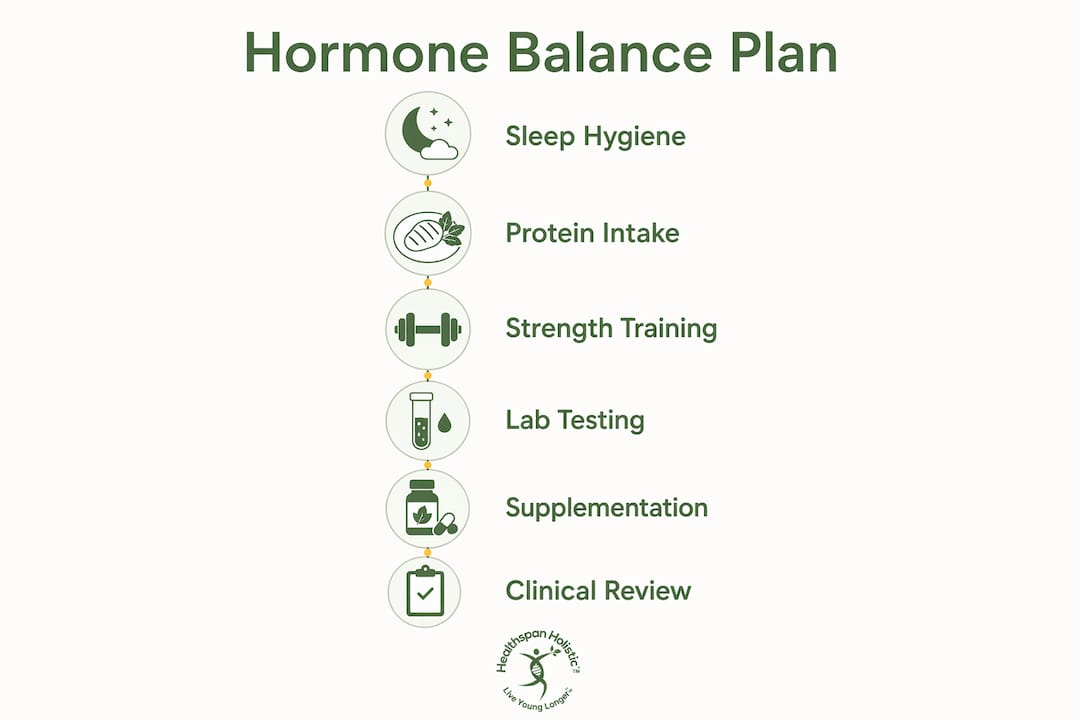
You can start balancing hormones today by locking in consistent sleep, eating protein and fiber at every meal, practicing 10 minutes of daily breathwork, and scheduling a baseline hormone panel. Lifestyle comes first. Testing comes second. Clinician-supervised treatment, when needed, comes third.
TL;DR for your next clinician visit: “I’d like to run a Comprehensive Hormone Panel, including estradiol, testosterone, SHBG, TSH, morning cortisol, and fasting insulin, so we have a baseline before discussing any interventions.”
Your 48-hour checklist:
- Set a fixed bedtime and wake time and stick to it tonight
- Add protein to your next three meals
- Block 10 minutes tomorrow morning for breathwork or a short walk outside
- Call your provider or visit Healthspan Holistic to schedule baseline labs
Why do hormones change so much after 40?
Endocrine aging is gradual but predictable. Four systems shift most noticeably: sex hormones, thyroid function, cortisol regulation, and insulin sensitivity.
Biological drivers to know:
- Ovarian follicle decline reduces estradiol and progesterone output during perimenopause
- Declining Leydig cell function lowers testosterone production in men
- Age-related changes in the HPA and HPT axes alter cortisol rhythm and thyroid signaling
- Rising SHBG binds more free testosterone and estradiol, reducing bioavailable levels
- Liver metabolism slows, affecting how hormones are cleared and recycled
Symptoms mapped to hormone systems:
| Symptom | Likely hormone system |
|---|---|
| Fatigue, low libido, mood changes | Sex hormones (estradiol, testosterone) |
| Heat intolerance, unexplained weight gain or loss | Thyroid (TSH, free T3/T4) |
| Central weight gain, poor sleep, afternoon crashes | Cortisol and insulin |
| Irregular cycles, hot flashes, night sweats | Perimenopause / estrogen decline |
Medications including corticosteroids, antidepressants, and hormonal contraceptives can also shift these patterns, as can underlying conditions like thyroid disease, type 2 diabetes, and perimenopause. These require clinical evaluation, not just lifestyle tweaks.
The daily habits that actually move the needle
Lifestyle foundations are the most powerful levers for hormone health and should precede or accompany any clinical intervention. Here is where to focus first.
Nutrition:
- Aim for a substantial amount of protein per meal to regulate ghrelin and support satiety hormones
- Follow a Mediterranean-style eating pattern rich in fiber, olive oil, fatty fish, and vegetables to support estrogen metabolism and insulin sensitivity
- Cut added sugar; chronic high intake drives insulin resistance and metabolic disruption
- Limit alcohol, which directly suppresses testosterone and disrupts sleep architecture
Sleep:
- Keep a consistent sleep and wake schedule, even on weekends
- Get morning sunlight within 30 minutes of waking to anchor your circadian rhythm
- Aim for 7+ hours; sleep deprivation raises evening cortisol and dysregulates leptin and ghrelin
- Enforce a screen curfew 60 minutes before bed to protect melatonin production
Stress and movement:
- Practice 10 minutes of breathwork or mindfulness daily; stress reduction produces measurable cortisol improvements within weeks
- Strength train twice weekly and accumulate 150 minutes of moderate aerobic activity per week
- Regular resistance and aerobic exercise improves insulin sensitivity and hormone receptor responsiveness
Pro Tip: Run a simple 2-week starter sequence: Week 1, fix sleep and add protein. Week 2, introduce strength training and daily breathwork. This order lets you feel the effect of each change before adding the next, which makes it far easier to stick with.

Which labs should you order, and when?
Start with a Comprehensive Hormone Panel plus metabolic and thyroid screening. Timing matters as much as which tests you order.
| Lab | Ideal timing | Clinical note |
|---|---|---|
| Estradiol | Day 3 of cycle or any day (post-menopause) | Tracks ovarian reserve and menopausal status |
| Progesterone | Mid-luteal (mid-cycle days) | Assesses ovulatory function |
| Total & free testosterone | Morning, fasting | Diurnal peak; free T reflects bioavailable fraction |
| SHBG | Morning, fasting | Affects free hormone levels |
| TSH, free T4, free T3 | Morning, fasting | Full thyroid picture beyond TSH alone |
| Morning cortisol | Morning, fasting | Baseline HPA-axis assessment |
| Fasting insulin / HbA1c | Fasting | Insulin resistance screening |
| DHEA-S | Morning | Adrenal reserve marker |
| LH / FSH | Day 2–3 of cycle or any day (post-menopause) | Confirms menopausal transition |
What to bring to your appointment:
- A current medication and supplement list
- Your cycle day (if applicable)
- A 2-week symptom log (energy, sleep, mood, libido)
- Sleep and activity data from any wearable you use
Healthspan Holistic’s Comprehensive Hormone Panel covers the core analytes above and is designed to be reviewed with a clinician so results are interpreted in context, not in isolation.
What clinical treatments are available, and are they safe?
Pharmacologic treatments can be effective, but they work best when individualized, started under clinician supervision, and paired with the lifestyle habits above.
Treatment categories:
- Bioidentical HRT: For symptomatic perimenopause and menopause; FDA-approved options include estradiol patches, gels, and micronized progesterone. Discuss breast cancer history and cardiovascular risk with your provider.
- TRT (testosterone replacement therapy): For men with verified low testosterone confirmed on two morning labs. Monitoring includes hematocrit, PSA, and symptom response. Women with low testosterone may also benefit; see testosterone’s role in women.
- Levothyroxine / combination therapy: For confirmed hypothyroidism; dose is titrated to free T3/T4 and symptom response, not TSH alone.
- GLP-1 agents: For metabolic dysregulation with insulin resistance; monitor for nutrient status changes during treatment.
Monitoring schedule:
- Baseline labs before starting any therapy
- Follow-up labs at 6–12 weeks after initiation
- Vital signs, symptom tracking, and relevant screenings (mammography, PSA) per standard clinical guidance
- Annual comprehensive re-evaluation
Red flag — seek urgent care immediately if you experience chest pain, severe calf swelling, sudden vision changes, or unexplained shortness of breath while on hormone therapy.
Wearable devices that track heart rate variability, sleep stages, and activity give your clinician objective data between visits, which speeds up dose titration and catches problems early.
Which supplements actually support hormone health?
Select supplements can support hormones when used correctly, but they are adjuncts to lifestyle and clinical care, not replacements for either.
Evidence-backed options for adults over 40:
- Omega-3 fatty acids: Support insulin sensitivity and reduce systemic inflammation that disrupts hormonal signaling
- Ashwagandha: An adaptogenic herb with clinical evidence for cortisol reduction and stress resilience
- Magnesium glycinate: Supports sleep quality, cortisol regulation, and insulin sensitivity
- Vitamin D3 + K2: Low vitamin D is associated with thyroid dysfunction and reduced testosterone; K2 directs calcium appropriately
- Fem Rebalance™ 60 Capsules: Formulated for women’s cycle and menopause support; review dosing with your clinician, especially if you take hormonal medications
- Adrenal Px Balance 75 Capsules: Targeted adrenal and cortisol support; well-suited for adults experiencing chronic stress, fatigue, or HPA-axis dysregulation
Interaction warning: Always check supplements against your prescription medications before starting. Adaptogens can interact with thyroid medications; omega-3s at high doses affect anticoagulants; some herbal blends alter insulin sensitivity. Your clinician should review your full supplement list at every visit.
Prefer product-grade supplements with third-party testing. Unverified blends with proprietary formulas and no certificate of analysis are a real risk, not a minor one.
How to build your personalized 3–6 month plan
Most people see measurable improvement in sleep and stress markers within 6–12 weeks of lifestyle changes, and meaningful sex-hormone optimization within 3–6 months under clinical supervision.
Your timeline:
- Weeks 0–2: Fix sleep schedule, add protein and fiber to every meal, start daily breathwork. No labs yet; let habits stabilize.
- Weeks 3–8: Run your baseline Comprehensive Hormone Panel. Begin strength training twice weekly. Track energy, sleep, and mood daily.
- Weeks 8–16: Review lab results with your clinician. Introduce targeted supplements or initiate clinical treatment if indicated. Re-check cortisol and fasting insulin.
- Months 3–6: Follow-up labs for any initiated therapy. Adjust doses based on symptom scales, wearable sleep data, waist measurement, and libido/energy scores.
Metrics to track throughout:
- Sleep duration and quality (wearable data)
- Waist circumference and body weight
- Energy and libido on a simple 1–10 daily scale
- Lab markers: testosterone, estradiol, TSH, fasting insulin, cortisol
- Symptom frequency (hot flashes, brain fog, mood shifts)
If labs remain abnormal after 3 months of consistent lifestyle changes and appropriate supplementation, escalate to a specialist. Persistent red-flag symptoms warrant urgent referral, not a wait-and-see approach.
How do you find the right clinician for hormone optimization?
Prioritize clinicians who use evidence-based labs, build individualized plans, and schedule regular monitoring. MD, DO, NP, or PA with hormone experience, or an integrative endocrine clinic, are your best starting points.
Vetting criteria:
- Orders a full panel (not just TSH or total testosterone) and explains why each marker matters
- Coordinates with your primary care provider rather than working in isolation
- Willing to incorporate wearable and symptom-tracking data into clinical decisions
- Has a clear monitoring schedule with defined follow-up labs
- Open to de-prescribing or modifying a protocol when labs and symptoms improve
Questions to bring to your first appointment:
- “Which labs do you recommend, and what are you looking for in the results?”
- “What is your monitoring schedule after we start any treatment?”
- “How will you measure whether the treatment is working?”
- “Under what circumstances would you reduce or stop a therapy?”
Pro Tip: A clinician’s willingness to de-prescribe is one of the strongest signals of quality. Anyone who resists adjusting a protocol when your labs normalize is optimizing for their protocol, not for you.
Key Takeaways
Hormone balance after 40 requires a sequenced approach: lifestyle foundations first, targeted lab testing second, and clinician-supervised treatment only when indicated by results and symptoms.
| Point | Details |
|---|---|
| Lifestyle comes first | Sleep, protein-rich meals, stress reduction, and regular exercise are the foundation before any clinical intervention. |
| Test before you treat | A Comprehensive Hormone Panel with timed labs (morning cortisol, mid-luteal progesterone) gives your clinician the data needed to act. |
| Clinical treatment is individualized | HRT, TRT, thyroid meds, and GLP-1 agents each require baseline labs, a monitoring schedule, and regular follow-up. |
| Supplements are adjuncts | Omega-3s, magnesium, adaptogens, and product-grade formulas support the plan but do not replace lifestyle or clinical care. |
| Healthspan Holistic | Offers the Comprehensive Hormone Panel, Fem Rebalance™, Adrenal Px Balance, and personalized coaching as a monitored, lab-driven starting point. |
What we’ve seen working for adults over 40
The conventional framing of hormone health tends to split into two camps: “just eat better and sleep more” on one side, and “get on HRT immediately” on the other. Neither is the full picture, and both shortcuts cost people time.
What actually works is the sequence. Lifestyle changes are not a consolation prize for people who “don’t need” medication. They are the substrate that makes clinical interventions work better and last longer. A person who starts testosterone therapy without fixing their sleep and insulin resistance will see a fraction of the benefit compared to someone who does both together.
The other thing most articles underplay is the role of objective data. Symptom journals are useful, but wearable sleep data, continuous glucose monitoring, and a well-timed lab panel give a clinician something to act on with precision. That specificity is what separates a plan that gets adjusted and refined from one that stalls after the first prescription.
The adults who make the most progress are the ones who treat this as a monitored process, not a one-time fix. Regular re-testing, honest symptom tracking, and a clinician willing to adjust the plan are worth more than any single supplement or therapy.
Healthspan Holistic can help you get started
If you’ve read this far, you already know the plan. What you need now is the data to personalize it.

Healthspan Holistic gives adults over 40 a concrete starting point: a Comprehensive Hormone Panel that covers the core analytes your clinician needs, paired with personalized coaching and AI-powered health analytics that turn your wearable and lab data into a clear action plan. For women navigating perimenopause or cycle changes, Fem Rebalance™ 60 Capsules offers targeted cycle and menopause support. For anyone dealing with chronic stress and cortisol dysregulation, Adrenal Px Balance 75 Capsules is formulated specifically for adrenal recovery.
1st Time Customers can take advantage of our BUY 1 GET 1 50% OFF special offer on all supplements.
Book your panel or browse the full supplement collection at Healthspan Holistic and bring your results to your next clinician visit ready to act.
Useful sources
- Cleveland Clinic — Clinical overview of hormonal imbalance causes, symptoms, and treatment options; used for treatment framing and red-flag guidance.
- Healthline — Evidence-based nutrition guidance including protein targets (25–30 g per meal) and Mediterranean diet support for hormone health.
- Integrative Nutrition — Lifestyle-first framework and cortisol/stress research; supports the sequenced approach throughout this article.
- UChicago Medicine AdventHealth — Exercise recommendations for insulin sensitivity and hormonal signaling.
- Labcorp OnDemand — Lab panel guidance including timing protocols for cortisol, progesterone, and testosterone.
- mindbodygreen — Supplement safety, interaction warnings, and quality standards reviewed by OB/GYNs and registered dietitians.
- Medical News Today — Dietary and lifestyle strategies for hormone balance across multiple hormone systems.
For clinicians: The Endocrine Society and the North American Menopause Society publish regularly updated clinical practice guidelines for HRT, TRT, and thyroid management. Reference these when making pharmacologic decisions for individual patients.
FAQ
How long does it take to balance hormones naturally?
Most people notice improvements in sleep and energy within 6–12 weeks of consistent lifestyle changes. Sex-hormone optimization under clinical supervision typically takes 3–6 months.
What are the most common symptoms of hormonal imbalance after 40?
Fatigue, low libido, unexplained weight changes, brain fog, poor sleep, and mood shifts are the most frequent signs. These can point to sex hormone, thyroid, cortisol, or insulin changes.
Which foods help regulate hormone levels?
Fatty fish, leafy greens, fiber-rich legumes, olive oil, and adequate protein at every meal all support hormone health. A Mediterranean-style pattern is the most consistently evidence-backed dietary approach.
When should you see a clinician about hormone symptoms?
Book an appointment when symptoms persist beyond 4–6 weeks, significantly affect your quality of life, or include red flags like chest pain, sudden vision changes, or severe swelling. A baseline panel is a good first step.
Does the Comprehensive Hormone Panel tell you everything you need?
It gives your clinician the core data needed to identify the most common imbalances. Timing your labs correctly (morning cortisol, mid-luteal progesterone) and reviewing results with a qualified provider is what turns numbers into a real plan.
Leave a comment: