

TL;DR:
- Testosterone can help postmenopausal women with diagnosed hypoactive sexual desire disorder but is not a general health booster. Proper diagnosis, low-dose therapy, and careful monitoring are essential to minimize risks and ensure benefits. Most evidence supports its use for improving sexual desire, not for anti-aging or weight loss purposes.
Testosterone can genuinely help some women — particularly postmenopausal women with clinically diagnosed hypoactive sexual desire disorder (HSDD) — but it is not a general vitality cure, and it carries real risks. Here is what the evidence actually supports:
-
Who benefits most: Postmenopausal women with HSDD who have already ruled out modifiable causes. Multiple randomized controlled trials report that 40–60% of participants saw meaningful improvement in sexual desire.
-
Regulatory reality: No FDA-approved testosterone product exists specifically for women in the U.S. All prescribing is off-label.
-
Key risks: Virilization (acne, facial hair, voice changes), uncertain long-term safety, and cardiovascular concerns at supraphysiologic doses.
-
Trusted guidance: The Global Consensus Position Statement on testosterone for women, along with major endocrinology and menopause societies, supports low-dose therapy for HSDD with careful monitoring — not broad anti-aging use.
This is a focused clinical tool, not a fountain of youth. Used correctly, it can restore something meaningful. Used carelessly, it can cause lasting harm.
What are the symptoms of low testosterone in women?
Testosterone is not just a male hormone. In women, it plays a role in sexual desire, bone density, muscle maintenance, mood regulation, and energy. Levels begin declining gradually from the early 30s onward, often accelerating in the 40s before the estrogen drop of menopause even begins.
Common symptoms that may point to low testosterone:
-
Reduced or absent sexual desire (the most consistently documented symptom)
-
Persistent fatigue that does not resolve with rest
-
Loss of muscle mass or difficulty maintaining strength
-
Low mood, irritability, or emotional flatness
-
Brain fog or difficulty concentrating
-
Reduced bone density (often found incidentally on DEXA scans)
Common causes of low testosterone in women:
-
Natural age-related decline (begins in the 30s, accelerates around menopause)
-
Surgical menopause or oophorectomy (removal of ovaries causes an abrupt drop)
-
Adrenal or pituitary disorders
-
Oral contraceptives or hormone therapies that raise SHBG, reducing free testosterone
-
Hypothalamic amenorrhea (from overtraining, undereating, or chronic stress)
-
Chronic illness, including autoimmune conditions
Pro Tip: Before attributing these symptoms to low testosterone, check for thyroid disease, iron deficiency anemia, depression, and medication side effects (especially SSRIs and oral estrogen). These conditions overlap significantly and are often more treatable. A thorough differential diagnosis saves time and avoids unnecessary hormone therapy.
How do clinicians test for low testosterone in women?
Testing is less straightforward than most patients expect. Testosterone levels fluctuate with age, time of day, and menstrual cycle phase. More importantly, no single agreed “deficiency” cutoff exists for women the way one does for men.

The table below outlines a practical clinical testing workflow:
| Step | What to do | Why it matters |
|---|---|---|
| Symptom review | Confirm HSDD or specific complaint with validated questionnaire | Prevents over-testing in asymptomatic women |
| Rule out modifiable causes | Check thyroid, iron, mood, medications, relationship factors | Avoids unnecessary hormone prescribing |
| Baseline labs | Total testosterone + SHBG; request LC-MS/MS if available | Standard immunoassays are often inaccurate at low female levels |
| Free/bioavailable T | Calculate or directly measure free testosterone | SHBG binding can make total T misleading |
| Timing | Morning draw; mid-follicular phase if premenopausal | Reduces day-to-day variability |
| Repeat measures | Confirm with a second draw if borderline | Single values are rarely diagnostic alone |
Standard immunoassays were designed for male testosterone ranges and often cannot reliably detect the much lower levels normal in women. LC-MS/MS (liquid chromatography-tandem mass spectrometry) is the preferred method when available. Even then, lab values alone rarely drive the prescribing decision — clinical correlation always comes first.
What does the research show about testosterone benefits for women?
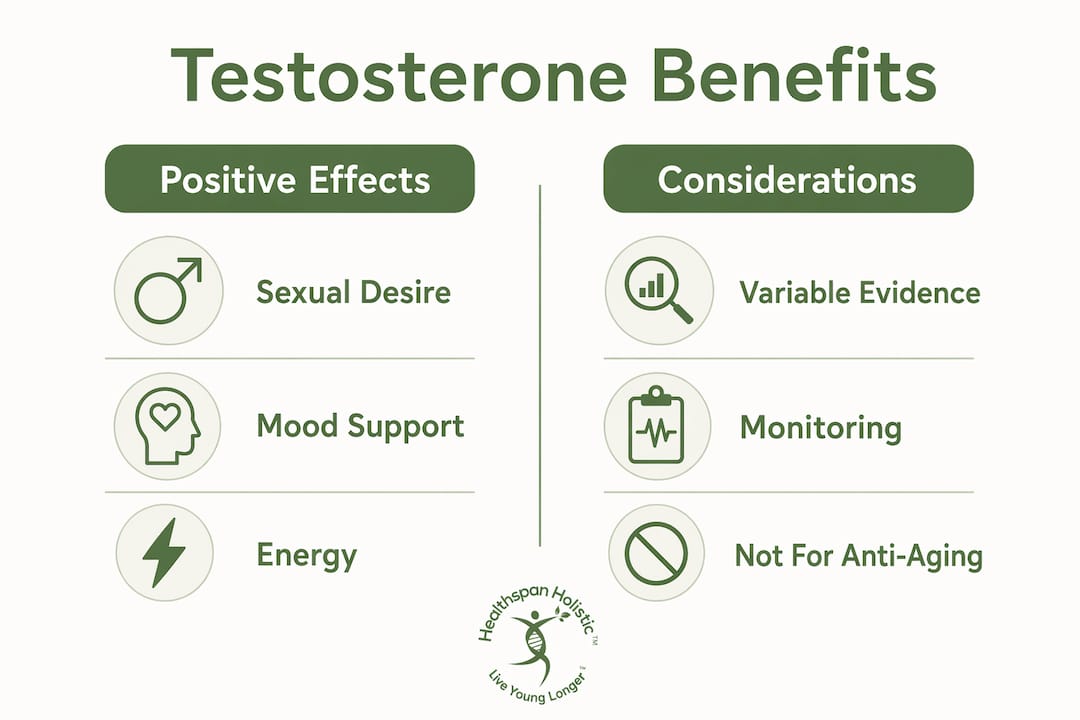
The evidence is clearest in one area: sexual desire in postmenopausal women. Systematic reviews and multiple RCTs consistently show a modest-to-moderate benefit for HSDD, with roughly 40–60% of participants reporting meaningful improvement over placebo. That is a real signal — but it comes with important context.
Limitations of the current evidence base:
-
Most trials lasted under 24 months, so long-term safety data remains thin
-
Study populations were predominantly postmenopausal women; evidence in premenopausal women is sparse
-
Dosing methods and formulations varied widely across studies, making direct comparisons difficult
-
Effect sizes, while statistically significant, are modest — not every woman responds
Beyond sexual desire, the picture gets murkier. Cleveland Clinic’s clinical guidance notes that evidence for mood, cognition, and bone density benefits is limited and inconsistent. Mood improvements reported in observational data often do not hold up in blinded RCTs, where placebo effects are substantial. Energy and vitality claims are similarly weak in controlled trials.
The bottom line: testosterone for female sexual dysfunction has a legitimate evidence base. As a general anti-aging or energy therapy, it does not — at least not yet.
How is testosterone prescribed for women in the U.S.?
Because no FDA-approved female testosterone product exists in the U.S., clinicians work off-label, typically adapting male formulations at a fraction of the standard male dose. Correct female physiologic dosing is roughly one-tenth of male replacement dosing — a detail that requires real provider expertise to get right.
Common formulations and their tradeoffs:
-
Topical creams and gels: Most commonly used; allow precise, titratable dosing; easy to adjust or stop; skin-to-skin transfer to partners or children is a concern
-
Transdermal patches: Consistent delivery; less flexible for dose adjustment; skin irritation common
-
Injections: Harder to control at female-range doses; peaks and troughs make steady levels difficult
-
Pellets: Implanted under the skin; controversial because the dose cannot be reversed if side effects occur; not recommended by most consensus guidelines
-
Oral testosterone: Largely avoided due to liver metabolism concerns and inconsistent absorption
Clinical monitoring checklist after starting therapy:
| Timepoint | What to check |
|---|---|
| Baseline | Total T (LC-MS/MS), SHBG, lipids, liver function, hematocrit, pregnancy test if applicable |
| 4–6 weeks | Total T, signs of virilization, symptom response |
| 3–6 months | Full reassessment: labs, symptom benefit, side effects, dose adjustment |
| Ongoing (every 6–12 months) | T levels, lipids, hematocrit, clinical signs |
Pro Tip: Be cautious with high-dose compounded testosterone therapies from online or non-specialist providers. Compounding pharmacies are not FDA-regulated for consistency, and supraphysiologic doses carry real virilization and cardiovascular risk. Choose a provider who follows Global Consensus Position Statement guidelines and uses LC-MS/MS testing when possible.

What are the risks and who should avoid testosterone?
Side effects at physiologic doses are generally mild but real. At higher or unmonitored doses, they become more serious and some are irreversible.
Common side effects:
-
Acne and oily skin
-
Increased body or facial hair (hirsutism)
-
Scalp hair thinning or androgenic alopecia
-
Clitoral enlargement
-
Voice deepening (can be permanent even after stopping)
-
Lipid changes, particularly reduced HDL cholesterol
Who should not use testosterone:
-
Women who are pregnant or breastfeeding
-
Anyone with a history of hormone-sensitive cancers (breast, uterine, ovarian)
-
Uncontrolled cardiovascular disease or active liver disease
-
Severe or uncontrolled hyperlipidemia
-
Women seeking it primarily for weight loss or general anti-aging (evidence does not support these uses)
The off-label status in the U.S. has a practical implication: there is no standardized product, no FDA-mandated patient information leaflet, and no regulated female dosing range. That places the burden of safety squarely on the prescribing clinician and the patient’s ability to find one who follows evidence-based protocols.
How do clinicians decide whether to prescribe, and what does monitoring look like?
Good prescribing follows a clear decision path rather than a transactional “you asked, here it is” model. Clinical experts consistently warn against prescribing without a thorough biopsychosocial evaluation and structured follow-up.
Decision flow:
-
Confirm HSDD diagnosis and that it causes personal distress (distress is a required criterion)
-
Rule out and address modifiable causes: relationship factors, medications, thyroid, mood disorders
-
Review contraindications and discuss risks honestly with the patient
-
Consider testosterone only after other options have been tried or are inappropriate
-
Document shared decision-making, including the off-label nature of the prescription
Monitoring timetable:
-
Baseline: Full labs before starting (see table above)
-
4–6 weeks: First testosterone level check and virilization screen
-
3–6 months: Full reassessment — if no meaningful benefit, stop therapy
-
Every 6–12 months thereafter: Ongoing labs including hematocrit monitoring, lipids, and clinical review
Pro Tip: Refer to an endocrinologist or menopause specialist if testosterone levels come back unexpectedly high, if virilization signs appear despite low doses, or if the patient has complex comorbidities like adrenal disease, polycystic ovary syndrome, or a history of hormone-sensitive cancer. These cases need specialist-level judgment.
What should you ask your provider, and what does treatment cost?
Walking into an appointment prepared makes a real difference. Testosterone therapy for women involves nuanced decisions, and many primary care providers have limited experience with female hormone optimization.
Questions worth bringing to your appointment:
-
Do I meet the clinical criteria for HSDD, and is my distress documented?
-
What modifiable causes have we ruled out?
-
What is the target testosterone range for my age and menopausal status?
-
Which formulation do you recommend, and why?
-
What is the monitoring plan, and how often will we check labs?
-
What are the signs I should watch for and report immediately?
-
What are the alternatives if testosterone does not help within 3–6 months?
-
How does this interact with any estrogen or other hormones I am taking?
Timeline for benefit: Most women who respond to therapy notice changes in sexual desire within weeks to a few months. Clinical practice recommends a formal reassessment at 3–6 months. If there is no meaningful improvement by 6 months, stopping is the appropriate next step.
Cost reality in the U.S.: Because prescribing is off-label, insurance coverage is inconsistent and often denied. Expect to pay out of pocket for the medication itself, plus the cost of baseline and follow-up labs. Compounded testosterone creams vary widely in price depending on the pharmacy.
What are the non-testosterone options worth considering first?
Testosterone is rarely the right first step. Several evidence-based alternatives address the same symptoms with better-established safety profiles.
Options to consider before or alongside testosterone:
-
Systemic estrogen therapy: For postmenopausal women, estrogen often improves sexual function, mood, and energy; address perimenopause hormone changes before layering in androgens
-
Vaginal estrogen: Highly effective for genitourinary syndrome of menopause (GSM), which frequently contributes to painful sex and reduced desire
-
Flibanserin (Addyi) or bremelanotide (Vyleesi): Both are FDA-approved for premenopausal HSDD; limited data in postmenopausal women
-
PT-141 (bremelanotide): A non-hormonal prescription option for libido that works via melanocortin receptors rather than the hormonal axis
-
Psychotherapy and sex therapy: Particularly effective when relationship factors, trauma history, or body image concerns contribute to low desire
-
Sleep optimization: Chronic poor sleep suppresses testosterone and libido; address this before attributing symptoms to hormone deficiency
-
Medication review: SSRIs, oral contraceptives, and antihistamines all reduce sexual desire; switching or adjusting medications can restore function without hormones
-
Thyroid and iron correction: Both are common, treatable causes of fatigue and low libido that are frequently missed
Pro Tip: A multidisciplinary approach works better than any single intervention. Pairing a gynecologist or endocrinologist with a mental health professional or certified sex therapist — and a health coach who understands the full hormonal picture — consistently produces better outcomes than hormone therapy alone.
Key Takeaways
Testosterone for women has a clear, evidence-supported role in treating postmenopausal HSDD, but it requires careful diagnosis, physiologic dosing, and structured monitoring to be both effective and safe.
| Point | Details |
|---|---|
| Primary indication | Low-dose testosterone is supported by RCTs for postmenopausal HSDD, with about 40–60% of participants reporting improvement. |
| Off-label in the U.S. | No FDA-approved testosterone product exists for women; all U.S. prescribing is off-label, requiring provider expertise. |
| Test accurately | Use LC-MS/MS and measure free or bioavailable testosterone; total T alone is often misleading due to SHBG binding. |
| Monitor consistently | Check labs at baseline, 4–6 weeks, and every 3–6 months; reassess benefit at 6 months and stop if no improvement. |
| Healthspan Holistic | Offers a comprehensive hormone panel and personalized coaching to support evidence-based hormone evaluation and optimization. |
What responsible testosterone care actually looks like
The conversation around testosterone for women has gotten louder — and, in some corners, less careful. Online clinics offering quick prescriptions without proper workups, wellness influencers framing it as the missing piece for every tired woman over 40, and compounding pharmacies selling high-dose creams with minimal oversight: this is the environment many women are navigating when they start asking questions.
What gets lost in that noise is something worth saying plainly. Testosterone is a powerful hormone. At physiologic doses, with proper monitoring, it can restore something real for women who genuinely have HSDD and have exhausted other options. But the dose window for women is narrow, the assay challenges are real, and the long-term safety data is still incomplete. A provider who skips the differential diagnosis, orders a basic immunoassay, and prescribes without a monitoring plan is not offering hormone optimization — they are offering risk.
At Healthspan Holistic, the philosophy is to start with the full picture: advanced diagnostics, a thorough review of lifestyle and medications, and a coaching relationship that supports the whole person rather than just a number on a lab report. Testosterone may be part of that picture for some women. For others, the answer is estrogen, better sleep, a medication switch, or a conversation with a therapist. The goal is always to find what actually works for you — not what sounds good in a wellness headline.
How Healthspan Holistic supports your hormone health
Women over 40 dealing with low libido, fatigue, or hormonal uncertainty deserve more than a rushed appointment and a generic prescription. Healthspan Holistic offers a genuinely different path: a comprehensive hormone panel that goes well beyond a basic testosterone check, paired with personalized coaching that helps you interpret results in the context of your full health picture.
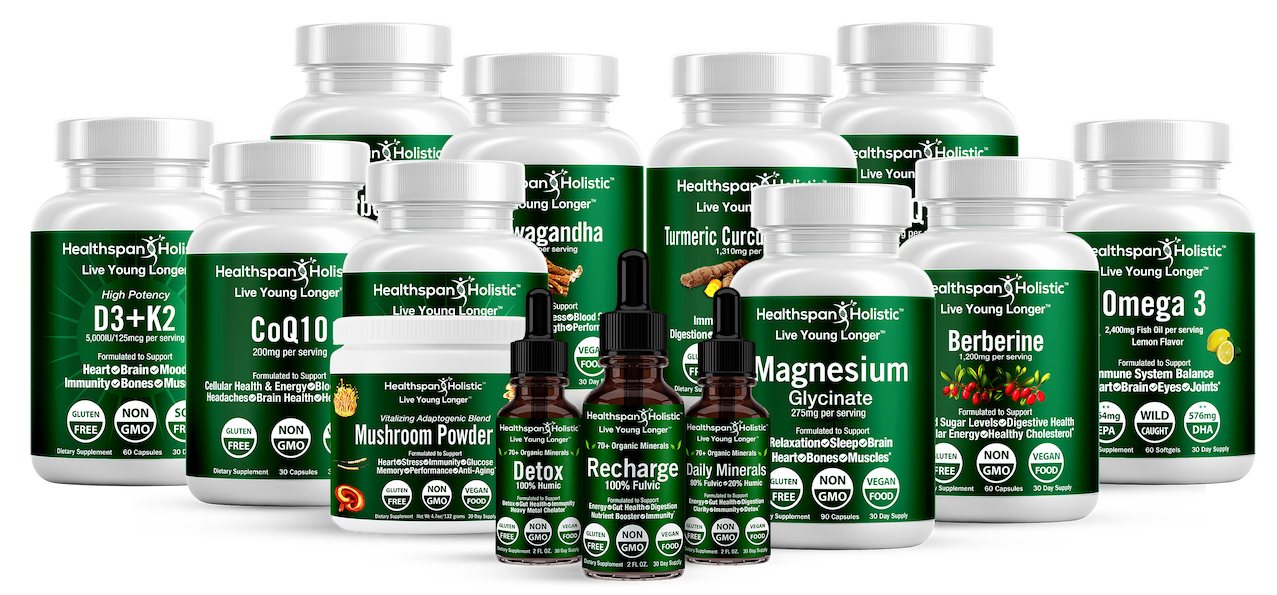
Here is our complete line of female hormone optimization prescriptions - our team of doctors will work with you to ensure that you get the proper labs completed and that you get put on the correct product at the right dose. Our 90 Day Journey to Longevity program combines advanced diagnostics, AI-powered health tracking, and one-on-one coaching to build a hormone optimization plan that is actually yours — not a template. Whether you are in perimenopause, post-menopause, or simply noticing that something has shifted, this program gives you the data and the guidance to act on it with confidence.
1st-time customers can take advantage of our BUY 1 GET 1 50% OFF special offer on all supplements.
Useful sources
These are the primary clinical and research sources behind this article. Each is worth bookmarking if you want to go deeper before your next appointment.
-
Can testosterone boost a woman’s sex drive? | Scientific American — Accessible analysis of the RCT evidence for testosterone and HSDD, including effect sizes and trial limitations.
-
Testosterone Therapy for Women | Cleveland Clinic — Clinician-reviewed patient guide covering indications, risks, and monitoring protocols.
-
Low Testosterone in Women | Cleveland Clinic — Practical overview of symptoms, causes, and testing considerations for low testosterone in women.
-
Testosterone Therapy for Women | Cedars-Sinai — Expert commentary on formulation choices, pellet controversy, and dosing cautions.
-
Women are turning to testosterone | National Geographic — Balanced investigative piece on the off-label prescribing landscape, overprescribing concerns, and the U.S. regulatory gap.
-
Testosterone measurement challenges in women (PDF) — Peer-reviewed review on assay accuracy, SHBG interference, and the case for LC-MS/MS in female testing.
FAQ
Does testosterone therapy improve sexual desire in women?
Yes, for postmenopausal women with diagnosed HSDD, multiple RCTs show that low-dose testosterone produces meaningful improvement in sexual desire compared to placebo, with roughly 40–60% of participants responding.
Will testosterone make a woman lose weight?
Evidence for clinically meaningful weight loss from testosterone in women is sparse and not robust. Testosterone is not supported as a weight-loss therapy, and using it for that purpose exposes women to hormonal risks without a reliable benefit.
Is testosterone FDA-approved for women in the U.S.?
No. There is currently no FDA-approved testosterone product specifically for women in the U.S.; all prescribing is off-label, typically using male formulations at much lower doses under clinician supervision.
How long does it take to feel the effects of testosterone therapy?
Most women who respond notice changes in sexual desire within weeks to a few months. Clinicians typically reassess at 3–6 months and recommend stopping if no meaningful improvement has occurred by 6 months.
What blood test should you get before starting testosterone therapy?
A baseline panel should include total testosterone via LC-MS/MS when available, SHBG, lipids, liver function tests, and hematocrit. A comprehensive hormone panel gives clinicians the full context needed to prescribe safely and monitor effectively.
Leave a comment: